Science Delivers a Powerful Rebuttal to 'It's Not Natural'
For anyone in the LGBTQ+ community who has ever faced the tired argument that their identity is 'unnatural,' science has just provided a powerful and fascinating comeback. A landmark new study, the most comprehensive of its kind, has confirmed that same-sex sexual behaviour is not only common throughout the primate world but also serves a crucial evolutionary purpose.
The research, published in the prestigious journal Nature Ecology & Evolution, reviewed data on hundreds of primate species and found documented instances of same-sex sexual activity in at least 59 different species, including our close relatives like chimpanzees and bonobos. This isn't just a fluke; it's a widespread pattern woven into the fabric of primate social life.
More Than Just Reproduction: Sex as Social Glue
The study's authors argue that this behaviour evolved for vital social reasons. In complex and often stressful primate societies, sex is about much more than just procreation. Same-sex encounters are used to build alliances, ease tensions after a conflict, and navigate intricate social hierarchies.
"What we found shows that same-sex [behaviour] is not like something bizarre, aberrant or rare. It’s everywhere, it’s very useful, it’s very important,” explained Vincent Savolainen, a lead author of the study from Imperial College London. He described it as a form of "social currency" that primates use to strengthen their communities, especially when facing harsh environmental conditions or intense competition.
This behaviour was observed in both males and females and included everything from mounting and genital touching to oral sex. The key takeaway is that for many of our animal cousins, sexuality is a flexible tool for social bonding.
Key Findings of the Study:
- Same-sex sexual behaviour was identified in 59 nonhuman primate species.
- It appears to be more common in species that live in complex social groups with strict hierarchies.
- The behaviour serves to reduce conflict and build social bonds, acting as a form of social cohesion.
- It challenges the long-held, simplistic assumption that animal sexual activity is solely for reproduction.
Challenging Outdated Assumptions
This research directly confronts outdated views on animal—and by extension, human—sexuality. Marlene Zuk, an evolutionary biologist at the University of Minnesota who was not involved in the study, praised its scope and highlighted how it corrects common misunderstandings.
"Sexual behavior is often about more than reproduction, and that’s certainly true in our species. But, people don’t tend to think that it’s also true in other species," Zuk told NBC News. She humorously added, "They have this idea that in all animals, except for people, that they’re old-fashioned Roman Catholics and they can only have sex briefly when it’s going to result in an offspring and with the lights off, you know? And that’s just not how animals are either.”
The study also reinforces what geneticists have been saying for years: there is no single "gay gene." Like almost all complex behaviours, sexuality is the result of a dynamic interplay between genetic predispositions and environmental factors.
A Natural Part of a Diverse World
While the study doesn't make direct claims about modern human sexuality, the implications are undeniable. It demonstrates that a spectrum of sexual behaviour is deeply rooted in our own evolutionary family tree. For a community that has long fought for its existence to be recognised as valid and natural, this research provides a wealth of scientific evidence.
Even in a progressive country like the Netherlands, the 'unnatural' argument can still surface in some debates. This study serves as a crucial, evidence-based reminder that sexual diversity is not a modern human invention, but a long-standing, functional, and natural part of the world we inhabit.
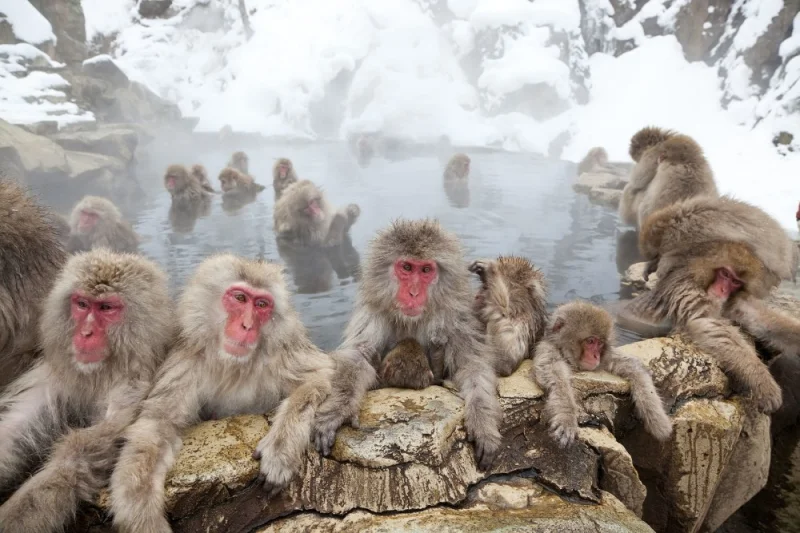
So, the next time someone questions the naturalness of same-sex love, you can point to the macaques, the bonobos, and the chimpanzees. It seems that for primates, sex has always been about much more than just making babies—it’s about connection, community, and survival.