It was the 30th anniversary of the Srebrenica genocide, a somber milestone meant to reinforce the global commitment to "never again." Yet, instead of the steady march toward equality many took for granted, 72 percent of the world's population now lives under autocracy. For the LGBT community, this is not just a political shift; it is a fracture in the rules-based international order that has transformed them into a common enemy.
The American Pivot: A Lifeline Severed
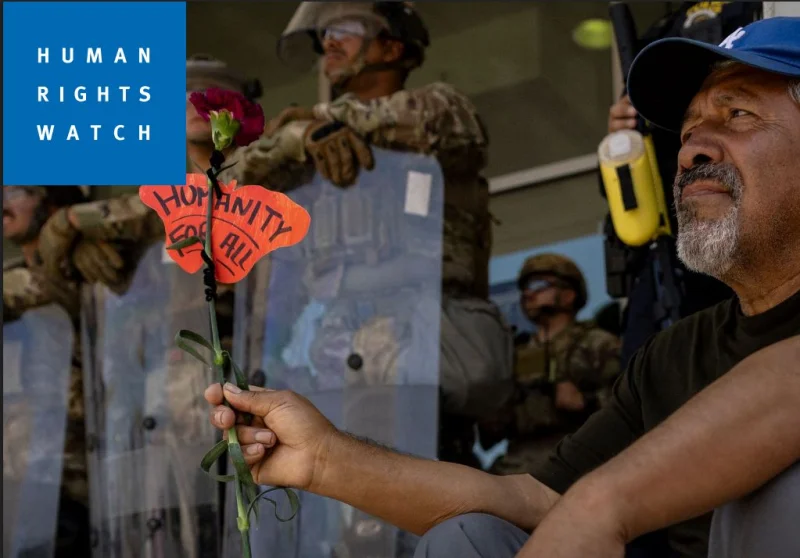
The first 12 months of the Trump administration's second term have sent shockwaves through the global human rights architecture. For decades, the United States was—however inconsistently—a cornerstone of the international rights system. Today, it has pivoted from protector to persecutor.
Domestically, the administration has systematically stripped protections from trans and intersex people, while reportedly preparing a list of "domestic terrorists" that could target progressive advocacy groups. Abroad, the impact is even more devastating. By eviscerating aid programs that once provided a literal lifeline to LGBT people, human rights defenders, and marginalized children globally, the U.S. has effectively switched sides on the human rights playing field.
"Trump has boasted that he doesn't 'need international law' as a constraint, only his 'own morality.' His administration has eviscerated US aid programs that provided a lifeline to children, older people and those needing health care, LGBT people, women, and human rights defenders."
This retreat is being met with a surge of popular resistance, such as the "No Kings" marches that drew millions into the streets, but the institutional damage is undeniable.
Survival Under Extremism: The Taliban's Targeted Campaign
While the U.S. retreats, other regimes are accelerating their campaigns of persecution. In Afghanistan, the "Law on the Promotion of Virtue and the Prevention of Vice" has codified the erasure of queer life. In February 2025, four men were subjected to public lashing and sentenced to years in prison for the "crime" of same-sex relations.
This brutality is not occurring in a vacuum. The Taliban's campaign comes as the country faces a catastrophic humanitarian crisis, with 22 million people experiencing food insecurity. In this context, the International Criminal Court's decision to issue arrest warrants for senior Taliban leaders Hibatullah Akhundzada and Chief Justice Abdul Hakim Haqqani is a landmark moment. The warrants specifically charge them with "crimes against humanity," including the systematic persecution of LGBT people.
The Dark Pulse of South America
In South America, a rising wave of hate crimes reveals the gap between constitutional promises and lived reality. In Argentina, President Javier Milei used the global stage at Davos to disparage gender identity, while his administration oversaw an economy where price inflation for rights-essential goods hit 33.6 percent. This rhetoric has had lethal consequences: the National Observatory of LGBT+ Hate Crimes documented a 70 percent surge in violence between January and June 2025, with 17 people killed and 85 injured.
The situation in Colombia is equally sobering. Despite holding some of the most robust constitutional protections in the region, the country saw 164 LGBT people killed in 2024. For the most marginalized, legal status is often nothing more than a "paper shield" that fails to stop bullets or blades when the rule of law is under strain.
Legislative Erasure: The Authoritarian Playbook
Across the globe, autocrats are reaching for the same playbook: targeting "others" to distract from failing infrastructure, economic stagnation, or political instability. By manufacturing a common enemy, they consolidate power through legislative erasure:
- Burkina Faso: In September 2025, the military junta passed a law making consensual same-sex relations punishable by up to five years in prison, even as it announced it would leave the International Criminal Court.
- Belarus: In April, the Culture Ministry amended decrees to classify depictions of same-sex relationships and transgender identity as pornography, part of a wider crackdown that has left over 1,100 political prisoners behind bars.
- Bosnia and Herzegovina: In Republika Srpska, the assembly eliminated "gender identity" as a protected category in hate speech and hate crime laws, coinciding with broader separatist threats against the federal state.
Cultural Warfare: Censorship as a Weapon in Asia
In Asia, the battle for queer existence has moved into the realm of cultural warfare. In China and Hong Kong, the state increasingly views queer expression as "soft resistance" or a threat to national stability. Authorities are aggressively promoting heterosexual gender norms through a sophisticated censorship apparatus.
The capricious nature of this control was perfectly illustrated in October 2025, when the LGBT-themed play We are gay was cancelled in Hong Kong just two hours before tickets went on sale. This censorship is matched by the editing of media—such as an Australian film where a same-sex wedding was replaced with a heterosexual one—and the expansion of transnational repression. The export of "Great Firewall" surveillance technologies to countries like Pakistan and Myanmar proves that China's model of digital authoritarianism is becoming a global commodity.
Glimmers of Judicial Defiance
Even as the authoritarian wave grows, the judiciary remains a critical site of resistance. In Brazil, the Supreme Court ruled that anti-domestic violence laws must apply to same-sex couples and trans women, and suspended a resolution that sought to ban puberty blockers for minors and restrict hormone therapy.
In Ecuador, the Constitutional Court stood up for the rights of the next generation. By ruling in favor of a transgender girl whose school refused to acknowledge her identity, the court mandated a national protocol ensuring that schools must respect students' preferred names and bathroom access. These rulings demonstrate that while political branches may falter, the principle of universal human rights still has champions in the highest chambers of the law.
A Generational Challenge
The findings of the 2026 World Report confirm that LGBT rights are the "canary in the coal mine" for democracy. When a state begins to strip protections from its most marginalized citizens, the institutions intended to protect everyone are usually the next to fall.
We are no longer in an era where progress is guaranteed by the passage of time; we are in a democratic recession that requires a coordinated and strategic reaction from voters, civil society, and the dwindling ranks of rights-respecting governments. Breaking the current authoritarian wave is not a task for a single election cycle—it is a generational challenge.
The struggle between freedom and tyranny is once again the defining narrative of our time. As the global alliance for rights reshapes itself, will the protection of the most marginalized be the foundation of the new order, or the first sacrifice to the old?