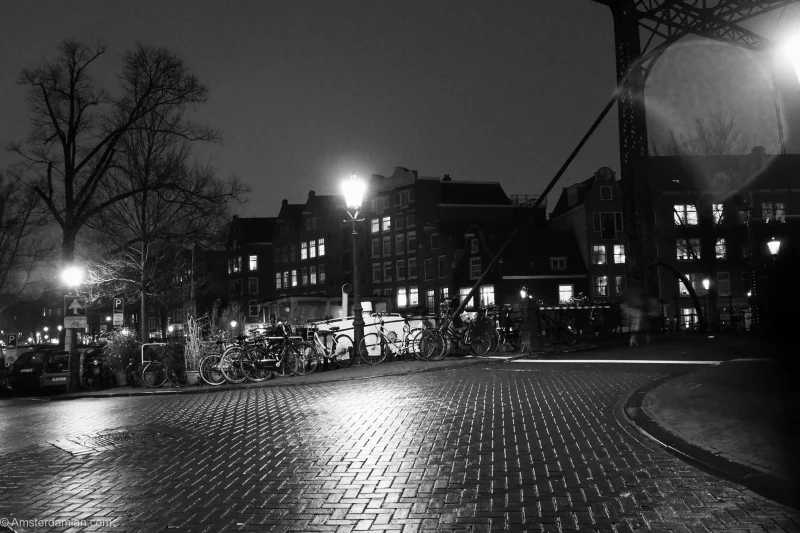
That Feeling of Looking Over Your Shoulder
It’s a familiar feeling for many in our community: the quickened pace through a poorly lit tunnel, the glance over the shoulder on a deserted street, the decision to take the long way around a dark park. For LGBTQ+ people, public space can often feel like a place of vulnerability. Now, the city of Amsterdam is launching a series of measures aimed at tackling that very feeling, prompted by the tragic murder of 17-year-old Lisa from Abcoude last August.
In a letter to the city council, Alderperson Melanie van der Horst outlined a multi-faceted approach that moves beyond simple surveillance, focusing instead on improving the design and social fabric of the city's public spaces, especially after dark.
More Than Just Cameras: A Focus on 'Social Safety'
A key part of the strategy is to bring more life to isolated areas. The city is actively seeking entrepreneurs to build and operate kiosks and pavilions at metro entrances, starting with the area around Bullewijk and Holendrecht stations in the Bijlmer. The idea is simple but effective: more people conducting normal business means more 'eyes on the street,' creating a natural deterrent to crime and a greater sense of security for passersby.
This isn't just about selling coffee; it's about transforming transitional spaces into community hubs. The plan for Holendrecht even suggests a sports-themed pavilion, aiming to activate the area and connect neighborhoods currently divided by the railway tracks.
Lighting the Way, Intelligently
Anyone who has cycled through an Amsterdam underpass knows the sensory whiplash: blindingly bright at night, but a dark, intimidating void during the day. The city is finally addressing this with a pilot program in Zuidoost.
Three new lighting profiles are being tested in tunnels around the Bullewijkpad and Hogevecht. The goal is to use indirect lighting that illuminates people and their surroundings more softly and clearly. This reduces glare at night while brightening the tunnels during the day, making it easier to see what—and who—is ahead. If successful, this approach could be rolled out across the city.
Designing from a New Perspective
The city explicitly states that Lisa's murder has put the 'female perspective' on public space on the agenda. This lens is directly applicable to the safety concerns of the LGBTQ+ community. It’s a perspective that understands that safety isn't just about preventing the worst-case scenario; it's about feeling comfortable enough to exist in public without fear.
This new approach is already being implemented in several projects:
- Spaklerweg: The bike path where Lisa was killed will be widened, lighting will be improved, and overgrown shrubbery will be cut back to eliminate hiding spots.
- Spieringhorn Park (Nieuw-West): The redesign includes plans for public toilets, better sightlines along bike paths, and features that encourage more activity and vibrancy.
- Flevopark (Oost): Better lighting is being installed on routes within the park and in the underpass leading to the Kramatweg.
- Plein ’40-’45 (Nieuw-West): The city is looking to redesign an area currently perceived as unsafe, targeting hidden corners and desolate spots where people feel vulnerable.
While these measures are a welcome and necessary response, they are just one piece of the puzzle. Creating a truly safe city requires not only well-lit paths and busy kiosks but also a continued fight against the intolerance and hatred that puts our community at risk in the first place. This is a start, but the work is far from over.