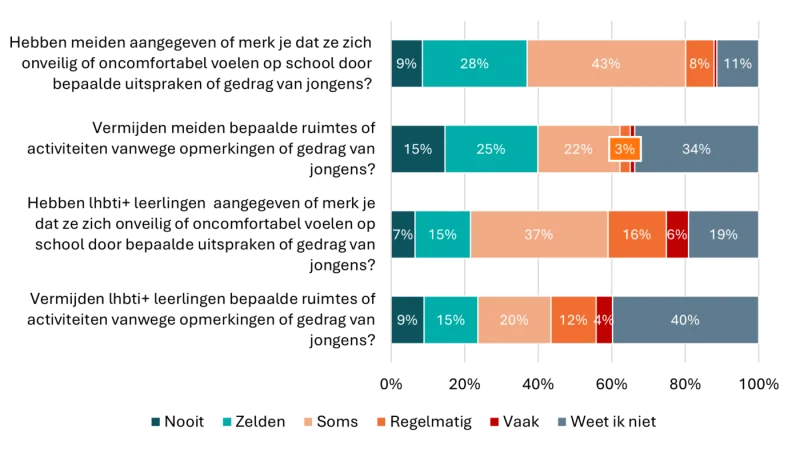
AMSTERDAM - A significant number of secondary school teachers in the Netherlands are witnessing a rise in misogynistic and anti-LGBTQ+ behaviour among male students, which they connect to the influence of the online 'manosphere'. According to a new study by Ipsos I&O, 59% of teachers report that LGBTQ+ students feel unsafe at times due to comments from boys, highlighting a growing concern for social safety in schools.
The research, commissioned by the School & Safety Foundation (Stichting School & Veiligheid) and the 'Worden Wie Je Bent' ('Becoming Who You Are') alliance, surveyed 246 secondary school teachers. It found that three in ten teachers believe boys are being "reasonably to strongly" influenced by online content promoting rigid and often toxic ideas about masculinity.
The 'Andrew Tate Effect' in the Classroom
This influence manifests in several ways, teachers reported. Nearly half (49%) of teachers hear misogynistic jokes or remarks directed at girls and LGBTQ+ students on a monthly basis or more frequently. This is often accompanied by the idolization of controversial influencers.
"Andrew Tate was very popular for a while," one teacher noted. Another reported a student saying that "a woman should just be available for him." Other common themes observed by educators include:
- Explicit references to influencers like Andrew Tate, who are seen as 'great thinkers'.
- Harmful ideologies suggesting women belong in the home or should be sexually available to men.
- A strong fixation on getting rich quickly through cryptocurrency and aggressive entrepreneurship.
A Growing Concern for School Safety
The study's findings paint a troubling picture of the school environment. Over half (56%) of the education professionals surveyed believe this type of behaviour has increased over the past four years. This has a direct impact on the well-being of other students.
Beyond the 59% who see LGBTQ+ students feeling unsafe, 52% of teachers observe the same for female students. The behaviour is also linked by teachers to a rise in verbal aggression (37%) and bullying (31%), creating a climate of disrespect and fear.
Teachers Feel Unprepared to Respond
While many teachers attempt to address the issue by engaging students in conversation, many also report feeling ill-equipped to handle the situation effectively. The report notes a sense of handelingsverlegenheid, or an uncertainty on how to act.
Key barriers for teachers include a lack of specific knowledge about the manosphere's talking points, a shortage of practical tools to counter the ideology, and the persistent pressures of time and high workloads. "You're always too late in a situation like this, and they know it," one teacher commented in the study.
Despite these challenges, four out of five teachers (79%) say they maintain a positive relationship with their male students. However, this rapport doesn't always translate into constructive dialogue, with 40% of teachers stating they rarely or never discuss related topics like relationships, sexuality, or masculinity. The findings suggest a clear need for more resources and training for educators to help them navigate these complex online influences and ensure schools can be a safe place for every student.