
A Wake-Up Call for Europe: The Fight Against HIV is Far From Over
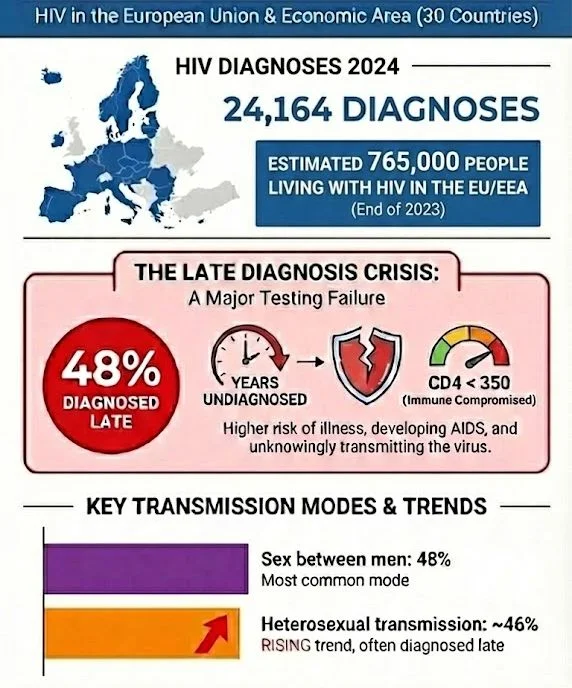
A stark new report from the European Centre for Disease Prevention and Control (ECDC) and the WHO Regional Office for Europe has unveiled a troubling reality: Europe is facing a 'hidden HIV crisis' driven by late diagnoses. The annual surveillance report, using data from 2024, reveals that a staggering 54% of people diagnosed with HIV last year were already in an advanced stage of infection. This means thousands have been living with the virus for years, unaware of their status, which impacts their long-term health and increases the risk of onward transmission.
While the overall number of new diagnoses in the European Union (EU/EEA) has decreased by 14.5% since 2015, this positive trend is dangerously undermined by the growing number of people living with undiagnosed HIV. The goal of ending AIDS as a public health threat by 2030 is now under serious threat.
The Critical Finding
More than one in two people (54%) diagnosed with HIV in 2024 received their diagnosis late, with a CD4 cell count below 350 cells/mm³. This indicates a severely weakened immune system and that they likely lived with HIV for several years before diagnosis.
A Shared Burden: Shifting Transmission Dynamics
The latest data challenges the perception that the epidemic is concentrated solely within one demographic. In 2024, sex between men accounted for 48% of all new diagnoses, while heterosexual contact followed closely at 46%. With these figures being practically identical, it is evident that the transmission landscape has shifted toward a near-equal split between these groups.
While heterosexual contact is the main mode of transmission in Eastern Europe, the report highlights that even in the West, a significant portion of these cases are among migrant populations, pointing to a need for more inclusive and accessible healthcare for everyone, regardless of their origin.
The PrEP Paradox and Persistent Stigma
The report paints a mixed picture of prevention efforts. While the uptake of Pre-Exposure Prophylaxis (PrEP) has increased, its potential is being hampered by unequal access. Shockingly, five countries in the region still have no formal PrEP guidelines, creating significant gaps in this vital prevention tool.
For us in the Netherlands, where PrEP is available through the GGD, this serves as a reminder that access is not universal across Europe. It also highlights the importance of continuing to advocate for low-barrier access and awareness campaigns.
Furthermore, stigma remains a formidable barrier to care. The report found that over 10% of people living with HIV have experienced discrimination in healthcare settings. This is unacceptable and directly discourages people from getting tested and seeking the care they need.
What Needs to Happen Now?
The ECDC has laid out clear recommendations to get Europe back on track. These are not just for policymakers, but for all of us:
- Close the Testing Gap: We need to normalize regular HIV testing. For anyone who is sexually active, knowing your status is a crucial part of self-care. Early diagnosis means early access to treatment, allowing people with HIV to live long, healthy lives and preventing further transmission (U=U, Undetectable = Untransmittable).
- Combat Stigma: We must intensify efforts to eliminate discrimination in healthcare and our communities. This starts with education and calling out prejudice wherever we see it.
- Holistic Care: For people living with HIV, care must go beyond just viral suppression. It needs to address mental health, age-related conditions, and overall quality of life.
This report is a crucial reminder that complacency is our enemy. The tools to end the HIV epidemic exist, but they are useless without accessible testing, equitable prevention, and a compassionate, stigma-free approach to care. It's time to close the gap and end this hidden crisis.
For more detailed information, you can access the full report from the ECDC.