
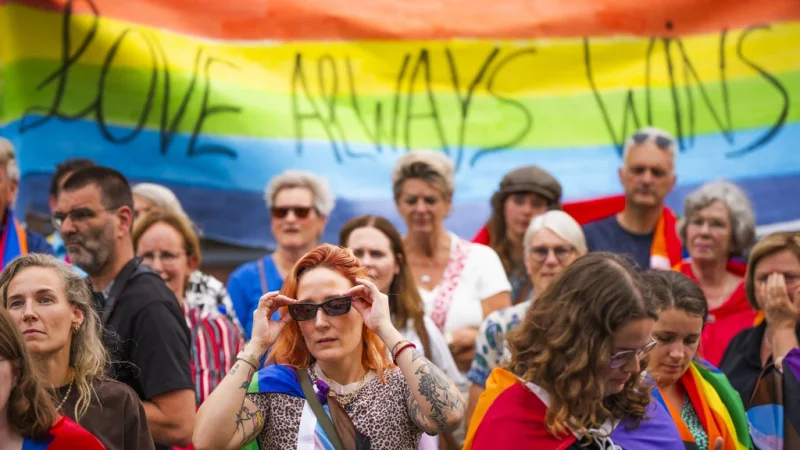
A crowd of around 100 people, armed with rainbow flags and a clear message of inclusion, gathered outside the Oldebroek town hall on Thursday evening, reports NOS. They were there to protest a decision by the municipality's new conservative coalition to dismantle local policies supporting the LGBTQI+ community.
The demonstration follows the installation of new aldermen from a coalition formed by the Christelijk Verbond Oldebroek (CVO), the Staatkundig Gereformeerde Partij (SGP), and a local party. Their coalition agreement explicitly states that the Pride flag, which they label as "un-Christian," will no longer be flown on International Coming Out Day. As we reported earlier, the agreement also signals an intent to withdraw other pro-LGBTQI+ measures.
A Step Backwards for Inclusion
This move makes Oldebroek the first municipality in the Netherlands to actively roll back existing policies designed to protect and support its queer residents. The policies were only established in 2021 following community discussions led by Mayor Tanja Haseloop-Amsing. The plan aimed to improve safety, resilience, and social acceptance for LGBTQI+ people through initiatives in schools and clubs, and the symbolic flying of the flag.
The peaceful protest, which included speakers and dancing, was organized by local resident and ally Kjeld Mooi. After being shocked by the coalition's plans, he used donations from 250 others to place an ad in the local paper calling for the gathering. "There are many people who feel unsafe, and it's important that the municipality stands up for them," Mooi told NOS.
Counter-Protest and Political Reaction
A counter-demonstration of about 70 people from right-wing groups also took place. An earlier call for a "peaceful conversation" by a local faith healer with tens of thousands of Instagram followers did not result in his supporters appearing at the town hall.
Tom de Nooijer, leader of the CVO, defended the policy change by calling the rainbow flag a "polarizing symbol." He argued that true safety comes from investing in police and ensuring that crime reports are taken seriously, rather than through symbolic gestures.
Mayor Haseloop-Amsing, who remains in her post and will now work with the new aldermen, acknowledged the democratic process. She commented that sometimes plans are made that are not "joyful" for everyone. The events in Oldebroek highlight a growing tension in some Dutch municipalities between established symbols of inclusion and new conservative political agendas.