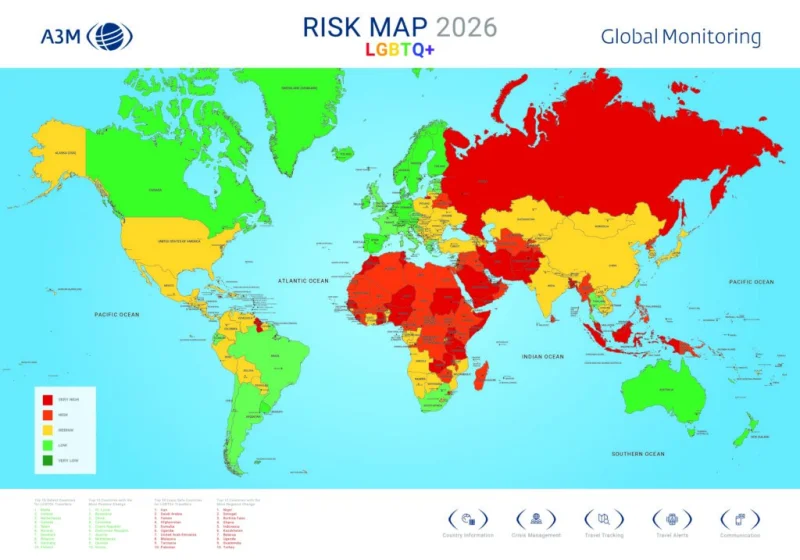
For LGBTQ+ individuals, planning a holiday or a business trip involves more than just booking flights and hotels; it requires a careful assessment of safety and acceptance. A newly released LGBTQ+ Risk Map for 2026 by travel safety specialist A3M Global Monitoring, in partnership with Diversity Tourism and ITB Berlin, provides a detailed overview of the global landscape for queer travelers.
The report highlights a world of stark contrasts. While some countries have made significant strides in protecting and recognizing LGBTQ+ rights, others have regressed, implementing new laws that criminalize and endanger the community. These legal shifts have a direct impact on the safety and well-being of travelers.
Signs of Progress: Where Rights are Advancing
The past year has seen positive legislative changes in several countries, creating safer and more welcoming environments. These developments often follow years of activism and legal challenges.
- Netherlands: Closer to home, the Netherlands strengthened protections by criminalizing conversion practices and officially recognizing discriminatory motives, including sexual orientation, as an aggravating factor in hate crimes.
- Canada: The 'Combatting Hate Act' was passed, allowing for harsher penalties for crimes motivated by hatred toward a person's sexual orientation or gender identity.
- Botswana: The country fully removed all remaining provisions criminalizing same-sex acts from its penal code, cementing a 2019 court ruling.
- China: The Supreme People's Court ruled that discrimination based on sexual orientation or gender identity is unlawful, requiring that such decisions be overturned and victims compensated.
- Colombia: Labour market reforms now explicitly prohibit discrimination against employees based on sexual orientation and gender identity.
- Czechia: The constitutional court struck down the requirement for gender-affirming surgery and sterilization for legal gender recognition.
- Austria: The rights of trans and non-binary people were strengthened, clarifying that medical intervention is not a prerequisite for changing one's legal gender.
- St. Lucia: The High Court decriminalized consensual same-sex acts between adults, ruling the old laws unconstitutional.
Setbacks and New Dangers: Countries with Increasing Risks
In contrast, a number of countries have introduced legislation that further marginalizes and endangers LGBTQ+ people, making travel to these regions significantly more hazardous.
- Uganda: Authorities have continued to enforce the severe Anti-Homosexuality Act of 2023, leading to arrests, detentions, and assaults against LGBTQ+ individuals.
- Ghana: A new bill, if signed into law, would intensify the criminalization of same-sex acts and also punish the promotion or support of any LGBTQ+ activities with prison sentences.
- Burkina Faso: For the first time, the country criminalized consensual same-sex acts, with penalties of up to five years in prison.
- Niger: A new penal code now explicitly criminalizes LGBTQ-related acts, with sentences of up to 20 years for involvement in same-sex marriages or organizations.
- Belarus: A new law now punishes the so-called "propaganda of homosexual relations" and information about "gender change" with fines and potential administrative detention.
- Indonesia: While not explicitly targeting same-sex acts, a new criminal code's provisions against extramarital sex raise serious concerns for LGBTQ+ people, who cannot legally marry.
- Senegal: The maximum penalty for consensual same-sex acts was increased from five to ten years in prison.
The full report and detailed findings from the A3M LGBTQ+ Travel Safety Survey are available for download, offering a valuable resource for anyone planning their next trip. Staying informed about both the legal framework and the social climate of a destination remains a critical step for safe and enjoyable travel.