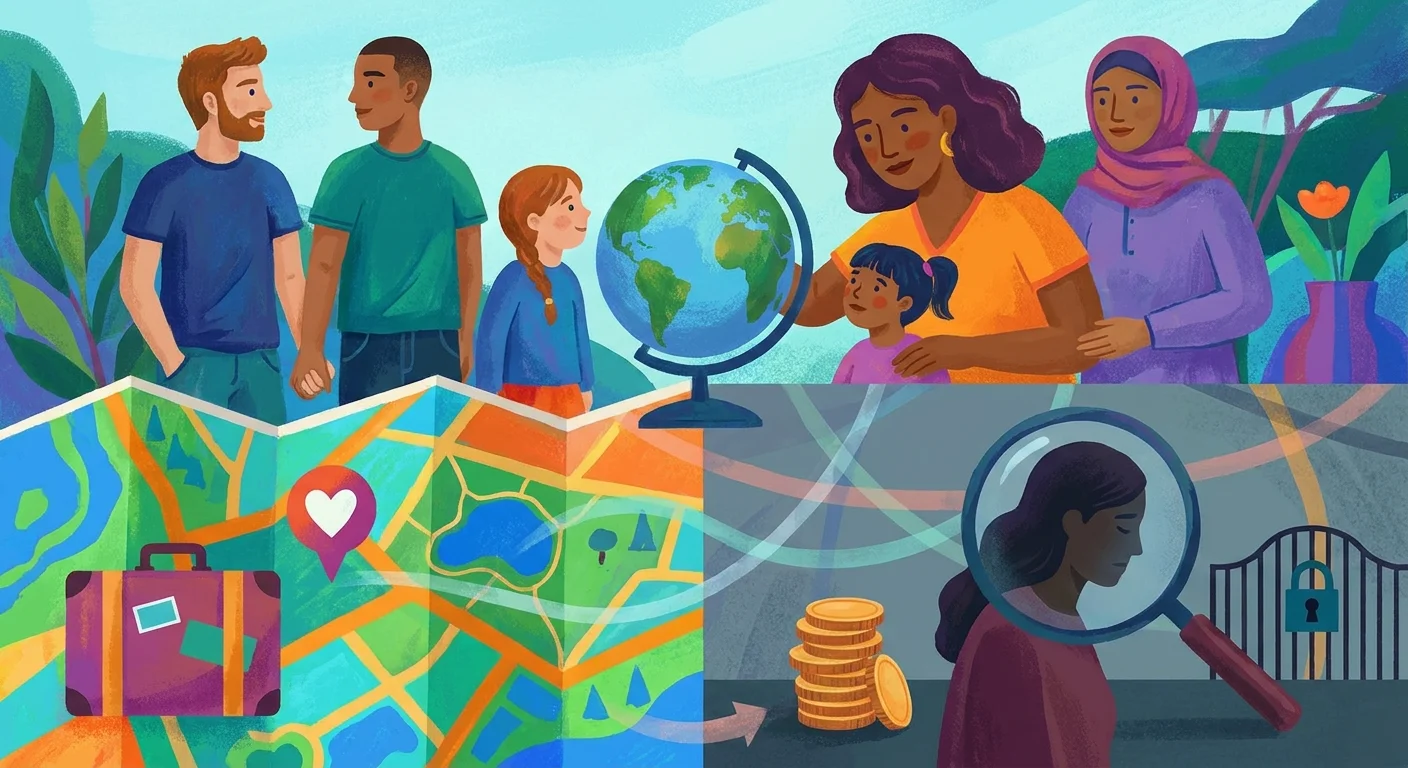
For many in the queer community, the path to parenthood can be complex and challenging. International commercial surrogacy has emerged as a seemingly viable, if expensive, route for some, particularly for gay male couples looking to build a family. However, a recent in-depth investigation by de Volkskrant has uncovered the disturbing reality of this industry, revealing a system of control and exploitation that many intended parents may be completely unaware of.
The report focuses on a growing phenomenon of 'flying surrogates'—women from former Soviet states like Ukraine, Kazakhstan, and Kyrgyzstan who are recruited by commercial agencies. For a fee ranging from €15,000 to €25,000, they travel to countries with lax regulations, such as Georgia, Armenia, or North Cyprus, to carry a pregnancy for foreign intended parents, including a growing number from the Netherlands.
A System of Control
The investigation, which involved interviews with 56 sources including surrogates, intended parents, and clinic staff, paints a grim picture. Once under contract, these women often lose nearly all control over their bodies and lives. A Dutch official familiar with international surrogacy contracts confirmed that severe restrictions are standard practice.
Surrogates reported being subjected to:
- Forced medical procedures: This includes the implantation of multiple embryos against their will to increase success rates, and being forced to undergo selective reduction (a partial abortion) if multiple embryos implant.
- Loss of decision-making: Decisions about terminating a pregnancy due to genetic abnormalities are made exclusively by the intended parents and doctors. 'The surrogate has no say in the matter,' states Polina Vlasenko, an anthropologist at the University of Oxford who has researched surrogacy in Georgia.
- Severe personal restrictions: Many women are forbidden from leaving the city where the IVF clinic is located. Contracts often include clauses prohibiting them from having sex, holding other paid jobs, and may even impose a curfew.
- Constant surveillance: To enforce these rules, women are monitored with cameras or subjected to unannounced house visits by agency staff. Many are required to live in shared housing with other surrogates for the duration of the pregnancy, far from their own homes and children.
Exploiting Vulnerability
The investigation highlights that this industry preys on the desperation of women in precarious situations. The surrogates interviewed were not making a simple lifestyle choice; they were driven by dire circumstances. One 27-year-old Ukrainian woman stated bluntly, 'If my child hadn't needed an operation, I would never have become a surrogate.' Others were trying to escape domestic violence or crippling debt.
This vulnerability is leveraged by the system. If a surrogate suffers a miscarriage or a premature birth, her payment is drastically reduced or withheld entirely, adding immense pressure to comply with every demand. A diplomat in Cyprus went so far as to describe the practice of flying in vulnerable women for pregnancies as 'a form of human trafficking'.
The Dutch Connection
In the Netherlands, actively 'promoting commercial surrogacy' is a criminal offense. The legally recognized path is altruistic surrogacy, where a surrogate (often a friend or family member) carries a pregnancy without financial gain beyond expense reimbursement. However, finding a suitable altruistic surrogate is difficult, pushing many intended parents to look abroad.
While the exact numbers are not tracked, family lawyers and government officials note a clear increase in Dutch parents pursuing this international route. The cost for intended parents in countries like Georgia or Armenia ranges from €50,000 to €100,000—a fraction of the up to €250,000 it can cost in the United States, but still a significant sum.
As more people in our community look to these international options to fulfill their dream of having a family, these findings present a difficult ethical crossroads. The deep and valid desire for a child is pitted against a global industry that, in some of its darkest corners, appears to trade on the desperation of the world's most vulnerable women.