
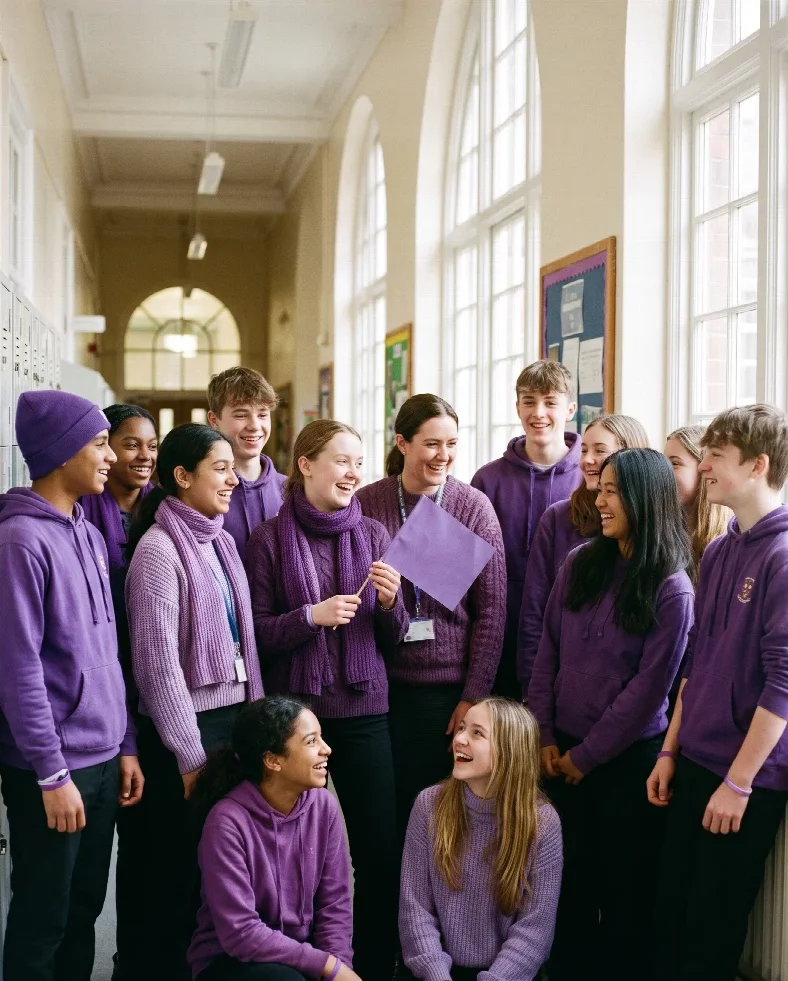
Today, Friday, October 9, schools and universities across the Netherlands will be awash in purple for the annual Paarse Vrijdag (Purple Friday). The day serves as a nationwide demonstration of solidarity with LGBTQ+ youth, encouraging everyone to wear purple to show that they support a safe and inclusive environment for all, regardless of sexual orientation or gender identity.
This year marks a significant shift for the long-standing tradition. For the first time, Purple Friday is being held on the second Friday of October, moving from its previous spot in mid-December. The change, initiated by organizers GSA Netwerk and COC Nederland, is a strategic one. December was often crowded with holidays and end-of-term activities, leaving little room for the day's core message. By moving it to October, Purple Friday now serves as a powerful kick-off to the school year, establishing a commitment to diversity and safety from the outset. The new date also aligns it more closely with other key dates, including Coming Out Day, which falls this Sunday, October 11.
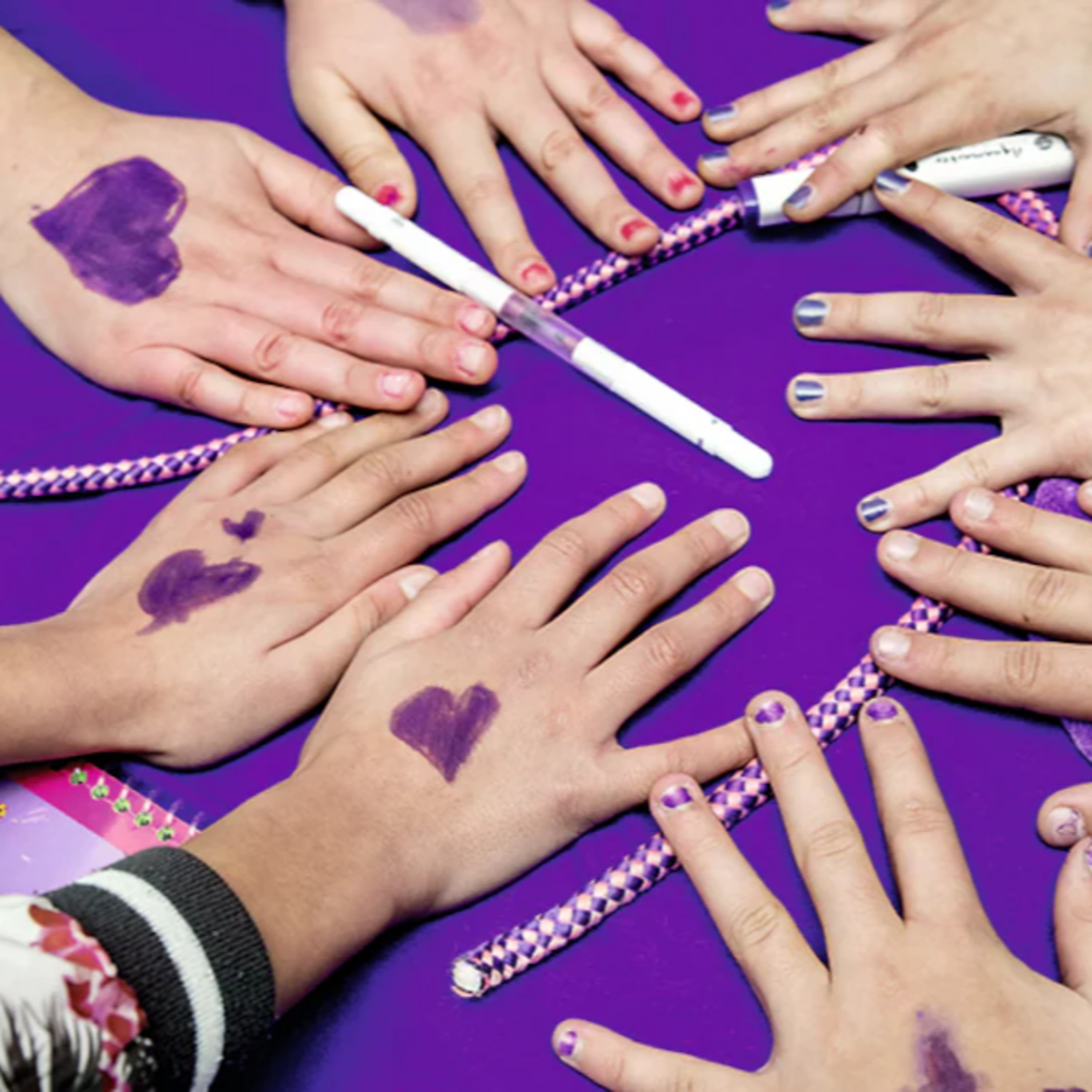

'Our Purple Friday': A Call for Collective Action
The theme for the 2026 campaign is "Onze Paarse Vrijdag" (Our Purple Friday), emphasizing that creating a welcoming environment is a shared responsibility. The campaign focuses on solidarity and allyship, highlighting that the work of fostering acceptance belongs to the entire school community—from students and teachers to administrators and support staff.
"Purple Friday is for each other, with each other, and together for the whole school," the campaign materials state. To support this, organizers are providing free Paarse Vrijdag packages to schools, filled with materials, videos, and activities designed to spark conversations and initiatives that last well beyond a single day.
This year's campaign was developed in close collaboration with Gender & Sexuality Alliances (GSAs), student-led groups that advocate for LGBTQ+ inclusion on campus. Their experiences and ideas are central to the new materials, ensuring the message is grounded in the reality of young queer people today.
A Necessary Stand in a Shifting Climate
The timing of this renewed focus on allyship is critical. A study by Utrecht University and the Trimbos Institute, covered by qMeet.nl last month, revealed a deeply concerning trend: a sharp decline in the acceptance of homosexuality among Dutch teenagers. Among boys aged 12 to 16, positive attitudes have nearly halved in four years, to just 22 percent, with researchers pointing to the influence of the 'manosphere' and a broader conservative shift.
These findings underscore the reality that for many LGBTQ+ youth, school remains a place of insecurity. Research has consistently shown that queer students are more likely to face bullying, exclusion, and negative remarks, which can lead to school avoidance and disengagement. Purple Friday acts as a visible and powerful counter-narrative to this hostility, showing students they are not alone.
More Than Just One Day
While the visual impact of a sea of purple is significant, organizers stress that the day is a means, not an end. The ultimate goal is to use the momentum of Purple Friday to build a culture of safety and respect that persists throughout the year.
Everyone is invited to participate today by wearing purple. Whether you're a student, a teacher, a parent, or simply an ally, taking part sends a clear message of support. It's an invitation to act: to make space, protect space, and take up space, for yourself and for others.
For more information or to see school materials, you can visit the official website at paarsevrijdag.nl.