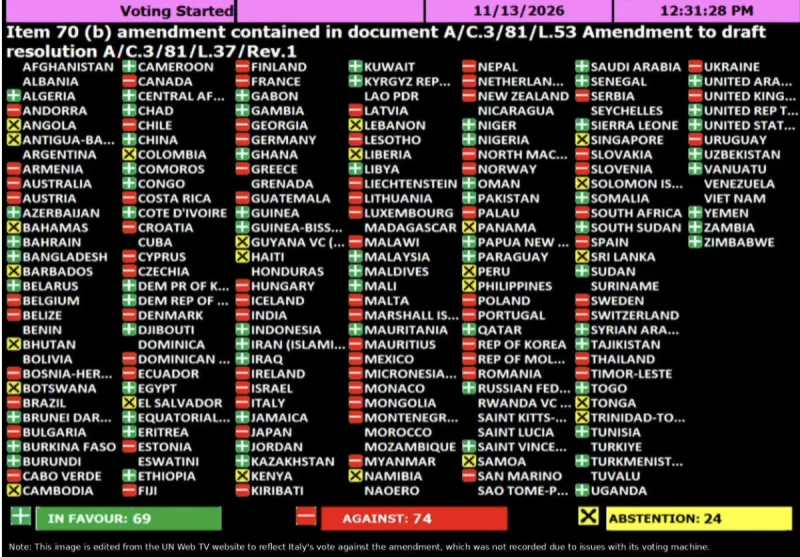
An attempt to strip specific protections for LGBTQ+ people from a United Nations resolution against unlawful killings has been narrowly defeated in a key committee vote. The proposal, led by Egypt, was supported by 69 countries, including a notable and concerning vote from the United States.
The amendment to remove references to "sexual orientation and gender identity" from the text failed by a slim margin, with 74 countries voting to keep the language and 69 voting for its removal. The Netherlands, along with its European Union partners, voted to maintain the protections, reaffirming a commitment to universal human rights. However, the close result highlights a shrinking base of support for LGBTQ+ rights on the global stage.
A Worrying Shift in US Policy
The vote by the United States marks a significant reversal of its previous foreign policy stance. It is the first time the US has supported removing this language from the biennial resolution on extrajudicial executions. This follows a similar move in December of last year, when the US also backed an amendment to remove LGBTQ+ protections from a UN resolution on disability rights, signaling a clear pattern.
Human rights advocates point to a troubling trend. In 2024, a similar amendment was defeated more comfortably by 78 votes to 47. The latest vote shows that international opposition to including explicit protections for queer individuals is growing.
Life-or-Death Language
The resolution calls on all states to investigate and prosecute unlawful killings, particularly of vulnerable groups. Since 2002, this has explicitly included people targeted because of their sexual orientation, with gender identity added in 2012.
A recent report by Outright International underscores the real-world importance of this language. The organization documented at least 233 killings of LGBTQ+ people worldwide between early 2020 and mid-2026, noting that this is likely a fraction of the true number.
"Behind every case in our report is a grieving family and community, often still waiting for an investigation or justice," said Ohotuowo Ogbeche, a researcher at Outright International. "This resolution is a source of hope for them."