For most of us, a layover at Schiphol is a brief, boring pause. A chance to grab an overpriced coffee before the next leg of a journey. But nearly five years ago, for Youssef Aboelmagd, that layover was everything. It was a calculated, life-or-death gamble that marked the end of one life and the beginning of another.
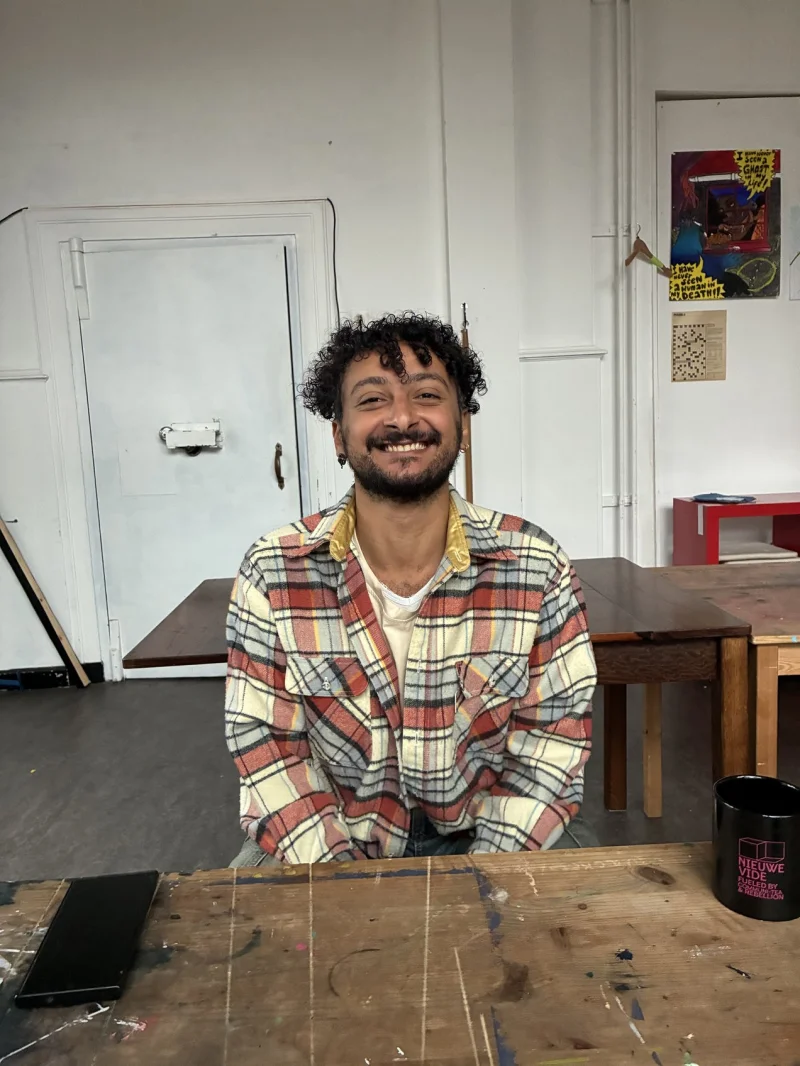
Today, Youssef is a central figure in Haarlem’s queer scene, working as both a community builder for the arts space Nieuwe Vide and a community outreach coordinator for the municipality. He’s the person creating connections, organizing events, and advising the city on how to better serve its LGBTQ+ residents. But his journey here was anything but straightforward.
A Calculated Escape
Back in Alexandria, Egypt, Youssef was a recent civil engineering graduate with no future. As a queer man, he was considered “vogelvrij”—fair game, with no legal protection. On top of that, mandatory military service loomed. “I felt nothing for it,” he explains. “I did everything I could to be rejected.”
He succeeded, but that was only the first hurdle. He needed to get out of Egypt, fast. With his savings from his student years, he booked the only escape route he could find: a flight to Brazil. The crucial detail? It had a stopover in Amsterdam. During that stop, he walked up to the Koninklijke Marechaussee and declared his intention to seek asylum in the Netherlands.
The relief of landing on safe ground was short-lived. Youssef was sent to an asylum seekers' center (AZC) in Den Helder, where the conditions were, in his words, “terrible.” He had escaped one closet only to be forced back into another. “Even there, I couldn't be openly queer,” he recalls. The experience gave him a stark insight into the vulnerability of LGBTQ+ people within the asylum system—a system that is supposed to offer protection.
From Art Space to Community Hub
After a relatively quick asylum process, Youssef received his residence permit and began to build a new life. He now channels his experiences into his dual roles in Haarlem, with a special focus on creating the welcoming spaces he never had. His home base is Nieuwe Vide, an arts center that’s much more than just a gallery.
“It’s a place with 35 artist studios, exhibitions, and a library,” Youssef says, “but it’s also a place for community.” He warmly invites queer newcomers to join the regular activities, which are open to everyone and offer a low-key way to meet people and practice Dutch:
- Taalcafé (Language Cafe): Twice a month on Tuesdays from 15:00 to 16:30.
- Soep op Woensdag (Soup Wednesday): Every Wednesday at 13:00. Grab a bowl of soup with others for just €2.50.
- Community Café: Every Thursday.
“It’s a great opportunity to meet artists, local residents, and other visitors,” he adds. If you’re interested in learning more or just want to connect, you can reach out to him directly at youssef@nieuwevide.nl.
A Challenge to Our Community
Youssef’s work isn’t just about organizing cozy get-togethers. He’s also an advocate, using his platform to push for systemic change. He’s involved with ‘Live your story,’ an organization running queer-themed theatre workshops in schools, and advises the Haarlem municipality as part of its Rainbow Coalition.
But his most urgent message is directed at the Dutch queer community and the institutions that are supposed to help. “I’ve seen firsthand that it’s not safe for queer people in an AZC,” he states plainly. “Organizations like the COC should be doing more for this group, like organizing trips or other activities. Contact between queer newcomers and Dutch people is extremely important.”
He’s also trying to raise awareness among the staff who work directly with asylum seekers. “I want to give workshops to COA employees to make them more aware of the position of queer people in the centers.” The response so far? “The COA is not open to it.”
Youssef’s story is a powerful reminder that seeking asylum is not the end of the struggle. It’s the start of a new one. His work in Haarlem is building bridges, but his challenge to the rest of us is clear: we need to do more to ensure that everyone who comes here seeking safety finds not just a refuge, but a real community.