A Glimmer of Progress in a Challenging Landscape
After years of stagnation and hostility under the previous government, Poland is taking a tentative step towards recognizing same-sex couples. The new pro-European government, led by Prime Minister Donald Tusk, has approved a draft bill to introduce 'cohabitation contracts', a move aimed at providing basic legal protections for unmarried couples, including those of the same sex.
For a country that remains one of the European Union's most restrictive on LGBTQ+ rights, any forward movement is notable. However, the proposal has been met with a mix of cautious relief and profound disappointment from the very community it aims to help.
What's in the Bill?
The proposed law, championed by Equality Minister Katarzyna Kotula, would allow any two people, regardless of gender, to formalize their relationship at a notary's office. This contract would grant a number of crucial, practical rights that are currently denied to same-sex partners in Poland. These include:
- The right to access a partner's medical information and make healthcare decisions.
- Inclusion in a partner's health insurance.
- The right to take leave from work to care for a sick partner.
- Inheritance and housing rights.
- The ability to file joint tax returns and receive tax exemptions.
A Calculated Compromise, Not a Celebration
While these provisions would offer a tangible improvement in security for many couples, the bill's scope is deliberately limited. It stops far short of legalizing same-sex marriage, which remains constitutionally banned, and doesn't even create a formal registered partnership system as seen in the Netherlands and other EU countries.
This watered-down approach is a direct result of Poland's complex political reality. Tusk's government must contend with conservative elements within its own coalition and the constant threat of a presidential veto from Karol Nawrocki, who is aligned with the previous nationalist Law and Justice (PiS) party. The bill is designed to be the bare minimum that might survive this political minefield.
"This is not a moment of triumph... It's a meagre response to great expectations – and the only one that, in the current situation, can offer any sense of security."
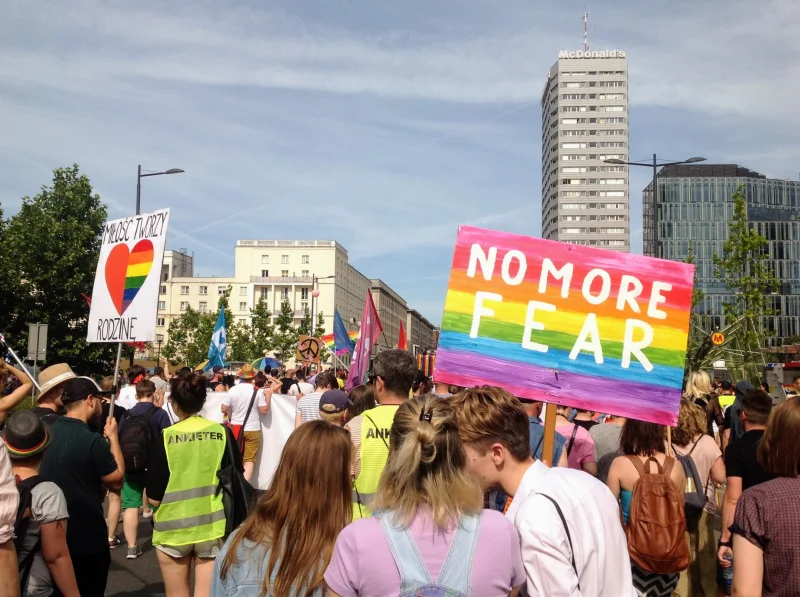
LGBTQ+ advocacy groups have voiced their frustration. The Campaign Against Homophobia, a leading Polish organization, stated that while the bill is a necessary first step, it is far from the equality they have been fighting for. Their statement highlights the painful reality: after two years of waiting for the Tusk government to act on its promises, this compromised bill is the only proposal that could gain consensus within the ruling coalition.
For the LGBTQ+ community in the Netherlands and across Europe, Poland's struggle is a stark reminder of how uneven progress is within the EU. While this bill may provide some essential protections, the fight for full equality and recognition in Poland is clearly far from over.