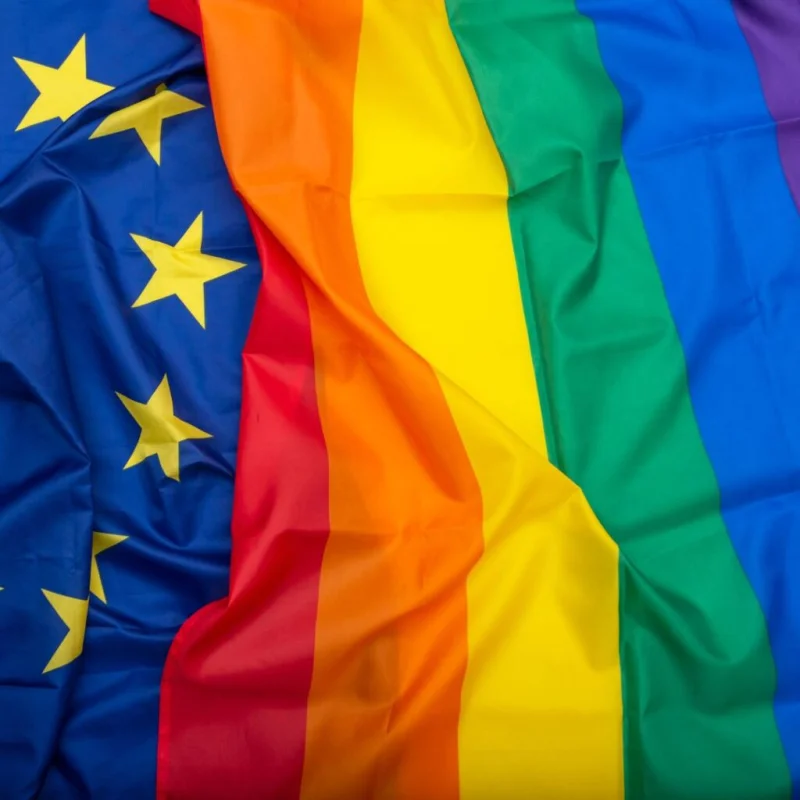
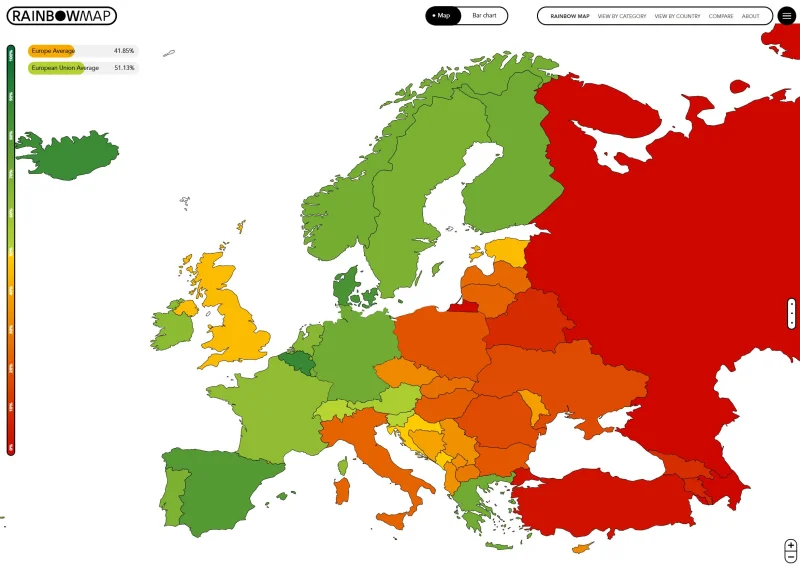
A new report from ILGA-Europe details a sharp escalation in anti-LGBTQ+ measures, moving from scapegoating to formal prosecution in several European and Central Asian nations.
BRUSSELS – The human rights situation for LGBTI people across Europe and Central Asia has reached a concerning new low, marked by a sharp rise in laws that criminalize and suppress communities, according to the latest Annual Review published by ILGA-Europe. The report, released on February 26, documents a clear shift from political rhetoric to formal state policy, where tactics once used to target the LGBTI community are now part of a broader, authoritarian approach to governance.
"Over the past ten years, ILGA-Europe’s Annual Reviews have traced a pattern that is familiar from history: propaganda, scapegoating, and disinformation escalate into the denial of basic rights, which has now translated into laws that criminalise and silence," said Katrin Hugendubel, Advocacy Director at ILGA-Europe.
From Propaganda to Prosecution
The review highlights an alarming trend of 'recriminalization', where governments are increasingly using legal and administrative powers to silence and prosecute LGBTI individuals and organizations. This represents a significant hardening of tactics compared to previous years.
Key examples from the past year include:
- Russia: Authorities have intensified their crackdown after designating the “international LGBT movement” as an extremist organization. This has led to police raids on venues, prosecutions of individuals for displaying rainbow symbols, and the creation of a database of LGBTI people.
- Hungary: Within the EU, Pride organizers in Budapest and Pécs have faced investigations and indictments, a clear move to intimidate public expressions of community.
- Belarus: New amendments now classify “propaganda” of homosexuality and gender reassignment as harmful to children, setting the stage for criminal sanctions.
- Kyrgyzstan: A draft bill is under consideration that would introduce prison sentences for disseminating information that creates a “positive attitude” toward non-traditional sexual orientations.
- Turkey: Activists and journalists face mounting legal pressure. The Editor-in-Chief of the LGBTI news portal KaosGL.org was arrested, and other activists have been charged under various restrictive laws.
The Erasure of Trans and Gender-Diverse People
The report also identifies a coordinated effort to erase the legal existence of trans and gender-diverse people. A growing number of policies are being introduced based on a strict interpretation of “biological sex” assigned at birth, effectively denying trans people legal recognition, documentation, and access to healthcare.
This trend is visible across the continent. In the United Kingdom, the Supreme Court interpreted “woman” and “sex” as referring to biological sex at birth. In Hungary, constitutional amendments now define sex as an immutable biological trait. Meanwhile, lawmakers in Georgia have advanced changes to remove references to “gender” and “gender identity” from equality legislation.
This erasure often begins in schools, with Hungary's 'Child Protection Act' restricting content that is deemed to “promote deviation” from sex assigned at birth. Similar political pushback against equality and diversity education has been noted in Italy, France, and Germany.
Pushing Back Against the Tide
Despite the bleak outlook, the report emphasizes that this decline is not inevitable. In some countries, democratic institutions and civil society are successfully resisting the anti-rights movement.
In Poland, the final remaining “LGBTI-free zone” resolution was repealed in April, marking a symbolic end to a chapter of institutional stigmatization. In Spain, several regional parliaments successfully pushed back against attempts by the far-right party, Vox, to dismantle existing equality frameworks.
These developments show that decisive political will can uphold and defend fundamental rights. However, ILGA-Europe concludes with a warning. "The human rights safeguards established after the Second World War are now in serious jeopardy," Hugendubel stated. "Without decisive action, we face a rapid and dangerous democratic collapse."
For communities in the Netherlands, the report serves as a stark reminder of the fragility of hard-won rights and the importance of solidarity with activists facing growing suppression across Europe.