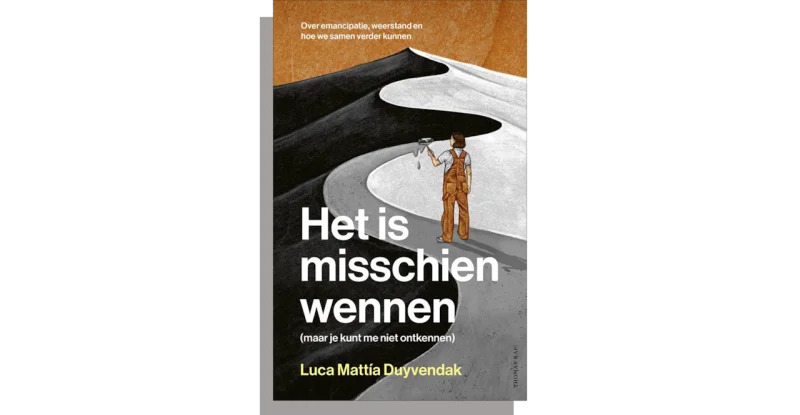
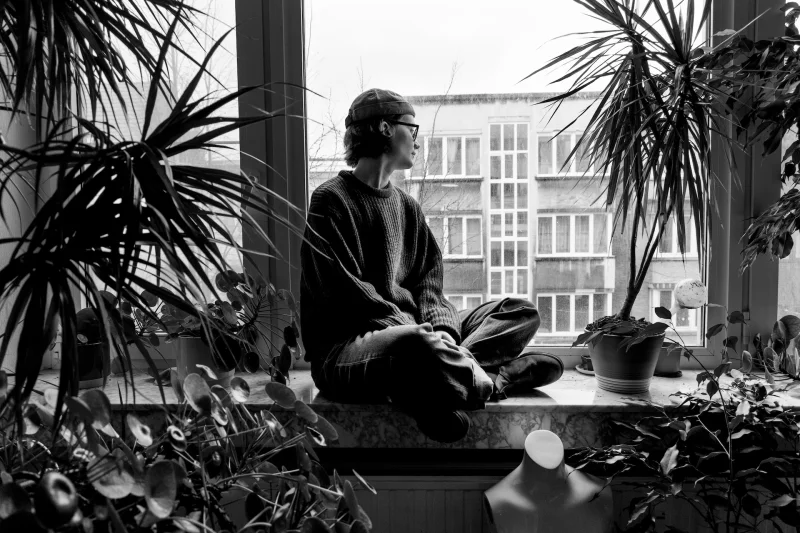
The book serves as a multi-faceted response to a climate of increasing hostility. It is part personal memoir of their own gender journey, part a sharp rebuttal to common transphobic arguments, and part a vulnerable account of navigating gender dysphoria.
"I wondered: why do people care what I do with my own body, or what letter is in my passport?" Duyvendak, 28, explained in an interview in the Ducth daily Trouw. This question became a driving force behind the book.
A Journey Through Doubt and Dysphoria
Duyvendak, who uses they/them pronouns (die/diens in Dutch), came out publicly as non-binary in 2021. However, their journey began long before, marked by a persistent feeling of being a 'fake woman' and not a 'complete person'. This profound discomfort with one's assigned gender at birth is known as gender dysphoria.
"It's like you're always giving the wrong answers on an exam, even though you studied really hard for it," they said, describing the feeling. "For a long time, I thought I just had low self-esteem. But when I started wearing different clothes, something started to flow. I began to realize: my battery isn't broken, it was just in backwards."
The book candidly explores the uncertainty and self-questioning that is often part of the process, a nuance frequently absent from public narratives. "Trans and non-binary people often feel forced to be assertive and on the barricades because a portion of the population denies your right to exist," Duyvendak noted. "You don't have much freedom to be visibly doubtful, because that doubt can be seen as, 'see, you don't know, you're just confused'."
From 'Wrong Costume' to Self-Acceptance
The physical manifestation of dysphoria was a significant struggle. Duyvendak describes their body as feeling like the wrong 'costume' and simple acts like showering as a source of panic. "It feels a bit claustrophobic, like you're trapped in an elevator," they shared.
A turning point came last year with a breast removal surgery, a procedure that has significantly reduced their dysphoria. "Everything is much less of a struggle now," they said. "I feel closer to myself and closer to others, because a part of the alienation has disappeared."
This newfound peace also fueled their desire to counter the negativity they had spent so much time observing from far-right groups and anti-gender activists. "I started to wonder: why do other people think I'm a danger?"
Addressing the Arguments
A core part of 'Het is misschien wennen' is its direct engagement with common anti-trans talking points. Duyvendak methodically addresses arguments they encountered during their time spent reading online hate forums.
- On the 'Apache Helicopter' Joke: Duyvendak acknowledges the intent to invalidate non-binary identities by comparing them to inanimate objects. They trace this back to a rigid, binary worldview. "I understand where it comes from; we were raised with this binary... The very first time I heard about non-binary, I also thought: but that's not possible, right?"
- On Transitioning to Escape Misogyny: They also tackle the theory, sometimes voiced by older feminists, that assigned-female-at-birth individuals transition to escape sexism. Duyvendak counters this by pointing out that trans people often face more, not less, hostility and violence. "If you only focus on those social mechanisms, you deny that there is an intrinsic experience of your identity."
Duyvendak hopes to bridge the gap with feminist movements, noting that the concept of 'gender' as a social construct was central to the second feminist wave. "Now 'gender' has a slightly different meaning: it's also about your inner truth. But the two don't have to be in conflict," they argue. "I hope we can continue on the same path. That everyone has as much freedom as possible to be who they are, and also receives recognition for who they are."
Ultimately, the book is a call for self-determination and a testament to a journey from internal conflict to a more integrated self. It stands as both a personal story and a public resource for a community navigating an often-difficult landscape.