For years, Dobrick navigated his promising career by carefully concealing his personal life, a process he described as an exhausting "hide-and-seek game." He spoke of the constant vigilance required to maintain his secret, from meticulously cropping his boyfriend out of holiday photos posted online to using deliberately vague language when colleagues asked if he had moved to a new city with a girlfriend. "There were a thousand everyday situations in which I had to deny a part of myself," he explained. "It was frustrating. Very frustrating."
The decision to come out was driven by a desire for authenticity and the ambition to coach at the highest levels of the sport. Dobrick questioned whether football was finally ready for an openly gay coach, a reality already commonplace in politics, arts, and culture. A key influence was a piece of advice from renowned manager Jürgen Klopp, who once told a group of young coaches: "You can be who you want as a coach, but you have to stand for something. You have to be yourself." For Dobrick, that message became a professional motto and a catalyst for change.
Dobrick offered a candid assessment of the sport's culture, stating that in professional football, "gays are still considered aliens." He pointed to the casual homophobia embedded in the game's vocabulary, where a weak pass is a "gay pass" and a player complaining about a foul might be called a homophobic slur. While he hopes much of this language is used without conscious discriminatory intent, he acknowledges it reinforces a distorted and negative image of gay men.
Adding a unique dimension to his story, Dobrick was born without his left forearm. He believes that the resilience he developed from a young age while dealing with a visible disability—enduring bullying and people underestimating his abilities—has prepared him for this moment. "My disability I can't hide, and my being gay I no longer want to hide," he stated, connecting the two core parts of his identity.
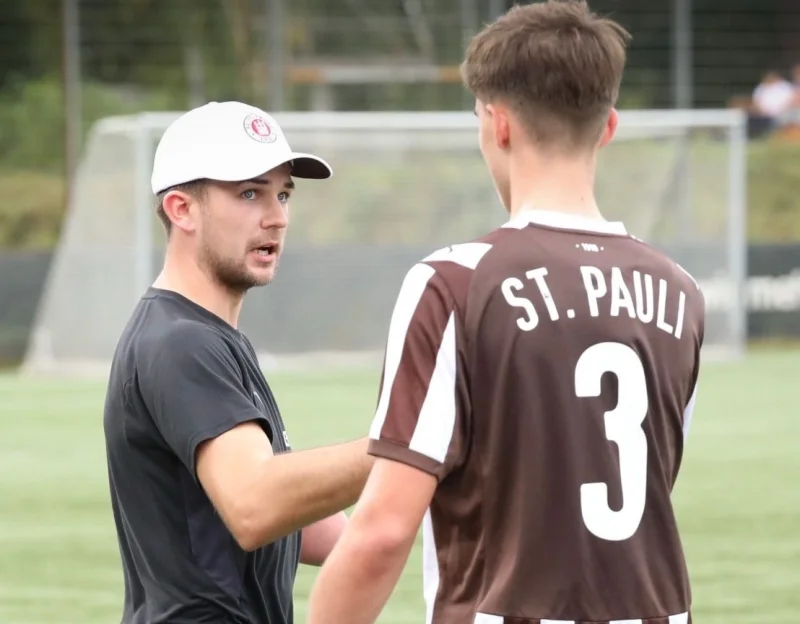
His choice of employer, FC St. Pauli, is notable. The Hamburg-based club is well-known throughout Europe for its progressive, anti-fascist stance and vocal support for minority communities. While this environment is more supportive than most, Dobrick is still aware of the potential risks, including a possible loss of authority with players from cultures where homosexuality is condemned.
Looking ahead, Dobrick is clear about his priorities. He expressed a desire to avoid becoming a "loudspeaker or a mascot for a community," insisting that his identity should be secondary to his work. "I am a coach who happens to be gay, and I want to be measured by professional criteria alone, by points and goals. Just like all other coaches."
The timing of his announcement was also deeply personal. Ten years ago, as a high school student, he wrote a letter to his future self, vowing that he would be living openly by the time he was allowed to read it again. That ten-year mark arrived this month. "It's time," he said, "that I fulfill the promise I made to myself back then."