Read the full overview article
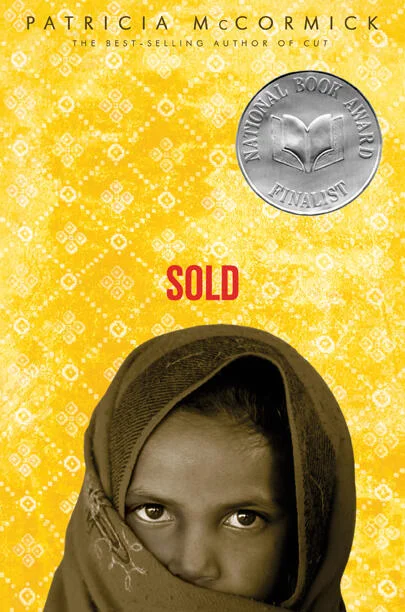
Sold' tells the story of Lakshmi, a thirteen-year-old girl from a remote village in Nepal. Deceived by the promise of a job in the city to support her impoverished family, she is instead trafficked to India and sold to a brothel called "Happiness House."
Written in a series of stark, poetic vignettes, the novel chronicles Lakshmi's harrowing experience, her loss of innocence, and the small acts of friendship and resilience that allow her to survive. It's a difficult read, but one that gives a powerful voice to the voiceless, based on McCormick's own interviews with survivors in Nepal and India.
The Push for Erasure
Despite its critical acclaim and numerous awards, 'Sold' is consistently challenged by parent groups and school boards in the US. The reasons cited for its removal often revolve around its mature themes: sexual abuse, rape, and prostitution. The argument is that such topics are inappropriate for young readers.
However, educators and librarians argue that this is precisely why the book is essential. They contend that it provides a safe, guided way for young people to learn about a harsh global reality. As one supporter at Williston High School in North Dakota stated during a challenge:
“The message of strength and hope is important to teen girls who need to know that whatever they are facing, whether as bad as rape and continued sexual abuse or not, can be survived and that help is available. That this book was challenged is ridiculous.”
This sentiment was echoed by the Buncombe County Board of Education in North Carolina, which called the novel a “touching and compelling read that offered a historical and cultural perspective on a relevant global issue.”
A Familiar Pattern
For the queer community, the logic behind banning 'Sold' is troublingly familiar. The same arguments about 'age-appropriateness' and 'protecting children' from difficult sexual topics are frequently weaponized to remove books with LGBTQ+ characters and themes from libraries. The fight to keep 'Sold' on the shelves is part of the same broader struggle against a form of censorship that seeks to present a sanitized, incomplete version of the world.
Author Patricia McCormick has been a vocal opponent of these bans. In a statement, she directly addressed the harm of such actions:
“To ban this book is to erase the young people around the world who are currently enslaved... But, perhaps most important, to ban this book is to take away a lifeline for readers who are experiencing abuse. These kids know what adults often don’t. Books aren’t the problem; they are part of the solution.”
The debate over 'Sold' is not just about a single novel. It's a microcosm of a larger conflict over whose stories are deemed worthy of being told, and who has the right to access them. As efforts to control school curricula and library collections intensify, stories of survival—whether from a brothel in India or from a closeted teen in rural America—are increasingly at risk of being silenced.