Organized Groups, Not Parents, Driving Most US Book Ban Attempts
The American Library Association (ALA) has released its annual list of the Top 10 Most Challenged Books, providing a stark overview of the state of literary censorship in United States public and school libraries. The 2024 data indicates a continuing trend where books by and about LGBTQ+ people and people of color are disproportionately targeted for removal.
A key finding in this year's report is the source of these challenges. According to the ALA, 72% of demands to censor books were initiated by organized pressure groups and government entities. This represents a significant shift from historical trends, where challenges were more commonly brought by individual parents, who in 2024 accounted for only 16% of complaints.
In total, the ALA documented 821 attempts to censor library materials in 2024, targeting 2,452 unique titles. The most common reasons cited for removal were the inclusion of LGBTQIA+ themes, which challengers often falsely claimed were sexually explicit, and content related to race and social justice.
While these statistics are specific to the United States, they reflect a broader, politically motivated push against inclusive literature. For communities in the Netherlands, it serves as a monitor of cultural currents that can influence conversations about education and representation globally.
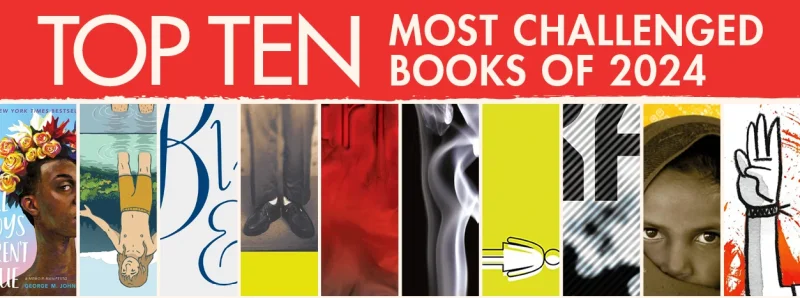
The Top 10 Most Challenged Books of 2024
In the next 10 days qMeet NL will present all of the listed 10 books individually
The list is populated with critically acclaimed and popular books, many of which have become central to the conversation around the freedom to read.
1. All Boys Aren't Blue by George M. Johnson
- Challenged for: Its exploration of growing up Black and queer, with complaints citing LGBTQIA+ content and claiming it is sexually explicit.
2. Gender Queer: A Memoir by Maia Kobabe
- Challenged for: Its depiction of a nonbinary author's journey of self-discovery, targeted for LGBTQIA+ content and illustrations that were labeled as sexually explicit.
3. (TIE) The Bluest Eye by Toni Morrison
- Challenged for: Depictions of sexual assault and incest, with claims of being sexually explicit and containing themes of equity and social justice.
3. (TIE) The Perks of Being a Wallflower by Stephen Chbosky
- Challenged for: LGBTQIA+ content, depictions of sexual assault and drug use, and profanity.
5. Tricks by Ellen Hopkins
- Challenged for: Claims of being sexually explicit in its portrayal of teenage prostitution.
6. (TIE) Looking for Alaska by John Green
- Challenged for: A scene that challengers claimed was sexually explicit.
6. (TIE) Me and Earl and the Dying Girl by Jesse Andrews
- Challenged for: Claims of being sexually explicit and containing profanity.
8. (TIE) Crank by Ellen Hopkins
- Challenged for: Depictions of drug use and for being allegedly sexually explicit.
8. (TIE) Sold by Patricia McCormick
- Challenged for: Depictions of sexual assault and claims of being sexually explicit.
10. Flamer by Mike Curato
- Challenged for: Its story about a young boy navigating bullying and his queer identity, with complaints citing LGBTQIA+ content and claiming it is sexually explicit.
The ALA's Office for Intellectual Freedom compiles this list annually to raise public awareness about censorship in libraries and to support the right of individuals to choose what they read. The data is based on confidential reports from library professionals and community members, as well as media coverage from across the US.