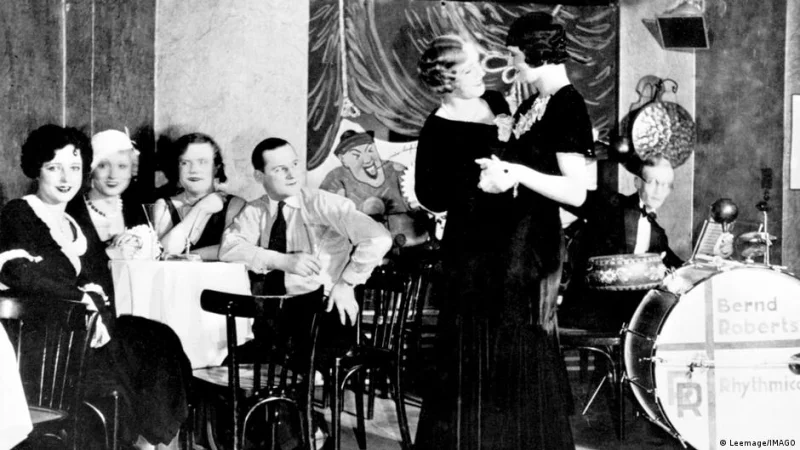
This article is based on reporting by Deutsche Welle (DW). As DW notes, "Berlin was certainly one of the most liberal cities in the world" at the time, according to Birgit Bosold of Berlin's Gay Museum. You can read the original report here.
Long before its modern reputation as a queer capital, Berlin experienced a period of extraordinary LGBTQ+ visibility and freedom during the 1920s. In the turbulent years of Germany's Weimar Republic, the city became a global hub for queer culture, activism, and groundbreaking scientific research, all while a law criminalizing homosexuality remained on the books.
The Scientific Pioneer: Magnus Hirschfeld
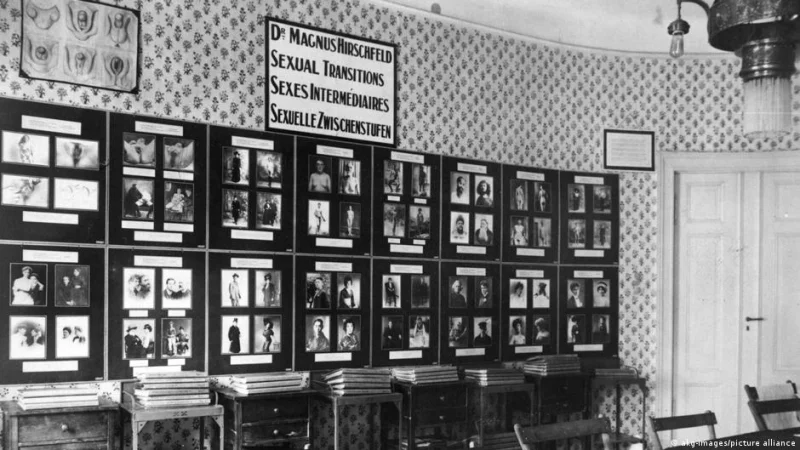
At the heart of this movement was Dr. Magnus Hirschfeld, a physician and sexologist whose work was decades ahead of its time. In 1897, he founded the Scientific-Humanitarian Committee, widely considered the world's first organization dedicated to advocating for gay rights. Its primary mission was to abolish Paragraph 175, the German law that criminalized sexual acts between men.
Hirschfeld's most significant contribution was the 1919 establishment of the Institute for Sexual Science. This was not merely a clinic but a comprehensive center for research, public education, and counseling. It housed an extensive library, offered support to queer and gender-nonconforming people, and pioneered early understandings of what is now known as transgender identity, challenging the rigid gender binaries of the era.
A City Alive with Queer Culture
This atmosphere of scientific inquiry and activism fostered a vibrant social scene. The Schöneberg district, still a queer hub today, was the epicenter of this world. Venues like the Eldorado nightclub became famous across Europe for their lavish parties and drag performances, attracting artists like Marlene Dietrich and inspiring writers such as Christopher Isherwood, whose "The Berlin Stories" captured the city's bohemian spirit. The lesbian community found a home at venues like the Dorian Gray café, which hosted literary readings and costume balls.
The End of an Era
This period of relative tolerance was brought to a violent and systematic end with the Nazi rise to power in 1933. Queer culture was one of the new regime's first targets. On May 6, 1933, Nazi-aligned student groups stormed Hirschfeld's Institute for Sexual Science. They looted its irreplaceable archives and library, and four days later, on May 10, threw its books and research onto the pyres of the notorious Berlin book burnings.
The Nazis also aggressively enforced and strengthened Paragraph 175, leading to the arrest of tens of thousands of gay men. An estimated 5,000 to 15,000 were sent to concentration camps, where they were marked with a pink triangle, according to the United States Holocaust Memorial Museum.
Legacy and Remembrance
The destruction was so thorough that for decades, this pioneering chapter of queer history was largely forgotten. Today, a commemorative plaque marks the former site of Hirschfeld's institute, and Berlin has once again become a center for the community it once nurtured. The story of the Weimar era serves as a vital record of early queer resilience and a stark reminder of how quickly progress can be undone.