MELBOURNE – An Australian federal court has ruled that a lower tribunal made legal errors when it rejected a request from a lesbian-only group to exclude transgender women from its events. The decision does not grant the exemption but sends the contentious case back to the tribunal for reconsideration, prolonging a debate that has highlighted deep divisions within the LGBTQ+ community.
The Lesbian Action Group (LAG), an Australian organisation, has been seeking a five-year exemption from the country's Sex Discrimination Act. The group's goal is to legally hold events exclusively for what it defines as "lesbians who were assigned female at birth."
This was the group's third attempt to secure the exemption, following rejections by both the Australian Human Rights Commission in 2023 and a subsequent appeal to the Administrative Review Tribunal.
A Technical Ruling, Not a Final Decision
In his judgment, Justice Mark Moshinsky of the Federal Court found that the tribunal had erred in its legal reasoning. He clarified that the tribunal was wrong to assume that because the proposed exemption would be discriminatory, it was automatically unlawful. Instead, the judge stated, the tribunal must properly weigh whether such an action could have a net positive outcome, a question the court itself did not answer.
Justice Moshinsky also identified a second failure: the tribunal did not adequately consider two key human rights principles it was required to address:
- The "indivisibility and universality of human rights."
- That "every person is free and equal in dignity and rights."
The case will now return to the Administrative Review Tribunal, which must re-evaluate the application based on the Federal Court's guidance.
Mixed Reactions from Community Groups
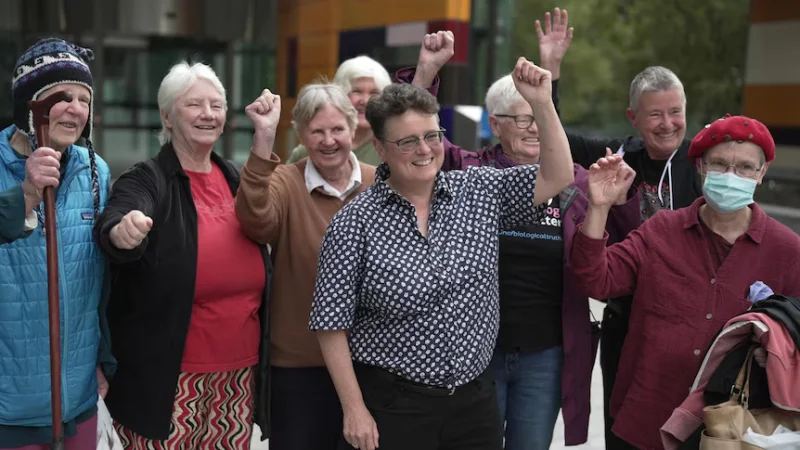
The ruling has been met with predictably different interpretations. LAG spokesperson Nicole Mowbray celebrated the decision outside the courthouse. "We are absolutely taking this as a win... we are just happy we've been heard," she said, arguing that the rights of lesbians are being "eroded by modern gender ideology."
However, LGBTQ+ advocacy groups cautioned against viewing the ruling as an endorsement of trans-exclusionary policies. Heather Corkhill, Legal Director of Equality Australia, described it as a "technical win" for LAG. "The court has not endorsed discrimination against trans women, and it has not decided whether the exemption should be granted," she said. "It has simply identified legal errors in the tribunal's reasoning, so the matter must now be reconsidered."
Dr. Son Vivienne, CEO of Transgender Victoria, expressed surprise and disappointment. "Throwing any one of our minority groups under a bus drags everyone else under it with them," they said. "It's not hard to understand that trans women are women and some trans women are lesbians. Gender has changed throughout time and will continue to change — and lesbians themselves have been discriminated against because of their gender expression throughout history."
Implications and International Context
The ongoing legal battle in Australia reflects a painful and polarising global debate about inclusion within queer spaces. While this case is specific to Australian anti-discrimination law, its arguments resonate in Europe. In the Netherlands, the General Equal Treatment Act (Algemene wet gelijke behandeling) provides robust protections against discrimination on the basis of gender identity. While certain exemptions exist for private clubs or religious institutions, a public-facing community group seeking to exclude transgender individuals would likely face significant legal and social opposition.
The Australian case will continue to be watched closely by rights advocates globally as the tribunal prepares to hear the matter for a second time, now tasked with a more complex balancing act between the right to freedom of association and the fundamental principle of non-discrimination.