BRUSSELS – A coalition of human rights organizations in Lithuania has formally called on the European Commission to take action against a proposal in the country's parliament, the Seimas, to hold a referendum that would narrowly redefine the concept of family in the constitution.
The proposed amendment seeks to enshrine in the constitution that a family can only arise from a marriage between a man and a woman, or from the bonds of motherhood and fatherhood. If passed, this would legally exclude families based on same-sex partnerships and other non-traditional structures from constitutional recognition and protection.
This move represents a significant step backward from the current legal interpretation in Lithuania. While the constitution currently defines marriage as a union between a man and a woman, the country's Constitutional Court has issued key rulings expanding the definition of family. In 2011, the court stated that marriage is not the sole basis for family relations, and in a 2019 decision, it affirmed that a same-sex couple married abroad is entitled to constitutional protections as a family.
A Challenge to European Values
The organizations, which include the national LGBTIQA+ rights organization LGL and the Lithuanian Youth Centre, argue that the referendum initiative directly contravenes both Lithuanian constitutional principles and fundamental EU law. In their letter to the European Commission, they highlight that the proposal would effectively legalize discrimination.
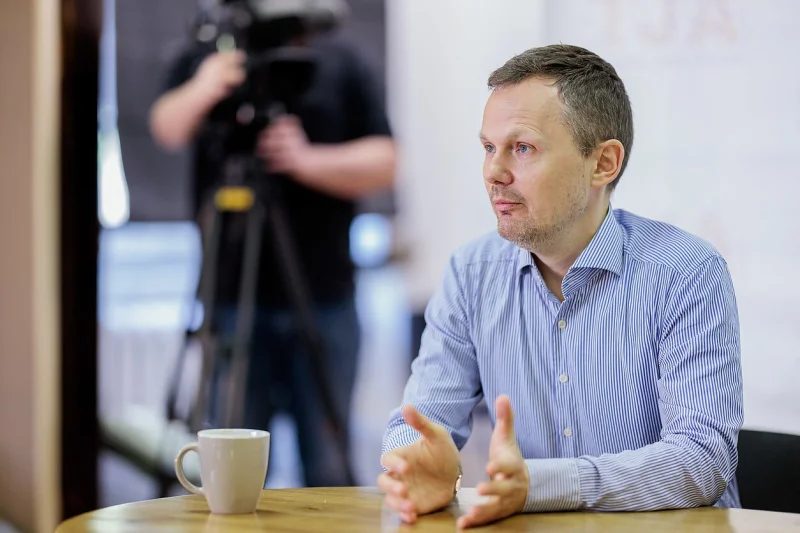
"We are following Russia’s path, where laws are first created to eliminate a segment of the population, followed by repression," said Martynas Norbutas, director of the Lithuanian Youth Centre, in a statement. "We urge the European Commission, as the guardian of the treaties, to take swift steps to prevent an initiative that undermines the foundations of democracy."
The appeal points to established case law from the European Court of Human Rights (ECHR), which interprets the concept of family broadly and not limited to marriage. As a member of the European Union, Lithuania is obligated to uphold these fundamental rights and values.
Political Momentum and Internal Doubts
The proposal is not a fringe effort; it was initially signed by 63 members of parliament and recently received the backing of 50 lawmakers in a preliminary vote. The plan is to hold the referendum alongside municipal elections next year.
However, the initiative faces questions about its own legality. The Lithuanian parliament’s own Legal Department issued an opinion stating the proposal "raises serious doubts regarding its compliance with the constitutional principles of the rule of law, the supremacy of the Constitution and responsible governance".
The coalition of rights groups has asked the European Commission to assess the referendum's compliance with EU law, begin an immediate dialogue with Lithuanian authorities, and use all available measures to prevent what they describe as a potential violation of human rights within the EU's borders.