Based on a reconstruction by Volkskrant
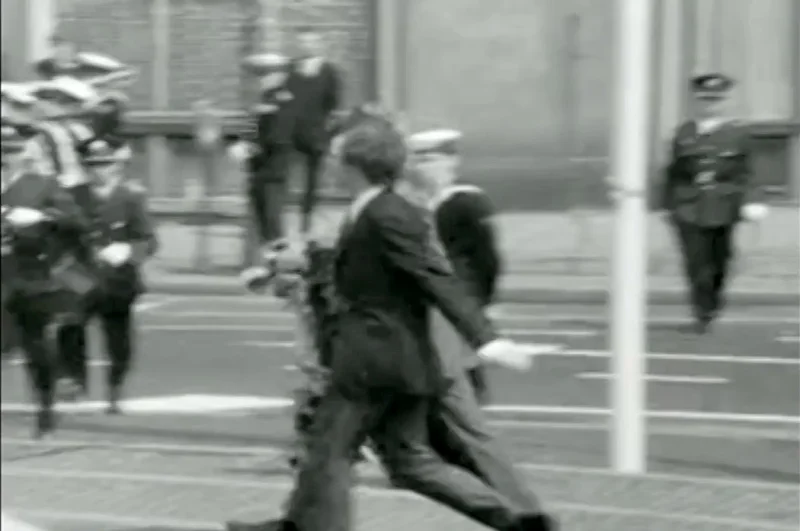
On the evening of May 4, 1970, as the Netherlands observed its National Remembrance Day (Dodenherdenking), two students in formal suits approached the National Monument on Dam Square in Amsterdam. In their hands, they carried a wreath adorned with a purple ribbon. Their goal was simple but, at the time, radical: to commemorate the homosexuals persecuted and murdered during World War II. They never reached the monument.
Before they could place their tribute, police officers intervened, tackling them to the ground. The scene, broadcast on national television, sent a shockwave through the country. This wasn't just an arrest; it was a public and forceful rejection of queer victims from the nation's collective memory.
A Nation Divided
The public response was swift and divided. The incident led to questions in parliament and a flood of public debate. A housewife from Landsmeer captured the growing sentiment in a letter to the Prime Minister, writing, "The monument is of the people, so also of the homophiles." The term, now dated, highlighted a fundamental question that the protest had forced into the open: who has the right to be remembered?
A letter to the newspaper Trouw shortly after the incident articulated the deep insult of the exclusion:
"The refusal to let the homophiles participate in the remembrance contains the painful implication that this category of victims was justifiably murdered."
A Ritual in Crisis
The students' protest didn't happen in a vacuum. By 1970, the official Dodenherdenking was facing a crisis of relevance. Many, particularly younger generations, viewed it as a rigid, conservative ritual that focused narrowly on soldiers and resistance fighters while ignoring other victim groups. The official narrative had significant gaps.
According to historian Ilse Raaijmakers, who researched the history of May 4 and 5, the focus was skewed. "It comes down to the fact that on May 4, we were commemorating the fallen Dutch soldiers in Indonesia before we commemorated the victims of the Holocaust," she notes. The ceremony was seen as an exclusive, state-sanctioned event, not a reflection of all those who had suffered.
From Protest to Permanent Memorial
The "wreath-laying affair" became a pivotal moment for LGBTQ+ visibility in the Netherlands. The public pressure it generated was undeniable. A year later, in 1971, representatives from the gay student movement were officially permitted to lay their wreath at the national monument.
More significantly, the incident sparked the initiative for a dedicated memorial. This movement led directly to the creation of the Homomonument on the Westermarkt, unveiled in 1987. Today, it is the site of its own annual May 4th remembrance ceremony, a powerful and permanent legacy of that initial act of defiance.
The Unfinished Conversation
The debate ignited in 1970 continues to shape how the Netherlands remembers. Raaijmakers argues that controversy and alternative memorials are not a threat to Remembrance Day but a sign of its enduring importance in a democracy. "I see alternative memorials as a crucial part of remembering in a democracy," she states. "That is important to keep the commemoration alive."
From discussions in the 90s about German participation to modern "inclusive" memorials that acknowledge victims of colonialism and current wars, the struggle for a more complete and honest remembrance is ongoing. The two students who were tackled on Dam Square did more than just attempt to lay a wreath. They forced a national conversation about who is included in the promise to "never forget." Their actions demonstrated that remembrance is not a static ritual, but an active, and sometimes confrontational, process of fighting for visibility—a fight that secured a permanent place for queer history in the Dutch national story.