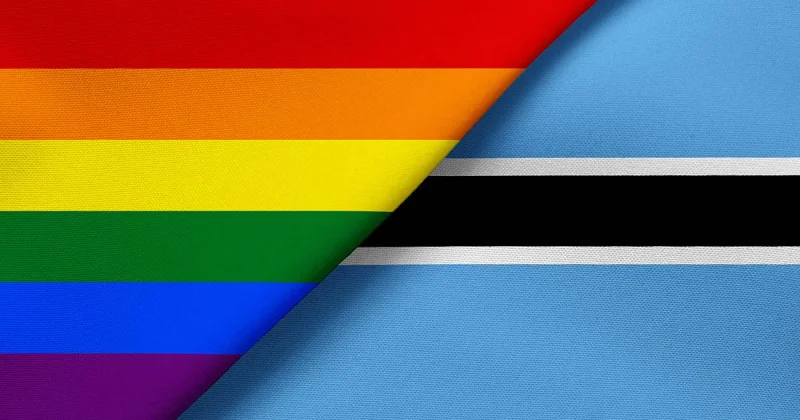
Legislative Update Follows Landmark Court Rulings
The government of Botswana has formally completed the process of decriminalising same-sex intimacy by removing colonial-era provisions from its Penal Code. The amendment, published in a government notice on 26 March, brings the country's written laws in line with a series of court decisions that had already found the ban unconstitutional.
This legislative change is the culmination of a long legal battle waged by local activists. In a significant 2019 ruling, the Botswana High Court declared that Sections 164(a) and (c) of the Penal Code, which criminalised "carnal knowledge against the order of nature" with a penalty of up to seven years in prison, were unconstitutional. The court argued that the law violated fundamental rights to privacy, liberty, and dignity. This decision was unanimously upheld by the Court of Appeal in 2021, solidifying the end of criminalisation in practice.
From Courtroom Victory to Legal Certainty
While the court rulings effectively legalised same-sex relations, the outdated text remained in the country's legal statutes. The recent amendment by Attorney General Dick Bayford formally deletes the discriminatory paragraphs. This move provides legal certainty and removes any ambiguity that the old text may have caused.
Local advocacy group LEGABIBO welcomed the government's action, describing it as a "necessary and long-overdue step." The organisation noted that even after being ruled unconstitutional, the law's continued presence on the books "sustained stigma, justified discrimination, and contributed to fear, silence, and exclusion" for LGBTQ+ people in Botswana. In a statement, LEGABIBO said the formal removal sends a clear message that LGBTQ+ individuals are not criminals and that their relationships deserve protection.
The Path Forward: Marriage Equality
With decriminalisation now formally complete, the focus for many activists in Botswana is shifting towards achieving broader legal recognition. A case is currently before the High Court, brought by couple Bonolo Selelo and Tsholofelo Kumile, challenging the constitutionality of the country's Marriage Act, which currently prevents them from marrying. That case is expected to resume in July.
Botswana's progress offers a point of contrast to developments in some other African nations. While it joins countries like South Africa, Angola, and Mozambique in upholding LGBTQ+ rights, recent years have seen severe anti-LGBTQ+ legislation passed or proposed in countries such as Uganda and Ghana. This makes Botswana's finalised decriminalisation a notable development for human rights in the region.