The findings come from the Public Religion Research Institute (PRRI), which interviewed over 22,000 adults across the U.S. for its 2023 American Values Atlas. For years, similar surveys have shown a steady, upward trend in acceptance of the LGBTQ+ community. This latest data, however, indicates a potential reversal.
The report details declines across several key policy areas. Support for same-sex marriage fell by two percentage points, while backing for laws that protect LGBTQ+ individuals from discrimination in housing, employment, and public accommodations dropped by four points. At the same time, support for allowing business owners to refuse service to gay and lesbian people on religious grounds increased by five points.
Political Polarization Identified as Key Driver
According to Melissa Deckman, CEO of PRRI, this shift is not happening uniformly across society. In an interview with PBS News Weekend, she explained that the decline is "largely driven by party polarization."
While support among Democratic voters remained stable, the survey registered much deeper declines among Republicans. Deckman suggested this reflects a concerted effort by some Republican leaders to "amp up the volume" on LGBTQ+ issues, which has had a "spillover effect" on national attitudes within the party.
Despite the overall dip, the report notes that a majority of Americans, including most people of faith, continue to support same-sex marriage and non-discrimination protections.
A Surprising Trend Among Younger Americans
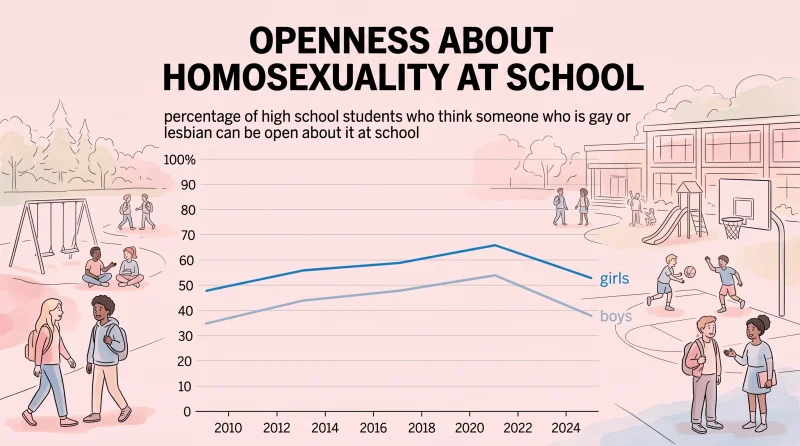
Perhaps the most unexpected finding is a downward trend in support among younger Americans aged 18-29. This challenges the long-held assumption that younger generations, who are more likely to identify as LGBTQ+ or know someone who is, would invariably be more supportive of LGBTQ+ rights.
This shift is also driven by partisanship. The data reveals a particularly stark drop in support for same-sex marriage among young Republicans. In 2020, two-thirds of this group supported marriage equality. By 2023, that number had fallen to less than half.
"I think there was often an assumption among many political analysts that younger Republicans would moderate the party with respect to things like LGBTQ rights," Deckman said. "But what we're finding in this data is that younger Republicans are very conservative socially."
A 'Canary in the Coal Mine'
Deckman described the findings as a "canary in the coal mine," a warning that progress on civil rights should not be taken for granted. The report also highlights a strong correlation between opposition to LGBTQ+ rights and support for Christian nationalism.
The survey serves as a reminder that hard-won rights remain vulnerable to political shifts. With a conservative majority on the U.S. Supreme Court and legal challenges to marriage equality expected, the political and legal landscape for the community in America remains uncertain.
While the situation in the Netherlands and Europe is different, these developments in the U.S. are a significant indicator of broader political currents that can affect LGBTQ+ communities across the Western world.