
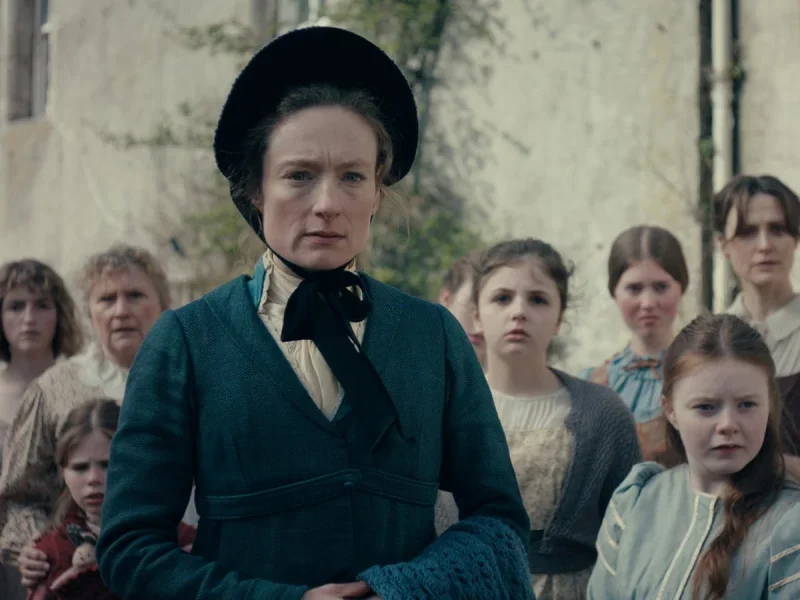
Premiering at the Berlin Film Festival, the German-directed drama delves into the true story of two 19th-century Scottish schoolteachers whose lives and reputations were destroyed by a student's accusation of a lesbian affair. The case, which took place in Edinburgh in 1810, later inspired Lillian Hellman’s influential 1934 play, The Children’s Hour, which was itself adapted into a notable 1961 film starring Audrey Hepburn and Shirley MacLaine.
However, director Sophie Heldman’s new film, based on historian Lillian Faderman's study Scotch Verdict, moves beyond the coded language and tragic implications of past versions. It instead offers a candid exploration of sexuality, race, and class in a period when the mere suggestion of a same-sex relationship could be ruinous.
The Story Retold
The film centres on Marianne Woods (Clare Dunne) and Jane Pirie (Flora Nicholson), the proprietors of a private girls' school. Their world is upended by a malicious rumour started by one of their pupils, Jane Cumming (Mia Tharia). Cumming, a student of colour whose mother was Indian, makes a detailed accusation of a sexual relationship between the two teachers.
The rumour is seized upon by her powerful grandmother, Lady Cumming Gordon (Fiona Shaw), leading to a mass withdrawal of students and a devastating libel lawsuit. The film distinguishes itself by not focusing on the courtroom drama, but on the intimate, private lives of the two women before and after the accusation.
A Complex Look at Sexuality and Power
What makes The Education of Jane Cumming particularly relevant is its nuanced approach to the teachers' relationship. The narrative speculates that the public accusation may have been the very catalyst that forced Woods and Pirie to confront and act upon their mutual attraction. It’s a complex psychological take that moves the story from one of simple persecution to a more intricate study of identity formed under pressure.
Furthermore, the film addresses the intersectional dynamics at play. Jane Cumming is portrayed not just as a spiteful student, but as a proud, isolated young woman of colour who is bullied by her white peers. Her testimony is ultimately deemed suspect by the courts, in part due to racist attitudes of the time, highlighting a bitter irony where her accusation is powerful enough to ruin lives but her identity is too marginalized for her to be seen as a credible witness.
With strong performances and a script that prioritizes historical and emotional clarity, The Education of Jane Cumming is a sober and intelligent retelling of a foundational story in queer history, reframing it for a contemporary audience.