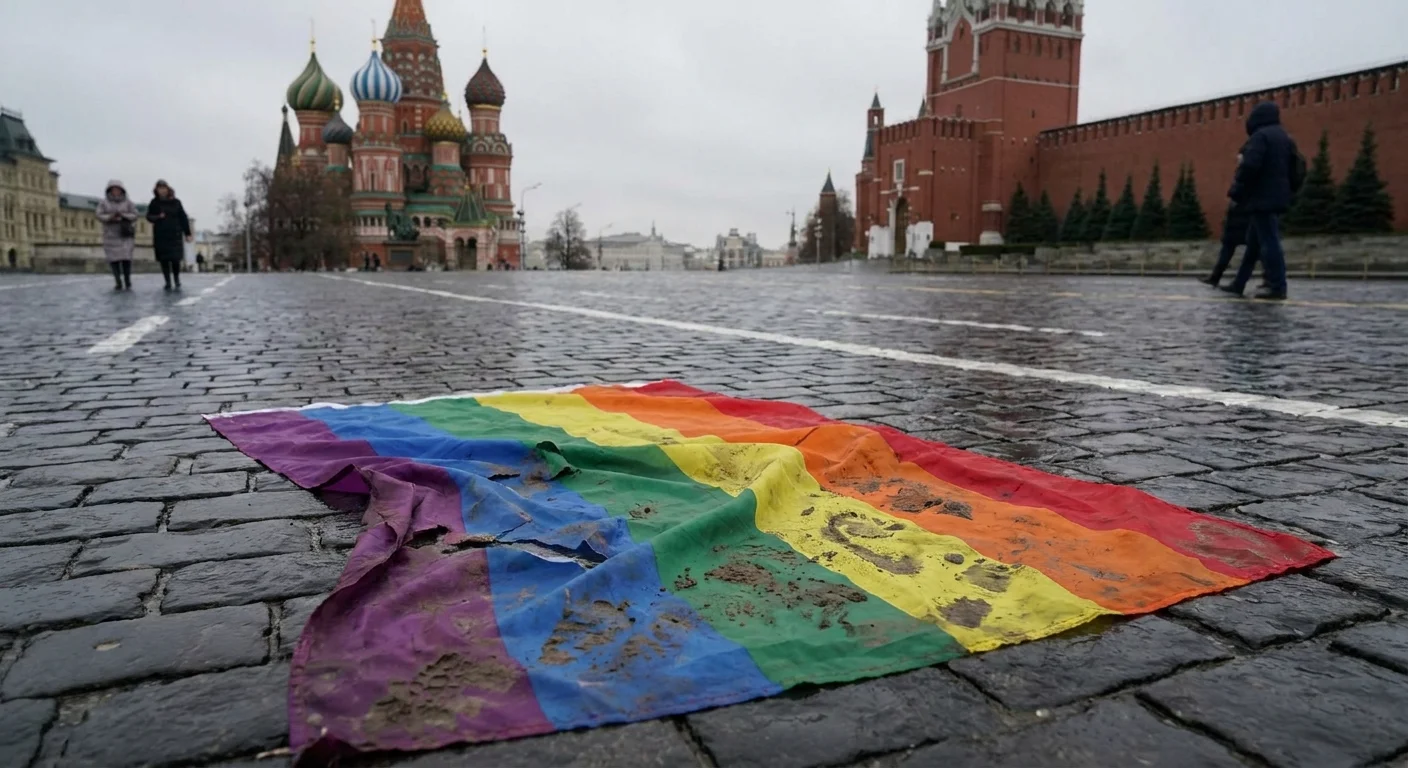
A Russian court has handed down the first prison sentences under the country's sweeping ban on the so-called "international LGBT movement," convicting the owner and two staff members of a nightclub in the city of Orenburg. The verdict sets a chilling precedent for the queer community, which has faced escalating persecution under President Vladimir Putin.
The owner of the 'Pose' nightclub, Vyacheslav Khasanov, 37, was sentenced to seven years in prison. The club's manager, Diana Kamilyanova, 30, received a term of six years and three months, while the art director, Alexander Klimov, 23, was jailed for two years and three months. All three had maintained their innocence.
The court found them guilty of organizing and participating in an "extremist organisation." Their crime, according to prosecutors, was running a nightclub that hosted drag shows and provided a space for the local LGBTQ+ community. The club had reportedly rebranded itself as a "parody bar theatre" in an attempt to navigate the increasingly hostile legal environment.
A Landmark Case
This case is the first of its kind since Russia's Supreme Court officially designated the "LGBT movement" as an extremist entity in November 2023. The ruling, which was intentionally vague and broad, effectively criminalized any form of LGBTQ+ advocacy or public expression. Human rights advocates warned at the time that it would pave the way for severe criminal charges against queer individuals and their allies.
The conviction of the 'Pose' staff confirms those fears. The case began in March 2024, when the club was violently raided by regional authorities and Russia's National Guard. Footage shared online by far-right groups showed patrons being forced to lie on the floor as masked officers stormed the venue.
The Kremlin's Anti-LGBTQ+ Campaign
The crackdown is part of a broader, state-sponsored campaign against LGBTQ+ rights in Russia. For over a decade, the Kremlin has used the queer community as a scapegoat, portraying LGBTQ+ rights as a decadent Western invention that threatens so-called "traditional Russian values."
This ideology has been used to justify a series of repressive laws, including the infamous 2013 "gay propaganda" law, which has since been expanded to apply to all ages. The 'extremist' designation is the most severe escalation yet, placing queer Russians in the same legal category as terrorist organizations.
For the LGBTQ+ community in Russia, this verdict signals the further erosion of already limited safe spaces. As one human rights lawyer noted, the case is designed to destroy the last remaining "safe havens" and drive queer life entirely underground. For those of us in the Netherlands and across Europe, it serves as a stark reminder of the fragility of our rights and the ongoing fight for equality in neighbouring countries.