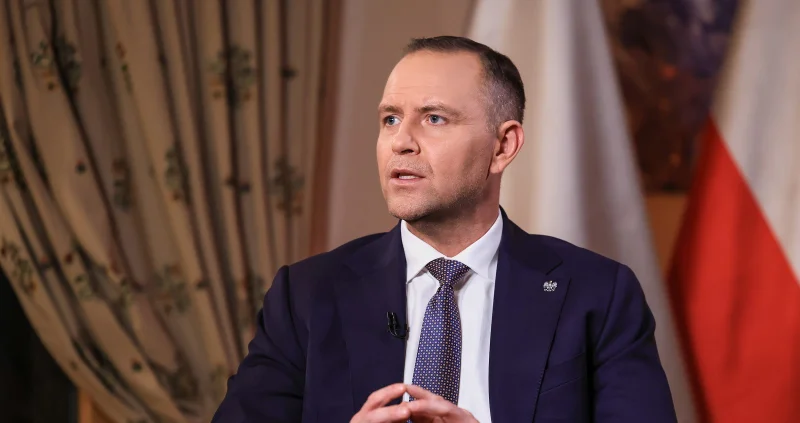
Hopes for a significant step forward for LGBTQ+ rights in Poland have been halted after President Karol Nawrocki vetoed legislation that would have offered the first form of legal recognition for same-sex couples in the country's history.
The bill, which had successfully passed through both houses of parliament, was a key initiative of Prime Minister Donald Tusk's pro-European government. It aimed to provide unmarried partners, both same-sex and opposite-sex, with a set of fundamental legal protections.
A Compromise Bill Blocked
The proposed law would not have established full civil partnerships, but rather a new type of legal contract. By signing this agreement before a notary, couples would have gained several crucial rights currently reserved for married spouses, including:
- The right to joint property and tax settlement.
- Access to a partner's medical information and the ability to make medical decisions.
- Exemption from inheritance and gift taxes.
- The right to arrange a partner's burial.
For thousands of same-sex couples in Poland, this would have marked a major improvement in their legal standing and daily security. The legislation itself was a compromise, scaled back from earlier proposals for full civil partnerships to appease more conservative factions within Tusk's own ruling coalition.
President Cites Constitutional Concerns
President Nawrocki, who is aligned with the national-conservative opposition, argued that the law was unconstitutional. In a statement, he claimed the measures would "introduce civil partnerships through the back door" and threaten the unique status of marriage.
He referred to Article 18 of the Polish constitution, which defines marriage as a "union between a woman and a man" and places it under the special protection of the state. "As the guardian of the constitution, I cannot accept a solution that would lead to the loss of the special status of marriage," Nawrocki said.
Government Condemns Veto
The decision was immediately condemned by the government. Prime Minister Tusk described the veto as "an expression of contempt toward people and their right to happiness and a normal life."
The government's plenipotentiary for equality, Katarzyna Kotula, vowed that the fight was not over. "The veto will not halt social change," she stated, suggesting the government would explore other avenues. She pointed to Poland's recent steps to legally recognise same-sex marriages performed in other EU countries, a move mandated by the European Court of Justice.
Despite the political deadlock, public opinion polls consistently show a majority of Poles—over 60% in a recent survey—support the introduction of same-sex civil partnerships, indicating a growing gap between the public and some of its political leaders on the issue.