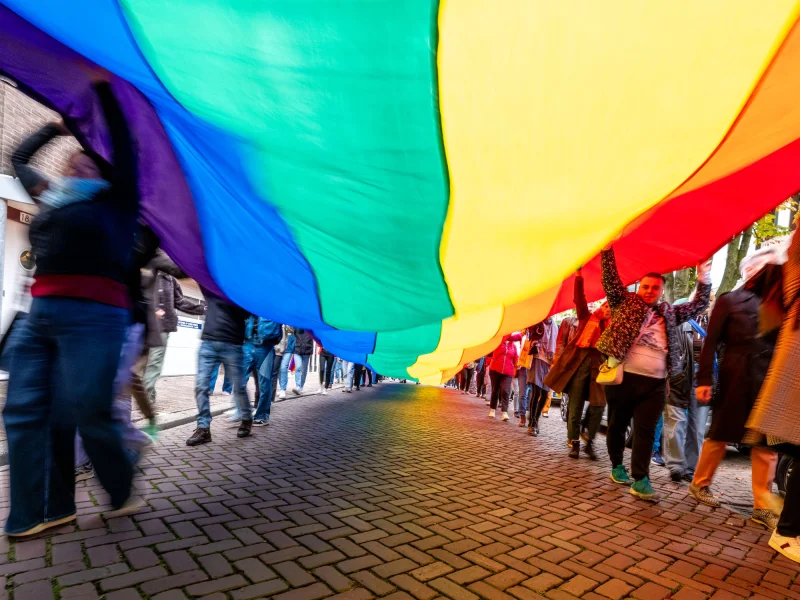
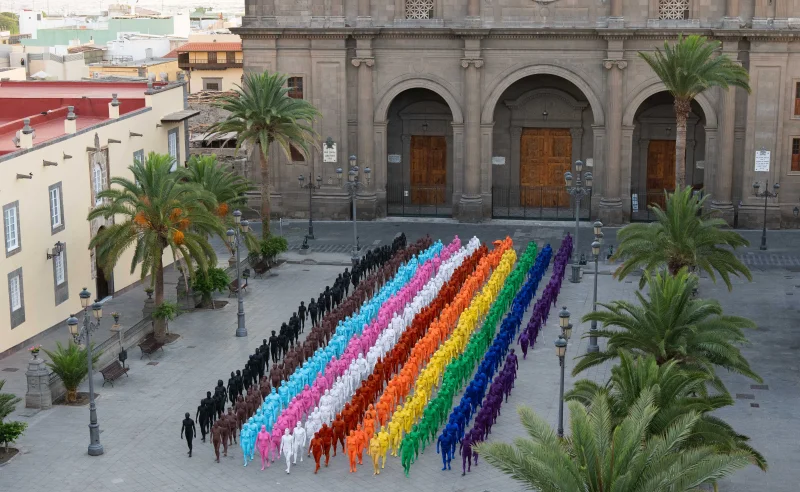
In the early morning light of Gran Canaria, hundreds of bodies came together to form a living, breathing Progress Pride flag. This was 'Grand Spectrum,' the latest large-scale installation by American photographer Spencer Tunick, who is known for his work with mass public nudity. The project saw members of the LGBTQ+ community and their allies painted in the eleven colours of the Progress flag, creating a striking visual in the heart of the city.
The installation, part of the Culture & Business Pride 2026 festival, was conceived as a collective statement on visibility and diversity. By using the nude human form in historic public spaces, the work aimed to create a powerful image in support of equality and fundamental rights at a time when they remain under threat in many parts of the world.
A Dedication to Berlin
The project took on a more urgent and somber tone as Tunick dedicated the work to the queer community in Berlin, following a violent attack during the city's Pride celebrations. In a statement, the artist underscored the importance of safety and solidarity.
"No one should ever have to fear for their safety, to be who they want to be. Solidarity with Berlin. Love will always be stronger than hate. A round of applause for equality, inclusion, and democracy!"
The Artist and His Canvas
For over 30 years, Spencer Tunick has been creating these temporary, site-specific installations in more than 70 countries. His method involves gathering thousands of volunteers who pose nude, transforming the human body into a sculptural element. Tunick's work often explores the relationship between the vulnerability of the nude form and the rigidity of public and private spaces, stripping the body of its typical sexual connotation to see it as pure form.
His largest work to date took place in Mexico City in 2007, where he photographed over 18,000 people in Zócalo square.
For 'Grand Spectrum,' the locations were carefully chosen. Volunteers posed in the historic Plaza de Santa Ana and in the streets near the Casa de Colón and the cathedral. By placing this modern statement of queer identity within spaces steeped in centuries of history, the installation suggests that diversity is an integral and enduring part of the region's story.