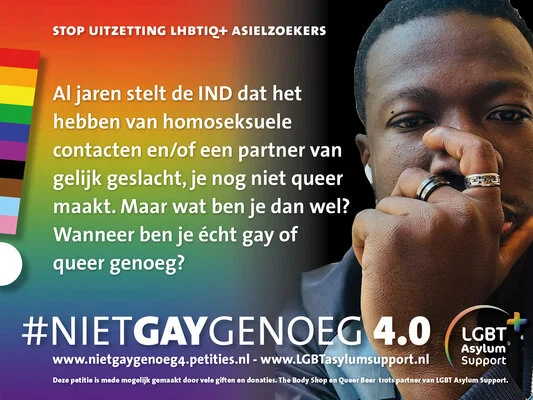
When is someone truly gay, lesbian, bi, or trans enough to be granted asylum in the Netherlands?
This is the critical question at the heart of the "NietGayGenoeg 4.0" (Not Gay Enough 4.0) petition, a campaign launched by LGBT Asylum Support. The initiative directly confronts the Dutch Immigration and Naturalisation Service (IND), arguing that its methods for assessing the credibility of LGBTQ+ asylum seekers are outdated, unfair, and based on harmful stereotypes.
How You Can Help
This petition is a crucial tool to pressure the Dutch government to reform a system that puts vulnerable lives at risk. By adding your name, you join a growing chorus demanding dignity, respect, and safety for LGBTQ+ people seeking asylum.
Your signature sends a clear message: no one should have their identity put on trial. It's time for a fair and humane asylum process.
Sign the 'NietGayGenoeg 4.0' Petition NowFor many queer individuals fleeing persecution, arriving in the Netherlands is not the end of their struggle. They face a second, daunting challenge: proving the very essence of their identity to officials. The petition argues that the IND's current process is fundamentally broken, creating an almost impossible standard for people seeking safety.
A System Stuck in the Past
According to the petition, the IND consistently fails to uphold agreements made with the Dutch Parliament back in 2018. The service is accused of continuing to use discredited and officially scrapped concepts like "self-acceptance" and "awareness" as benchmarks for an applicant's credibility. This forces individuals into a rigid, often Westernized narrative of coming out that may not reflect their personal or cultural reality.
The core problems identified by LGBT Asylum Support include:
- Ignoring Evidence: Having a same-sex partner or providing supporting statements from LGBTQ+ organizations is often deemed insufficient proof of one's orientation or gender identity.
- Dismissing Context: The IND inadequately investigates an applicant's "frame of reference," failing to consider their cultural background and personal journey.
- Unrealistic Expectations: There is an expectation that every asylum seeker can provide a detailed, linear, and perfectly articulated account of their identity, which is often impossible for those who have experienced trauma or lived in deep secrecy.
- Overlooking Legal Precedent: The petition states that the IND has even ignored positive court rulings in favor of asylum seekers, continuing to deny claims on the same flawed grounds.
The Demand for a Humane Process
"NietGayGenoeg 4.0" isn't just a list of complaints; it offers a clear roadmap for reform. The organizers are petitioning the government to implement concrete changes to ensure a dignified and fair assessment process.
Key demands include:
- Modernize the Language: Officially adopt "LHBTIQ+" as the standard abbreviation and create a comprehensive glossary of terms so that IND staff understand the diversity of identities and relationships.
- Honor Agreements: Formally integrate the parliamentary agreements to scrap outdated assessment terms into the IND's official work instructions.
- Assess with Context: Evaluate asylum seekers based on their unique personal and cultural frame of reference, rather than a one-size-fits-all checklist.
- Recognize the Journey: Acknowledge "identity growth" as a valid part of the assessment, and consider all evidence related to this ongoing process of self-discovery.