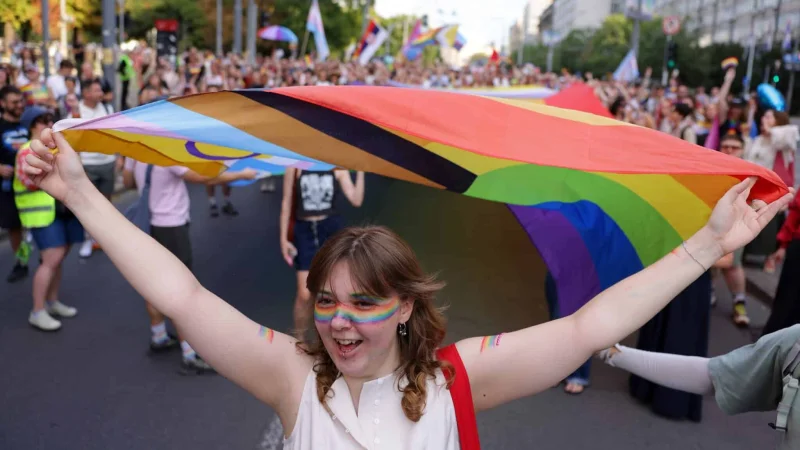
The streets of central Belgrade were filled with rainbow flags on Saturday as hundreds of people participated in the city's annual Pride march. The event marked a significant milestone: 25 years since the first, notoriously violent attempt to hold a Pride parade in the Serbian capital in 2001.
Under the slogan “There Is Room for All of Us” — the same one used a quarter of a century ago — participants marched through the city under a heavy police presence. While the atmosphere was one of celebration and resilience, the security measures were a clear reminder of the challenges the LGBTQ+ community continues to face in the country.
A Long Road Since 2001
The context of this anniversary is crucial. The inaugural 2001 Belgrade Pride was brutally attacked by nationalist and far-right groups, with dozens of participants and police officers injured. The event became a symbol of the deep-seated intolerance faced by the community. For years afterward, Pride marches were banned or marred by violence, only becoming a regular, albeit heavily protected, event since 2014.
This year's march, while proceeding without major incidents, was not without tension. A small group of counter-protesters carrying religious icons gathered to shout at the procession, and riot police reportedly removed a clergyman who broke through the security cordon near the National Assembly.
A Call for Broader Human Rights
The political dimension of the march was front and centre. Journalist Danica Vucenic, named the ‘Godmother of Belgrade Pride 2026’, addressed the crowd before the march began. She connected the struggle for LGBTQ+ rights to the broader state of democracy in Serbia.
“Pride is taking place at a time when violence is being glorified, amid serious threats to human rights,” Vucenic stated, referencing a climate of increasing homophobic attacks and police actions against anti-government protesters. “The way a majority treats a minority reflects how democratic a society is... If there is no room for a minority, there is no room for anyone.”
Participants carried banners with messages like “Visibility is not propaganda” and “God loves everyone.” The march was attended by several foreign diplomats, including the head of the EU delegation to Serbia, Andreas von Beckerath, and UK ambassador Edward Ferguson, signalling international support for the community.
After winding its way past key government buildings, the march concluded peacefully in Manjez Park with a concert featuring local artists, ending a day of protest and visibility with a moment of community celebration.