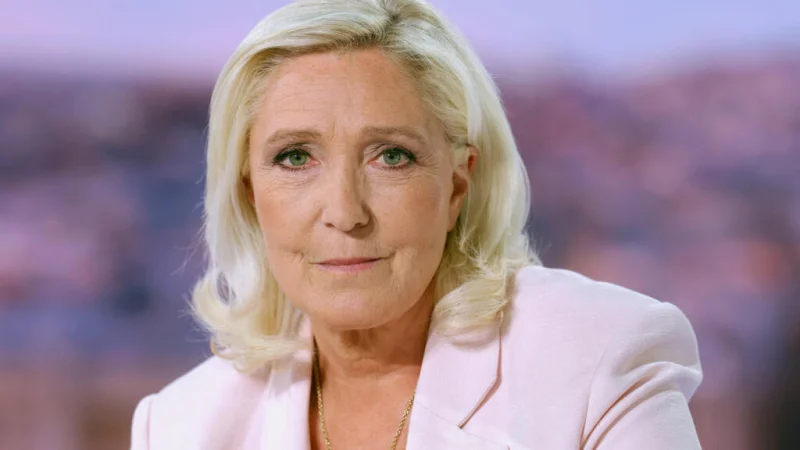
In a significant shift for one of Europe's most prominent far-right figures, French presidential candidate Marine Le Pen has stated she was wrong to oppose the country's same-sex marriage law. The statement came during a televised interview on Sunday, more than a decade after the 'mariage pour tous' law was passed amidst fierce opposition from her party.
Speaking with a high school student for the LCP channel, Le Pen, who is currently leading in polls for the 2027 presidential election, addressed her past position. She claimed her initial opposition in 2013 was rooted in a fear that it would lead to legalized surrogacy—a practice that remains illegal in France and which she continues to oppose.
"One can evolve in politics, there is nothing to be ashamed of, one just has to explain why they have changed their mind."
While Le Pen had previously indicated during her 2022 campaign that she would not seek to repeal the marriage equality law, this is the first time she has explicitly framed her former stance as a personal 'mistake'.
A Pattern of 'Softening'
This reversal is not an isolated event. It is part of a broader, long-term strategy by Le Pen to detoxify the image of her National Rally party and broaden its electoral appeal. After a decisive loss to Emmanuel Macron in the 2017 presidential election, she notably abandoned her call for France to leave the European Union, a cornerstone of her platform for years.
Critics argue these shifts are less about a genuine evolution of principles and more about political pragmatism. By moderating her party's most controversial positions, Le Pen aims to attract more mainstream conservative voters who were previously alienated by her more extreme rhetoric.
In the same interview, Le Pen also expressed regret over her past opposition to dual citizenship. This comes despite her own party proposing measures as recently as the 2024 parliamentary elections to bar dual nationals from holding certain sensitive government jobs.
"I gave those with dual citizenship the impression that I had some kind of suspicion regarding their love or commitment to France," she said. "I have changed my mind on that position, and I think I did the right thing."
Le Pen's evolving stance on social issues is part of a wider trend among some European populist right-wing parties. As they gain political ground, some leaders are attempting to shed socially conservative policies to build broader coalitions, a development being watched closely by LGBTQ+ communities across the continent, including here in the Netherlands.