For decades, the sharp, fleeting rush of poppers has been a familiar element of queer nightlife, particularly within the gay scene. But what was once a community staple is now finding a new, younger audience in Amsterdam's student and party circles, prompting a closer look at a substance that exists in a legal and regulatory haze.
An investigation by local news outlet AT5 has highlighted this growing trend and the significant confusion surrounding the sale and composition of these small bottles. According to research from the Trimbos Institute, popper use among young people has risen, from 11.4% in 2020 to 13.1% in 2023. This data is supported by anecdotal evidence. "At a student corps party, a surf party, or with skaters, it doesn't matter what group you're in. I see poppers being used everywhere," 23-year-old Amsterdam student Senna told AT5.
This shift hasn't gone unnoticed by long-time users. Anthony, who uses poppers primarily to enhance sex, notes the cultural crossover. "You get a warm haze over you. It loosens your body, your muscles tingle, your head gets very light," he explains. "I'm seeing more and more straight people who are loosening up and offering me a hit of poppers on the dance floor. I think, 'Huh, a straight person is offering me poppers?'"
A Legal Maze
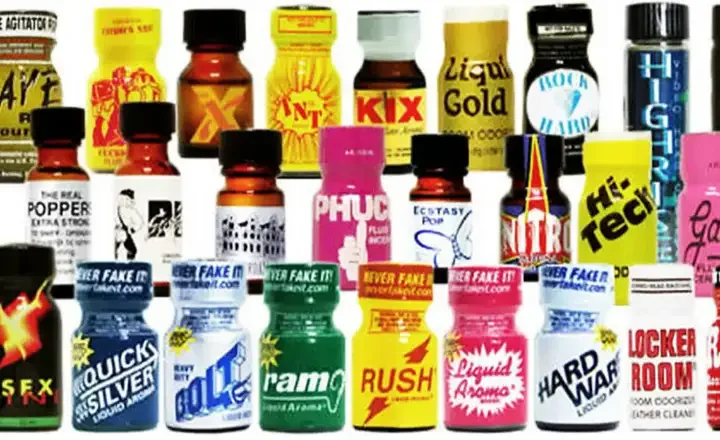
The accessibility of poppers is complicated by their ambiguous legal status. In 2001, the Dutch Ministry of Health effectively banned poppers containing amyl nitrite, classifying them under the Medicines Act. In response, manufacturers pivoted to a slightly different chemical, isopropyl nitrite, and began marketing the products as 'leather cleaners' or 'room odourisers' to circumvent the law and sell them under the less-strict Commodities Act.
According to chemist Pim Linnebank, the chemical difference is minor. "The isopropyl nitrite poppers have a shorter carbon chain, which makes the substance more volatile, and you inhale a bit more. As a result, the side effects can be more intense," he explained to AT5, suggesting the change was a loophole. "Practically speaking, it does the exact same thing."
However, the AT5 investigation found that this legal distinction is largely ignored in practice. Of 23 sex shops visited on the Wallen, 20 sold poppers. Out of 33 different products purchased, a staggering 22 were found to contain the supposedly banned amyl nitrite.
No Active Oversight
When questioned, both the Health and Youth Care Inspectorate (IGJ) and the Netherlands Food and Consumer Product Safety Authority (NVWA) confirmed they do not actively monitor the sale of poppers. Both agencies stated their oversight is risk-based and that they receive almost no complaints about the products, giving them low priority.
This lack of enforcement has direct consequences for consumer safety. Because many poppers are sold as 'cleaners', they cannot legally include instructions for human consumption or harm reduction advice. "Product information and sensible tips are missing, and that is essential to prevent overdose and hospitalisation," said drug expert August de Loor.
Health Risks and Potential Solutions
The use of poppers is not without risk. Common side effects include headaches and dizziness, with potential for eye damage from heavy use. The dangers increase significantly when combined with other substances. "The combination with Viagra and alcohol, which also dilate your blood vessels just like poppers, makes it harmful. Or, for example, with uppers like cocaine or speed, which increase your heart rate," Linnebank warns.
Experts are divided on the path forward. Linnebank suggests that since poppers are used as a recreational drug, they should be regulated under the Opium Act. De Loor, however, argues for a harm reduction approach through regulation. "Poppers should be sold via smartshops with trained staff. Product information on the bottle and sensible tips on how to use them. Instead of hiding and banning, I advocate for regulating."
For now, a substance with deep roots in the LGBTQ+ community is being embraced by a new generation, all while operating in a legal grey area where consumers are left to navigate the risks on their own.