
22
Nov
Join a literary salon with author Anja Sicking to discuss her novel 'The Visionary' and explore the ethical dilemmas of artificial intelligence and our growing dependence on technology.
Literature as a Testing Ground for the Future
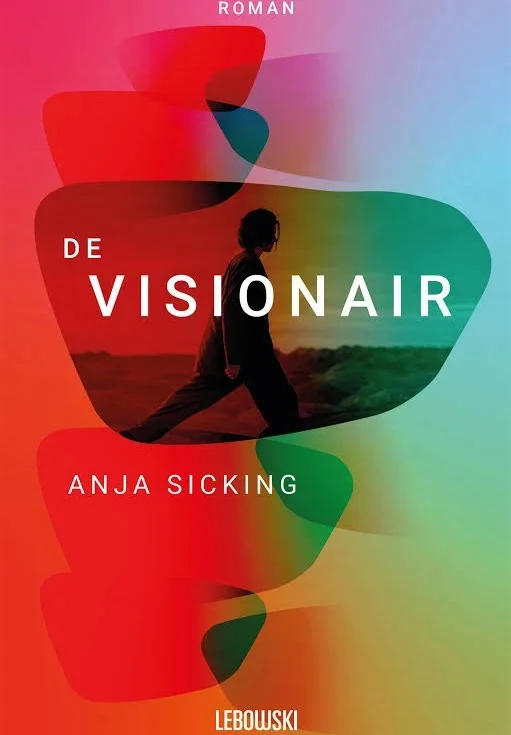
Anja Sicking's fifth novel, The Visionary, is partly set in the future. When Roemer gets to participate in a robotics project at school, he plans to design digital glasses that can read others' emotions. His own ability to interpret people's expressions is limited; he lives mainly in his head and fantasy world. He believes in the limitless possibilities of technology and thinks we should be able to measure and know everything. When he falls in love, his views on the measurable human begin to waver. Years later, while Roemer makes a significant contribution to a technology-dominated world, his love is rekindled. Can humans ever get a grip on themselves and others?
In The Visionary, Anja Sicking explores the ethical dilemmas arising from our increasing dependence on artificial intelligence. In a sensitive style, with compassion for her characters, she draws the reader into a world where tech giants seize power.
What distinguishes humans from artificial intelligence? Aren't humans and algorithms both just a collection of data? Exact science claims that humans can be 100% analyzed, but knowing is not the same as understanding. The numbers and data to which we can be reduced do not touch upon any deeper joy of life or the experience of meaning, unlike what a story, imagination, and the creative word can offer. Yet, even robot authors in Anja Sicking's book seem to be able to tell beautiful stories.
Anja Sicking has done extensive research and read the works of writers who came before her, who, like her, crossed the boundaries of their time in their imagination, such as George Orwell with 1984 and Margaret Atwood with The Handmaid’s Tale. She sees literature as a testing ground for the future. The influence of science fiction is growing, and the interplay between fiction and science generates new ideas. The internet already existed in films and literature before it became a reality. She writes that she was shocked when glasses with a built-in camera went on sale in the Netherlands. "Meta can now also follow us offline. On the street. Or in a café where people blurt things out after a few drinks. Let me describe the risk of these glasses in Zuckerberg's own, ever-enthusiastic words: ‘Smart glasses are ideally suited for AI assistants that watch and listen with you. In the US, this new Meta-Ray-Ban was introduced in 2024. The privacy conditions have already been updated there once. Bright.nl writes that the AI function with the camera is now always on, unless you completely disable the ‘Hey Meta’ voice control. Secondly, users can no longer choose whether their voice recordings are stored in the cloud. Spoken commands are now always stored and used to train AI models.’ Oh, and the next model of these glasses will come with a neural wristband, as Zuckerberg has since announced. You will then send messages by waving your hand. The wristband measures the electrical activity in your wrist. This is how Big Tech is crawling into your body. And all for 820 euros."
Anja Sicking is not the only one wondering what the gradual transfer of our emotional and cognitive abilities to tech companies means for our humanity. "The tech bosses in Silicon Valley are penetrating deeper into the human brain with their large language models. Some of them, like Sam Altman, even want to build an artificial brain for the world, to which we can then connect our own brains."
About the Author
Anja Sicking debuted in 2000 with Het Keuriskwartet, for which she received the Geertjan Lubberhuizen Prize. Her second novel, De stomme zonde, has been translated into German, English, and Turkish. She is an editor for the literary magazine Tirade and teaches at the Schrijversvakschool Amsterdam. She has written several essays on 'the writing robot,' including in the newspaper Trouw, and performed at Waag for the Future in a program about 'The Imagination of the Future'.
Everyone is cordially invited.
You can attend the literary salon even if you haven't read the books discussed. The books will be for sale afterwards and can be signed by the author.
Buurthuis De Coenen
Joh. M. Coenenstraat 4, Amsterdam, Netherlands
Queer Places Nearby
Upcoming
Joh. M. Coenenstraat 4, Amsterdam, Netherlands
Queer Places Nearby
Vice Versa
Bar in Amsterdam
Bar in Amsterdam
Bar Buka Amsterdam
Bar in Amsterdam
Bar in Amsterdam
Mail & Female | Sex Shop Amsterdam
Shop in Amsterdam
Shop in Amsterdam
Upcoming