
13
May
In Dutch. An exploration of the Netherlands' role in LGBTIQ+ policy, questioning its 'guiding country' status amidst stagnating acceptance and legislative standstill. What is the impact of politics on the daily lives of queer people?
Netherlands, a Guiding Country? – On Queer Emancipation and Politics
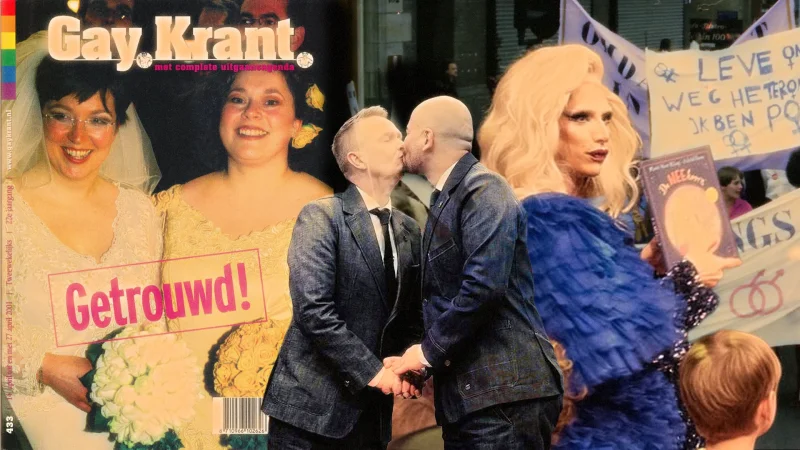
The Netherlands was once known as a guiding country, but in the area of LGBTIQ+ policy, little legislation has been passed by the House of Representatives in recent years. Meanwhile, the acceptance of LGBTIQ+ people is stagnating. What influence does politics have on the daily lives of queer people in the Netherlands?
From the very first Dutch gay demonstration in 1971, the pragmatic approach to the AIDS crisis in the 80s, to the opening of marriage to same-sex couples: the history of queer emancipation is often presented as one of steady progress – and ultimately: completion.
But how straightforward is that story? During this program, we will scrutinize the idea of the Netherlands as a guiding country. How have LGBTIQ+ people claimed their place in society over the past decades? What role has politics played in this? And where do we stand now?
The history of emancipation is not a closed chapter. The Netherlands has been dropping in rankings concerning the rights of LGBTIQ+ people for years (on the leading European Rainbow Ranking, the Netherlands holds the 13th spot). In terms of legislation, there is mainly a standstill, as illustrated by the rejected and much-discussed Transgender Law last year. What impact does this have on the daily lives of queer people?
Speakers
- Valentijn de Hingh (Journalist, De Correspondent)
- Harmen van Liemt (Writer, director)
- Jeangu Macrooy (Singer)
- Joost van Bellen (DJ and Director of Sexyland)
- Kim van Sparrentak (Member of the European Parliament, GL)
De Balie
Kleine-Gartmanplantsoen 10, Amsterdam, Netherlands
Queer Places Nearby
Upcoming
Kleine-Gartmanplantsoen 10, Amsterdam, Netherlands
Queer Places Nearby
Bar Twenty Two
Bar in Amsterdam
Bar in Amsterdam
Bar TWLV
Bar in Amsterdam
Bar in Amsterdam
Saloon
Bar in Amsterdam
Bar in Amsterdam
Upcoming
The Social Hub x AMP: Pride Paint and Sip
Fri, May 8 to Wed, May 6 2026, The Social Hub The Hague, The Hague
Fri, May 8 to Wed, May 6 2026, The Social Hub The Hague, The Hague
WORM x O. : Anthony Hüseyin – Songs from a Crime Scene
Saturday, 23-05-2026, 20:30, WORM Rotterdam, Rotterdam
Saturday, 23-05-2026, 20:30, WORM Rotterdam, Rotterdam