
10
Jun
A screening of Kutlug Ataman's 1999 film, a raw and kaleidoscopic landmark of queer European cinema exploring Berlin's Turkish transvestite and drag subculture.
Lola und Bilidikid
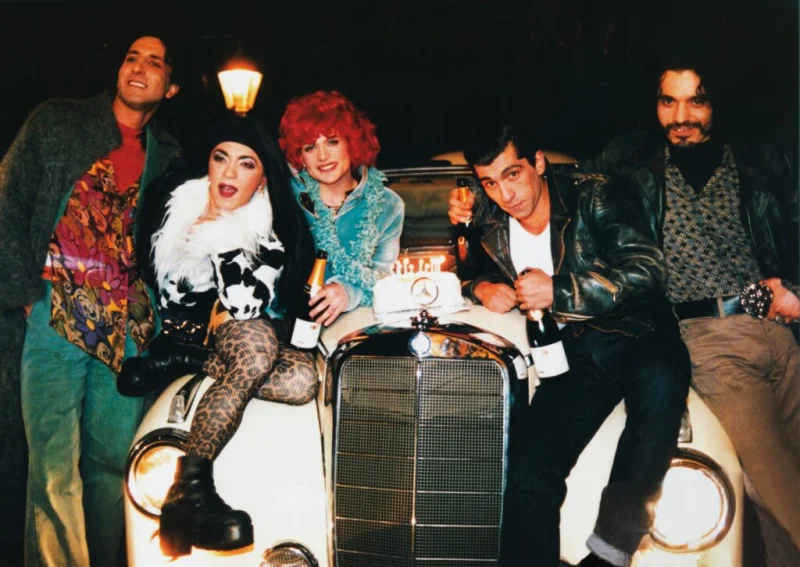
Lola und Bilidikid (Lola and Billy the Kid)
by Kutlug Ataman
1999, Germany, 93 minutes, German w/ English subtitles
With his second feature, Turkish-British director and visual artist Kutluğ Ataman opens a door onto a world cinema had never entered before: the Turkish transvestite and drag subculture of late-nineties Berlin. Seventeen-year-old Murat is awakening to his sexuality while being tyrannised at home by his macho elder brother Osman. In the cabaret bars of Kreuzberg he encounters Lola, a celebrated drag performer in the troupe Die Gastarbeiterinnen, who lives with the hyper-masculine Bilidikid, a lover demanding that Lola undergo gender reassignment so the two can return to Turkey and live "like normal people." When Lola is found murdered, Murat’s pursuit of the killer pulls migration, machismo, neo-Nazi violence and buried family secrets into a single fatal knot.
Ataman sidesteps both social realism and victim narrative. Writing in Sight & Sound, Paul Julian Smith observed that "mainstream narrative and characterisation make the film all the more subversive, because challenging content is presented in an accessible form," identifying its true subject as "the exploration of different national forms of homosexuality and masculinity" in the first Turkish film with explicit homoerotic content. Opening the Panorama section of the 1999 Berlinale, where it won the Teddy Award, and screened in Turkey only under death threats to its director, Lola und Bilidikid remains a raw, kaleidoscopic landmark of queer European cinema.
WORM Rotterdam
Boomgaardsstraat 71, Rotterdam, Netherlands
Queer Places Nearby
Upcoming
Boomgaardsstraat 71, Rotterdam, Netherlands
Queer Places Nearby
Daily Fresh at wunderbar
Bar in Rotterdam
Bar in Rotterdam
WORM
Community Center in Rotterdam
Community Center in Rotterdam
Cannibale Royale Westblaak
Bar in Rotterdam
Bar in Rotterdam
Upcoming