Amsterdam Votes Today: How to Participate in the 2026 Municipal Elections
Today, March 18, 2026, polling stations across Amsterdam are open for the municipal elections. Residents have the opportunity to elect the officials who will shape city policy for the next four years on issues ranging from housing and transport to cultural funding and public safety. For many in our international community, this may be their first chance to participate in the Dutch democratic process. This guide outlines who is eligible and how to cast your vote.
Who is Eligible to Vote?
If you are 18 years of age or older and officially registered as a resident of Amsterdam (which includes Weesp), your eligibility to vote in municipal elections depends on your nationality.
- Citizens of EU Member States: You are eligible to vote as soon as you are registered in the city's Personal Records Database (Basisregistratie Personen, or BRP). There is no minimum residency period.
- Non-EU Citizens: You are eligible to vote if you have lived in the Netherlands legally and without interruption for at least five consecutive years.
The system is designed for convenience. If you meet these criteria, you are automatically registered to vote. There is no separate application process required.
The Voting Process: What You Need
All eligible voters should have received a personal voting pass (stempas) by mail at their registered address approximately two weeks ago. To cast your ballot today, you must bring two items with you to any polling station in the city:
- Your personal stempas.
- A valid form of photo identification. This can be a passport, a Dutch or EU/EEA identity card, or a Dutch driver's license. Note that your ID may be expired by up to five years.
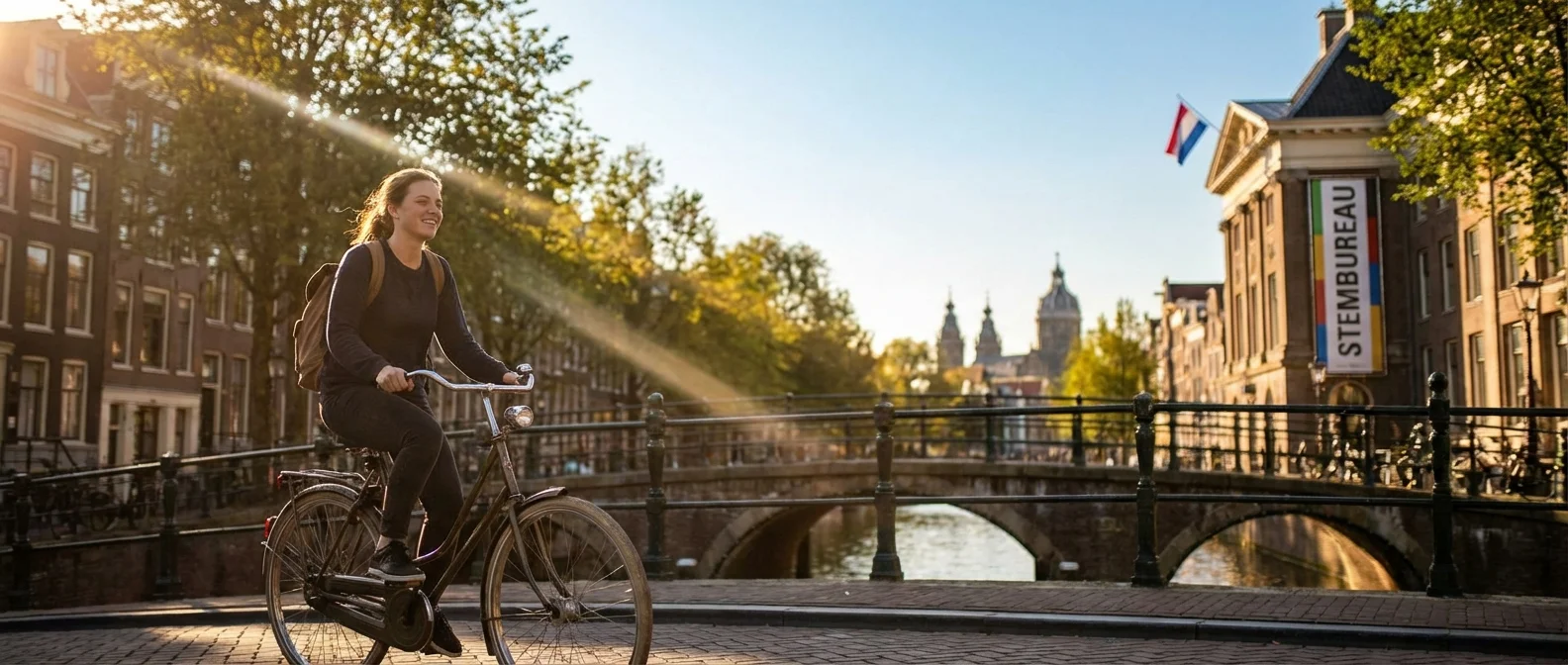
Polling stations are located throughout the city in schools, community centres, and even some train stations. They are open from 7:30 until 21:00. You are not required to vote at a specific location; any polling station within Amsterdam will accept your stempas.
Understanding Your Ballot: Council and Committees
When you vote, you are making two key decisions that affect governance at both the city-wide and neighbourhood level.
The Municipal Council (Gemeenteraad): This is the primary vote for the 45 members of Amsterdam's main legislative body. The council is responsible for creating city policy, passing budgets, and overseeing the day-to-day administration run by the Mayor and Aldermen. Their decisions directly impact services and regulations that affect the entire city, including those of particular importance to the LGBTQ+ community, such as funding for community organisations, public safety initiatives, and anti-discrimination policies.
District Committees (Stadsdeelcommissies): Residents also vote for their local district committee (e.g., for Centrum, Oost, Zuid, etc.). These bodies act as the eyes and ears of the neighbourhood, advising the central city government on local issues. They hold responsibilities over matters like the placement of benches, local event permits, and traffic safety, playing a vital role in shaping the character and inclusivity of your immediate environment.