
A New Demographic Landscape in the United States
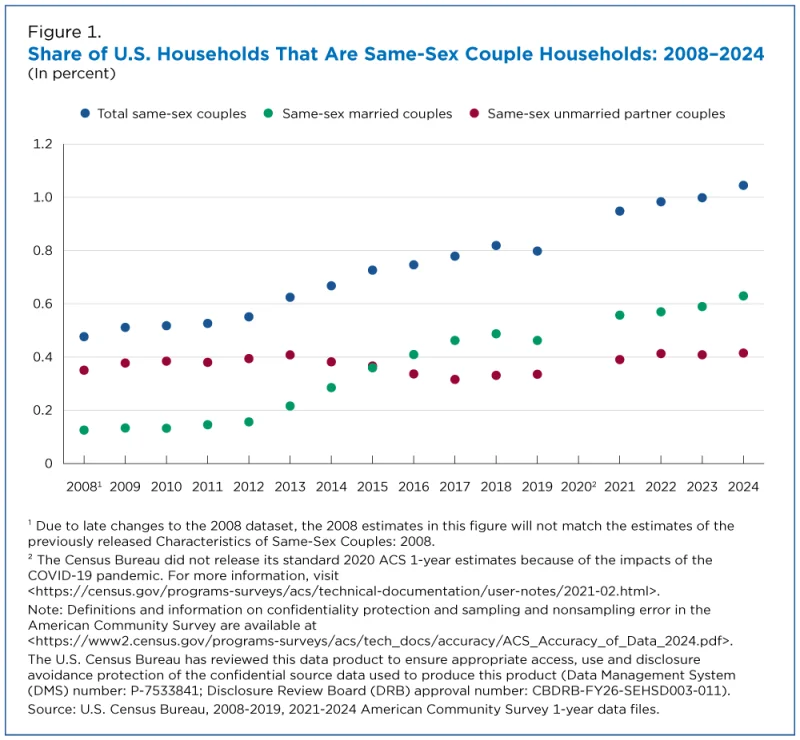
WASHINGTON – The number of same-sex couple households in the United States has grown to approximately 1.4 million, nearly doubling in number since 2005, according to new data released by the U.S. Census Bureau. The analysis, which covers the period up to 2024, also highlights a significant demographic shift: households of female same-sex couples now outnumber those of male couples, reversing the trend seen nearly two decades ago.
In 2024, same-sex couple households constitute about 1.0% of all households in the U.S. This figure is comprised of roughly 836,000 married couples and 551,000 unmarried couples. This marks a substantial increase from 2005, when there were approximately 392,000 married and 385,000 unmarried same-sex households.
The Rise of Female-Led Households
Perhaps the most notable change is the reversal in the sex ratio of same-sex couples. In 2005, male couple households were more numerous. By 2024, the situation had flipped. The number of married female couples more than doubled, growing from about 178,000 in 2005 to 450,000 in 2024. In comparison, married male couple households saw a more modest increase from 214,000 to 386,000 over the same period.
This trend indicates a more rapid growth in the formation and reporting of female same-sex households, a key development in understanding the changing structure of American families.
Key Characteristics of Same-Sex Households in 2024
The Census Bureau's American Community Survey (ACS) data provides further insights into the demographic and economic characteristics of these households. Here are some of the key findings:
- Income Disparity: A notable income gap exists between male and female couples. The median annual household income for male same-sex couples was $140,500, significantly higher than the $108,500 for female same-sex couples. This is despite nearly identical rates of dual-partner employment (around 64% for both).
- Employment: Same-sex married couples have a higher rate of dual employment (60.8%) compared to their opposite-sex counterparts (49.8%).
- Age: On average, householders in same-sex marriages (49.0 years) are younger than those in opposite-sex marriages (53.2 years).
- Education: A higher percentage of unmarried same-sex couples (32.5%) have both partners holding at least a bachelor's degree, compared to 19.1% of unmarried opposite-sex couples.
- Racial Diversity: Same-sex married households are more likely to be interracial. Nearly a third (31.3%) of same-sex marriages are between people of different races, compared to 19.5% of opposite-sex marriages.