Read the full overview article
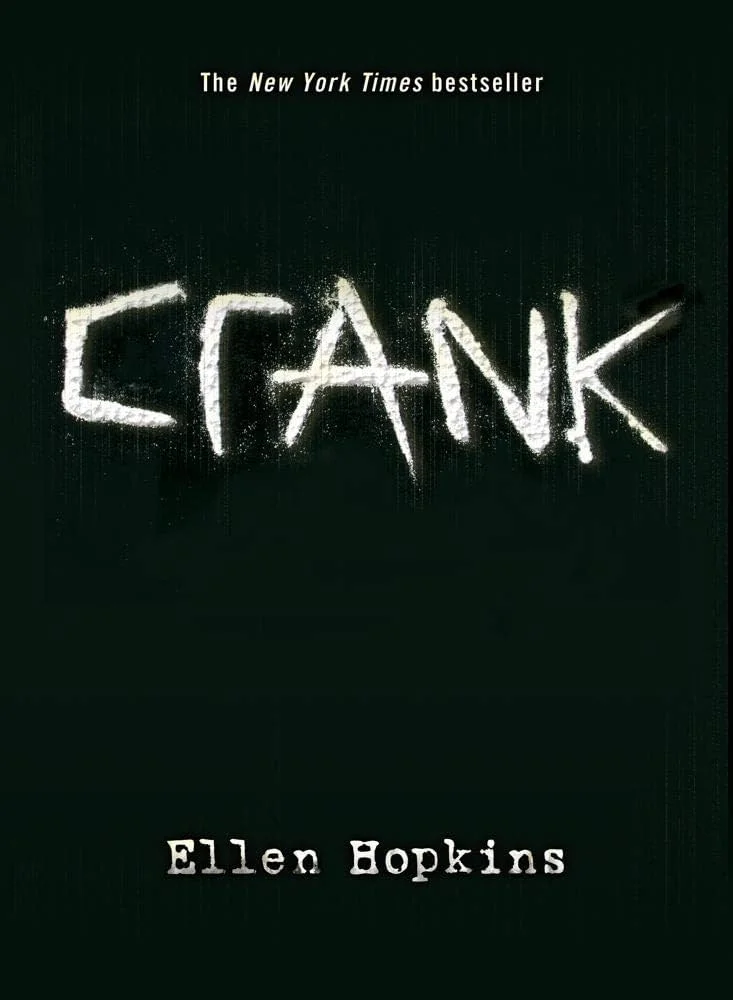
Before it became a fixture on lists of banned and challenged books in the United States, Ellen Hopkins' Crank was a #1 New York Times bestseller. First published in 2004, the novel tells the story of Kristina Snow, a high-achieving high school junior whose life is upended by an addiction to crystal meth, or 'crank'.
What sets Crank apart is its form. The entire story is told in free verse, a stylistic choice that mirrors the chaotic, fragmented, and intense experience of addiction. Reviewers at the time noted its power, with Kirkus describing the novel as a "hypnotic and jagged" chronicle that is both "powerful and unsettling." The narrative follows Kristina from a so-called perfect daughter to someone unrecognisable, struggling for her life against 'the monster' she met one summer.
Born from Personal Tragedy
The novel's raw authenticity stems from the author's own life. Ellen Hopkins wrote Crank based on her daughter's real-life battle with the same addiction. This personal connection informs the book's unflinching honesty, a quality that has made it a lifeline for some readers and a target for others.
Hopkins has been clear about her motivation for writing such a difficult story. "My daughter went to church; she was a straight-A kid. She had everything going for her," she stated. "She met a guy and her life, her dreams, were gone at 18 years old... So, if I could turn one kid off from that path, I would be happy."
The Battleground of the Library Shelf
Despite its numerous awards and accolades from library associations and teen reader groups, Crank consistently faces removal campaigns. The book's frank depiction of drug use, addiction, and its consequences has made it a perennial target for conservative parent groups and school boards in the US.
Organizations like the National Coalition Against Censorship (NCAC) have repeatedly stepped in to defend Hopkins' work, protesting efforts to remove her books from school libraries in districts from Florida to Texas. The challenges against Crank are part of a wider, politically charged effort in the US to control the narratives available to young people. This movement disproportionately targets books dealing with difficult realities, including stories about race, identity, and LGBTQ+ lives.
For Hopkins, the impulse to censor comes from a familiar place.
"Censorship comes from a place of fear. We fear that which is different, what we cannot comprehend. Books gift us with understanding, empower us with knowledge. So, obviously, would-be censors have it all wrong."
While Crank does not focus on a queer storyline, the fight over its place in a library is the same one faced by countless LGBTQ+ authors. It is a battle against the fear of showing young people the world as it is, in all its complexity and difficulty. The effort to remove Kristina's story from the shelf is driven by the same engine that seeks to erase queer experiences, rooted in a belief that teenagers must be shielded from realities that make adults uncomfortable.