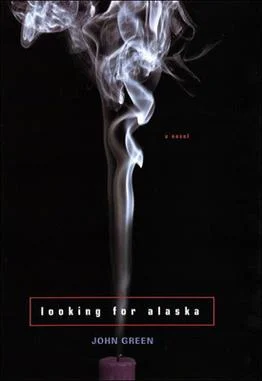
In 2006, John Green's debut novel, Looking for Alaska, received the Michael L. Printz Award, one of the most prestigious honours in young adult literature. A decade later, the American Library Association (ALA) named it the most challenged book in the United States. This paradox sits at the heart of the novel's legacy: a story celebrated for its emotional depth and raw honesty, while simultaneously being targeted for removal from school libraries and curricula across the country.
The novel, first published in 2005, is a staple of the modern young adult canon and tells a story that is, on its surface, a familiar one. It follows narrator Miles "Pudge" Halter as he leaves his quiet life in Florida to seek what he calls a "Great Perhaps" at a boarding school in Alabama. There, he finds a tight-knit group of friends and becomes captivated by the brilliant, funny, and deeply troubled Alaska Young. The novel is split into two parts, "Before" and "After," with a single tragic event irrevocably changing the lives of everyone involved.
The Center of the Storm
The push to ban Looking for Alaska from schools is not a recent phenomenon. For years, it has appeared on the ALA's list of most challenged books. Objections from parent groups and school boards consistently cite its inclusion of profanity, underage drinking and smoking, and sexually explicit content. A scene depicting oral sex is frequently described by challengers as "pornographic."
In places like Marion County, Kentucky, parents argued the book would encourage students "to experiment with pornography, sex, drugs, alcohol and profanity." In Depew, New York, challenges also cited "references to homosexuality" as a reason for its removal. While the novel's main characters are not explicitly LGBTQ+, the inclusion of even minor queer references has been enough to draw the ire of censors, a pattern seen with many challenged books.
These challenges highlight a deep cultural divide in the United States over what material is considered appropriate for teenage readers. Proponents of the book, including teachers and librarians, argue that it deals with themes highly relevant to young people: grief, mental health, friendship, and the consequences of impulsive decisions.
A Story of Grief, Not Gratification
What challengers often miss, according to the author, is the literary context. The novel is a profound exploration of grief and the search for meaning in the face of loss. Miles's journey is not one of glorifying risky behaviour, but of grappling with its aftermath. The structure itself—counting down the days to a tragedy and then counting the days after—frames the entire story around loss and its consequences.
John Green has publicly defended his work on numerous occasions. In a 2008 video titled "I Am Not A Pornographer," he addressed the controversy directly, explaining the intent behind the often-cited sex scene.
"I wanted to draw a contrast between that scene, when there is a lot of physical intimacy, but it is ultimately very emotionally empty, and the scene that immediately follows it, when there is not a serious physical interaction, but there's this intense emotional connection," Green stated. He argued that removing such scenes from literature for young people denies them the opportunity to engage with complex emotional realities in a safe, literary context.
From Page to Screen and Back to the Spotlight
The debate over the book was reignited in 2019 with the release of a well-received eight-episode miniseries on Hulu. The adaptation brought the story to a new generation, earning praise for its faithful and nuanced portrayal of the characters and their struggles. For many, the series reinforced the novel's status as a significant work of young adult fiction, one that trusts its readers to handle difficult subjects with maturity.
Ultimately, the story of Looking for Alaska is a case study in the ongoing American culture wars. It is a reminder that a book can be both a celebrated piece of literature and a target for censorship, often for the very same reasons: its unflinching willingness to explore the messy, complicated, and sometimes painful reality of growing up.