Senate Poised to Vote on Controversial Asylum Bill
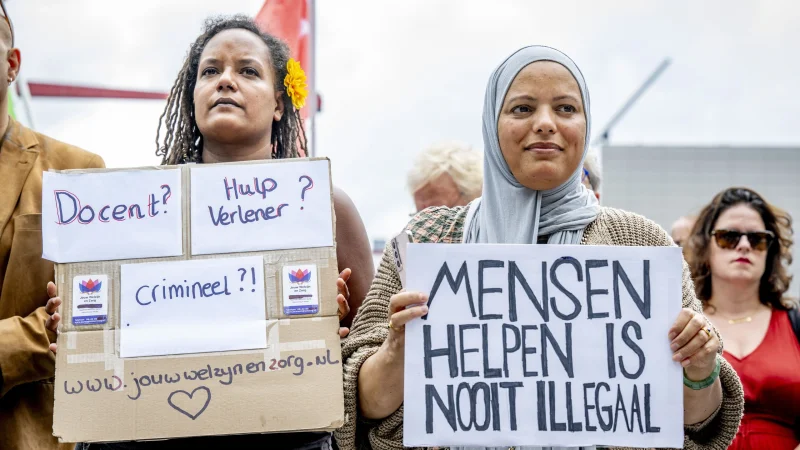
THE HAGUE – The Dutch Senate (Eerste Kamer) is on the verge of a critical vote that could significantly harden the country's asylum policies, with profound implications for the most vulnerable, including LGBTQ+ individuals seeking refuge. Next Tuesday, senators will cast their final votes on a package of asylum laws, with one proposal in particular drawing widespread concern: the criminalization of residing in the country without legal status.
The proposed legislation, a cornerstone of the new Schoof cabinet's agenda, has faced stiff opposition but appears to be gathering a narrow majority. The outcome now hinges on a few key votes, placing the future of many asylum seekers in a precarious balance.
LGBTQ+ Advocates Raise Alarm Over 'Inhumane' Consequences
During the Senate debate, the specific dangers facing queer asylum seekers were brought to the forefront by Senator Gaby Perin-Gopie of Volt. She presented a letter from LGBT Asylum Support, an organization that works directly with this group, detailing the potential fallout from the new law.
The letter highlights a grim reality. Many queer asylum seekers already endure waits of up to three years in overcrowded and often unsafe reception centers for a decision from the Immigration and Naturalisation Service (IND). For them, the fear of rejection is compounded by the new threat of being labeled a criminal if their application fails.
"A respectable country cannot treat vulnerable people this way, creating second-class citizens who can be hunted," the organization argued, warning against a system that punishes individuals already fleeing persecution. They stress that the focus should not be on punitive measures but on fixing the deeply flawed and slow asylum process.
The Political Calculus: All Eyes on the CDA
The passage of the law is not yet certain and depends heavily on the Christian Democratic Appeal (CDA) party. Historically opposed to criminalizing undocumented status, the party's senators are now under immense pressure to support the government's package.
To win them over, Asylum Minister Bart van den Brink has emphasized a key condition: the law would only be used to prosecute migrants who actively refuse to cooperate with their deportation. This is intended to shield others, such as families with children or those in vulnerable situations, from criminal charges.
However, critics, including the Socialist Party (SP), point out that this assurance is not explicitly written into the law itself. The text would still officially make being undocumented a criminal offense, leaving its application open to the interpretation of future governments.
Parties like GroenLinks-PvdA and D66 have condemned the proposal, calling it "unmerciful" and a "stone on the stomach."
A Solution in Search of a Problem?
Advocacy groups argue that the government is focusing on the wrong issue. The real crisis, they contend, is the systemic failure of the IND to process asylum applications within a reasonable timeframe. The Netherlands has previously been reprimanded by the European Court for failing to meet the six-month decision deadline.
Instead of alleviating the pressure on the system, this new law is expected to add another layer of bureaucracy and legal complexity, potentially worsening the very delays it claims to address. As LGBT Asylum Support noted, what queer asylum seekers want is not a debate about fines or punishments, but a simple, timely, and humane answer to their request for safety.
The final, roll-call vote on the asylum bills is scheduled for Tuesday, April 21. The decision made that day will have lasting effects on the lives of thousands seeking refuge in the Netherlands.