A New Chronicle of Pride's Past and Future
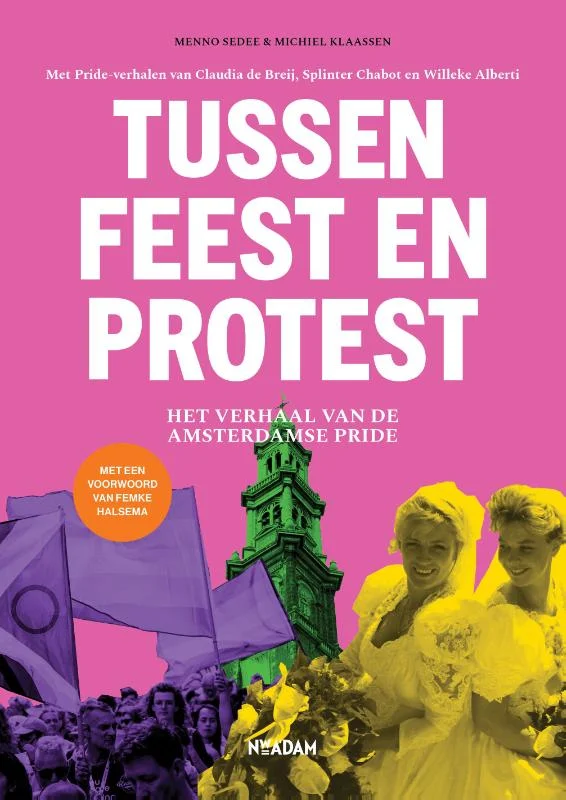
For nearly three decades, Pride Amsterdam has been a defining feature of the city's summer, but its identity has never been static. A new book, Tussen feest en protest: het verhaal van de Amsterdamse Pride (Between Party and Protest: The Story of Amsterdam Pride), documents this evolution. Authored by journalists Michiel Klaassen and Menno Sedee, the book draws on unique archival material and over 150 interviews to explore how a small-scale boat parade grew into a major event, and why it remains a subject of constant debate within the community it represents.
With contributions from prominent figures like Splinter Chabot, Claudia de Breij, and former Amsterdam mayor Job Cohen, and a foreword by current mayor Femke Halsema, the book serves as both a history and a critical examination of Pride's role today.
The Origins: A Party by Design
The book revisits the inaugural Canal Parade in 1996, an event deliberately framed as a celebration, not a protest. "The organizer of the Gay Pride—which was intended as a party and a way to promote Amsterdam as a gay nightlife city—stood at the front of the police boat," author Michiel Klaassen explains. The initial event at the Eenhoornsluis was fraught with uncertainty. "It was tense, because would there be attention for it? Would people accept it?"
That first parade drew an estimated 10,000 spectators, establishing the foundation for what would become one of Pride's most visible elements. The experience of being on a boat, Klaassen notes, remains a powerful one for participants. "Every time you sail under a bridge and thousands of people are screaming and cheering. As if you were Lady Gaga herself," he says.
The Inevitable Debate: Celebration vs. Activism
While the event's popularity soared, so did the internal criticism. The book addresses the period when Pride Amsterdam came under fire for being, as some saw it, too commercial, too white-washed, and too focused on a narrow segment of the community. "A part of the rainbow community said, 'Wait a minute, there's not just something to celebrate, but there's plenty to fight for for certain parts of our community,'" Klaassen states. "That struggle, over what kind of event it should be, is not new."
The authors place this tension in a broader historical context, reminding readers that queer protest in Amsterdam long predates the Canal Parade. They point to a large 1977 demonstration against homophobia at Amstelveld, organized by the women's movement, which eventually evolved into the annual Roze Zaterdag (Pink Saturday).
Pride's Role in a Changing Climate
Tussen feest en protest argues that these debates are more relevant than ever. As the book highlights, growing social and political resistance against the LGBTQ+ community poses urgent questions about the function of Pride. Klaassen suggests that engaging a broad audience, including allies, is a strategic necessity.
He posits that Pride must continue to build connections with mainstream society. In his view, this outreach is fundamental to securing and maintaining acceptance.
"What is very important is that Pride will always try to build a bridge to the hetero-society, so to speak. Because as a minority, you always exist by the grace of the majority."
The book ultimately presents Pride not as a finished product, but as a continuous project—a reflection of the community's own journey through celebration, struggle, and the ongoing search for its place in the Netherlands.
This article is partly based on reporting by AT5