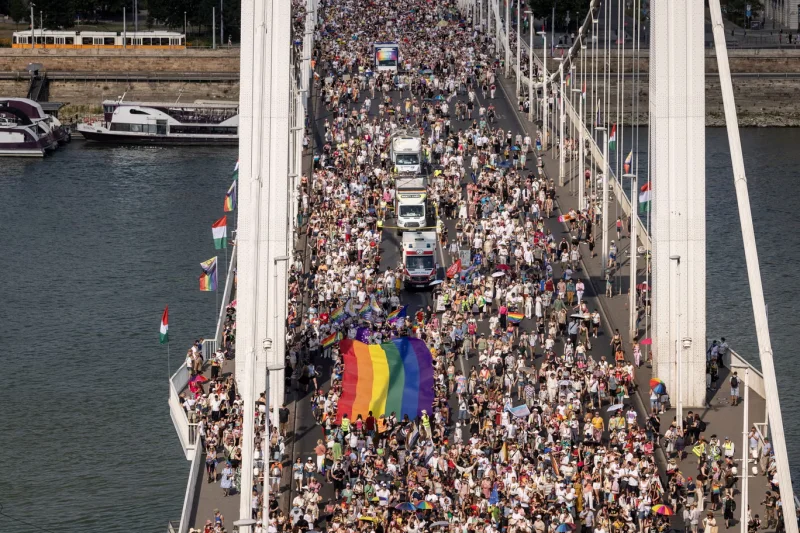
A palpable sense of relief and hope filled the streets of Budapest on Saturday as more than 10,000 people participated in the city's annual Pride march, the first since the electoral defeat of right-wing leader Viktor Orbán.
Braving record-high temperatures, participants marched with large rainbow and European Union flags, marking a significant shift in atmosphere from previous years. Last year's event, which the Orbán government attempted to ban, transformed into a large-scale anti-government protest. This year, following Orbán's loss to Péter Magyar's centre-right Tisza party in April, the ban was lifted, allowing the celebration to proceed freely.
The change was not lost on those attending. "Everyone is just so much more uplifted," said Fanni Fajth, an 18-year-old student, speaking to Reuters. Many expressed hope for a future with expanded rights, including marriage equality and the right to adopt.
A Legacy of Hostile Legislation
The optimism comes after a decade of increasingly hostile policies under Orbán, who positioned himself as a defender of "Christian values" against so-called Western liberalism. His government passed a series of laws directly targeting the LGBTQ+ community, including:
- Banning legal gender recognition in personal documents.
- Effectively halting adoption by same-sex couples.
- Passing a controversial "propaganda" law that banned materials in schools deemed to promote homosexuality or gender transition, a move widely condemned across the European Union.
For many, the political shift is a welcome reprieve. "The biggest change is actually the change in politics in the country," noted Máté Tarnai, a 51-year-old chemist. "We feel more freedom personally as well, and also the atmosphere in the country is much more relaxed than last year."
Cautious Hopes for the Future
While the mood was celebratory, there is an undercurrent of caution regarding the new government. The new leader, Péter Magyar, is a conservative figure. When questioned by Hungarian media about repealing Orbán's anti-LGBTQ+ legislation, he has reportedly asked for patience.
This leaves the community in a state of hopeful uncertainty. The freedom to march without state opposition is a clear victory, but the path to full legal equality remains unclear. For now, attendees are focused on the immediate change in their daily lives.
Boglárka Boruzs, a 23-year-old interpreter, said the most significant change is that LGBTQ+ people can feel safer and more accepted. She highlighted the power of political leadership to "make society understand that it's okay to be gay." The march in Budapest serves as a powerful public demonstration of that sentiment, as the community waits to see if the new political chapter will bring the legal reforms they have long fought for.