Based on reporting by Ilga-Europe
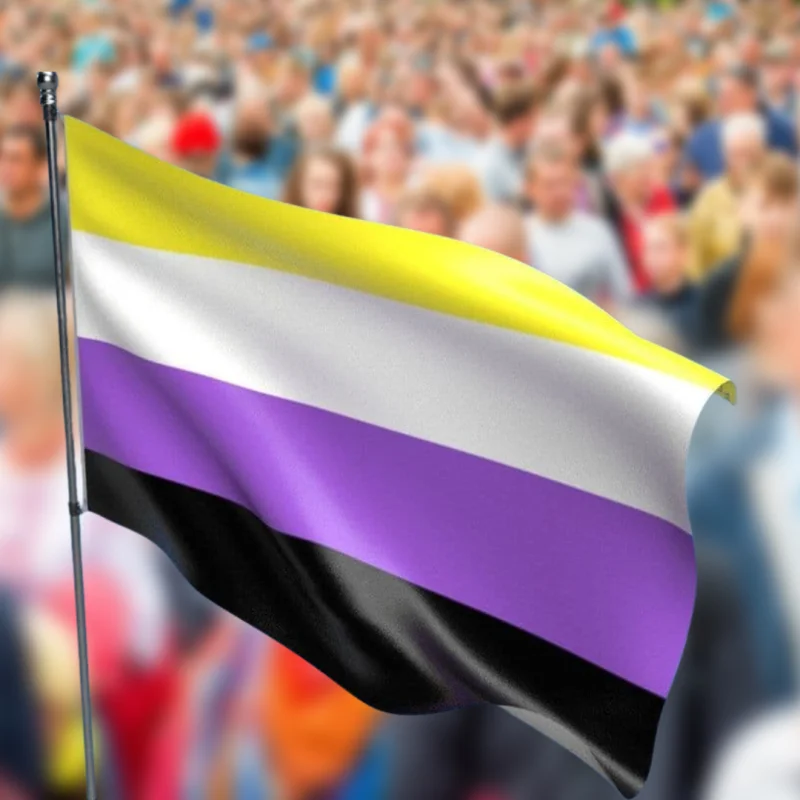
For non-binary people, the simple act of showing an ID can lead to invasive questions and a violation of privacy. When official documents only offer 'male' or 'female' as options, they force a choice that doesn't reflect reality. This isn't just an administrative issue; it's a matter of accuracy, dignity, and mental well-being. Data from the EU's Agency for Fundamental Rights (FRA) shows that over half of transgender respondents identify outside the gender binary, yet legal recognition across Europe remains slow and inconsistent.
While progress is being made, the legal recognition of non-binary identities is still the exception rather than the rule. To mark International Non-Binary People's Day, here is an overview of which countries have taken concrete steps and which are still in discussion.
The Forerunners: Countries with Non-Binary Options
A small group of countries has established legal pathways for non-binary gender markers, though each comes with its own set of rules and limitations.
Iceland: Since 2019, Iceland has allowed individuals to register their gender as 'X'. The country's Gender Autonomy Act also removed gendered naming conventions from the national registry, and those registered as 'X' can adopt gender-neutral family names. However, this naming option is not available to those registered as male or female.
Germany: The gender marker 'divers' (diverse) was introduced in 2019 on official documents. This was the result of a long legal battle by activist Vanja. A significant limitation remains: the option is currently available only to intersex people who can provide a medical certificate, excluding many non-binary and trans individuals.
Malta: A leader in LGBTQ+ rights, Malta has permitted an 'X' marker on identity documents since 2018. While a positive step, reports indicate that individuals with an 'X' marker can face practical hurdles, particularly in gendered healthcare systems, such as booking gynaecological appointments.
Austria: Following a Constitutional Court decision, Austria now allows non-binary people to choose from several gender markers on official documents, including 'divers', 'inter', 'offen' (open), or to have the gender marker removed entirely. The country has since issued its first gender-neutral passport.
The Next Wave? Countries in Transition
Several other nations, including the Netherlands, are navigating the path toward recognition, often prompted by court rulings and government proposals.
The Netherlands: The situation in the Netherlands is one of gradual, case-by-case progress without a comprehensive national law. The Dutch government has stated its intention to remove 'unnecessary' gender registration where it is not relevant. Cities like Amsterdam and Utrecht have already taken this step for some local documents. Crucially, Dutch courts have ordered an 'X' to be entered on birth certificates in several individual cases. However, these rulings do not set a legal precedent for everyone, meaning each case must be fought individually until a national law is passed.
Belgium: After its 2017 gender recognition law was found to be discriminatory by the Constitutional Court for excluding non-binary people, the Belgian government has been exploring changes. A recent proposal suggests not adding a third 'X' option, but instead allowing citizens to request the removal of the gender marker from their ID cards. LGBTQ+ organisations have criticised this as an incomplete solution that fails to provide full legal recognition and could create problems for individuals travelling abroad.
Greece: In 2020, a magistrate's court in Kallithea issued a ruling that recognised a non-binary gender identity, affirming that an individual's name and identity are fundamental rights. As in the Netherlands, this is an important step but does not yet represent a nationwide policy.
The Broader European Context
The conversation is not limited to national governments. Several cases are currently pending before the Court of Justice of the European Union (CJEU), where non-binary EU citizens are seeking recognition of their legal gender across member states. The outcomes of these cases could have far-reaching implications for how gender is recorded and respected across the entire bloc.