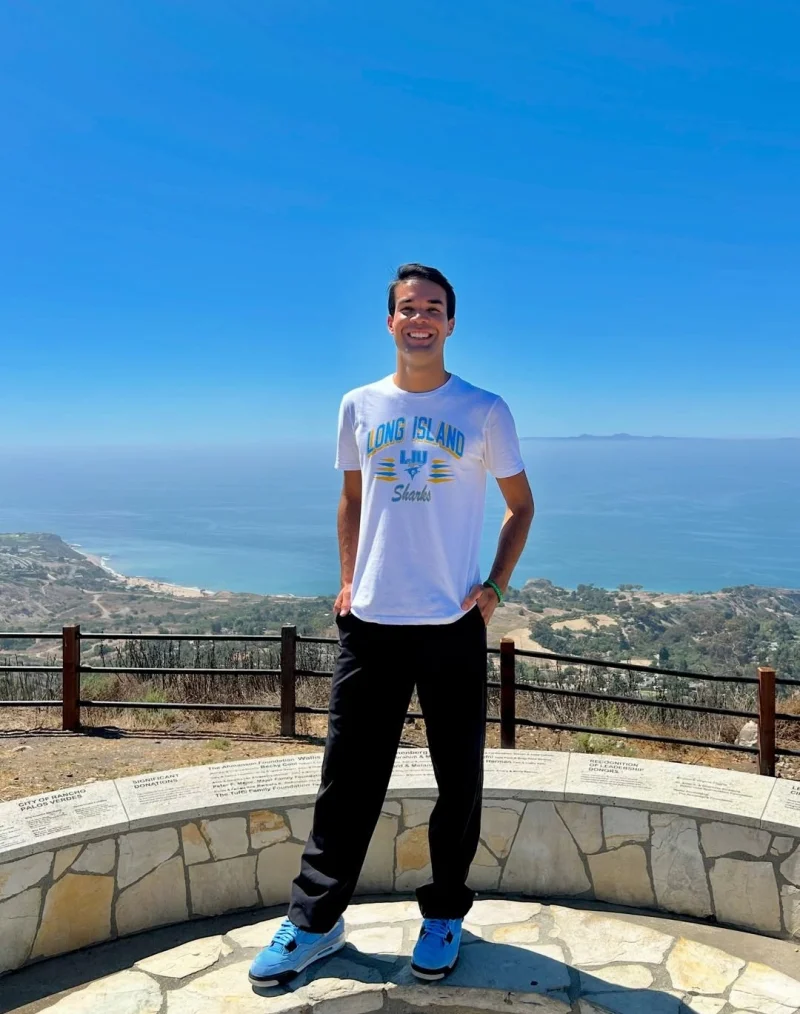
American college volleyball player Jordan Lucas, whose profile grew internationally after he was targeted by homophobic comments from a TV commentator, is moving to New York for his final season. The 22-year-old will join the Long Island University (LIU) Sharks, bringing his considerable following and visibility to one of the world's largest LGBTQ+ hubs.
Lucas became a prominent figure in queer sports circles earlier this year following an incident during a live broadcast. While Lucas was playing for his former team, the CSUN Matadors, commentator Charlie Brande made disparaging remarks about his expressive on-court celebrations, which include finger wags and other gestures after scoring points.
"I’m astonished that Jordan Lucas hasn’t been punched in the face yet," Brande said during the match against UC Irvine. He described Lucas's behaviour as "very tasteless."
The comments sparked immediate backlash, but the attempt to shame Lucas had the opposite effect. The incident went viral, and support for the young athlete poured in from around the world. His Instagram following surged to nearly half a million, and attendance at CSUN's games increased significantly, with many fans showing up specifically to support him. Lucas transformed from a college athlete into a visible role model for young, queer sportspeople.
A New Stage in New York
His move to LIU marks a new chapter. While his former team, CSUN, finished last season ranked 18th nationally, LIU was unranked. However, the transfer places Lucas in the heart of the New York metropolitan area, offering him a larger platform for his final year of college eligibility.
Lucas confirmed the move on his Instagram account. "Let's run it back… one last time, but with a change of scenery on the east coast," he wrote. "Thank you to everyone who made this possible. As well for all the continued support and love I have received these past months. It has meant the world to me."
With his arrival at Long Island University, Lucas is expected to draw new crowds and bring further attention to men's college volleyball, demonstrating how standing up to prejudice can create a powerful and positive impact far beyond the court.