
Slovakia has formally refused to register the marriage of a gay couple who were legally wed in neighbouring Austria, placing the country in direct opposition to a European Union court ruling and escalating tensions over LGBTQ+ rights within the bloc.
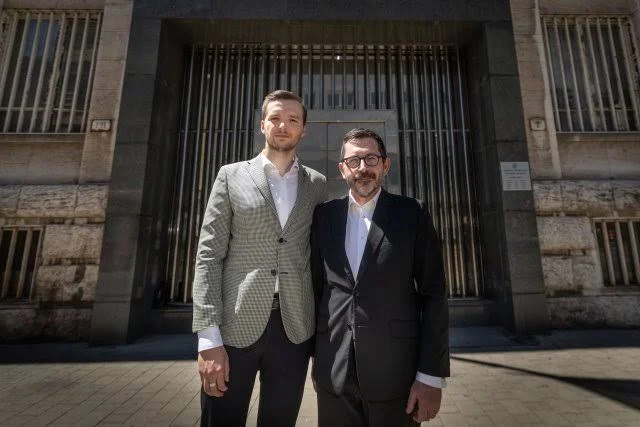
Ivan Novotný and Metod Špaček, both Slovak citizens, married in Austria in 2020. When they applied to have their marriage officially recorded in their home country last December, they expected a standard administrative process. Instead, they received a rejection letter this week, not from the local registry office, but directly from Slovakia's Minister of the Interior, Matúš Šutaj Eštok.
“We submitted our application to the registry office, and it was the registry office that should have made the decision,” Novotný stated, describing the rejection as based on “weak legal arguments.” He also alleged that the country's populist Prime Minister, Robert Fico, personally visited the registry office on June 12 to instruct them to deny the application, citing Slovakia's constitutional ban on same-sex marriage.
A Direct Challenge to EU Law
The decision is a significant challenge to the authority of the Court of Justice of the European Union (CJEU). In November, the EU's highest court ruled that all member states must recognize same-sex marriages performed in other member states for the purpose of granting residency and other fundamental rights. While the ruling does not force countries to legalise same-sex marriage, it requires them to acknowledge legal unions from elsewhere in the EU to ensure freedom of movement.
This is not the first time an EU member has pushed back against the CJEU on this issue. Poland's Constitutional Tribunal made a similar move in July, overturning a domestic court's decision that had initially complied with the EU ruling. These actions create a worrying precedent, undermining the principle that EU law supersedes national law.
European Commission Responds
The European Commission in Brussels quickly condemned Slovakia's move. “One of the foundations of our Union is that EU law, as interpreted by the Court of Justice of the EU, takes precedence over national law,” the Commission said in a statement. “All Member States have the obligation to fully implement all judgments of the CJEU.”
The statement concluded with a clear warning: “We will continue to monitor the situation very closely and, if necessary, will not hesitate to use all the instruments at our disposal.” This could include infringement procedures, which can lead to significant financial penalties.
For now, Novotný and Špaček are preparing for a legal battle in their own country. The couple plans to sue to challenge the minister's decision. “I reiterate that I have no doubt we will ultimately achieve equality for all in Slovakia as well,” Novotný affirmed.