
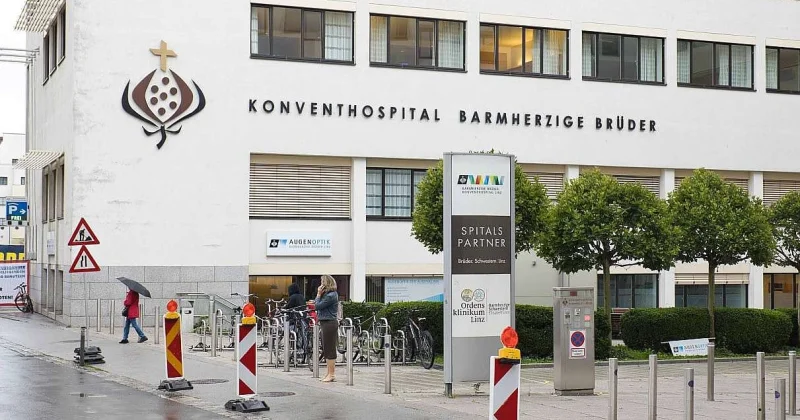
A judicial investigation is underway in Linz, Austria, after a trans woman who was the victim of a suspected rape was denied medical care by two separate hospitals, sparking outrage among LGBTQ+ organisations, report Queer.de.
The case, which has drawn attention across Europe, involves a woman named Viola who sought immediate medical help after a suspected drugging and sexual assault. Her ordeal highlights severe systemic failures and transphobia within the Austrian healthcare system. The public prosecutor's office in Linz is now investigating both the alleged rapist and the hospitals for failure to provide assistance.
An Ordeal of Rejection and Delay
After the assault, Viola and a friend immediately contacted the police, concerned that she had been drugged with KO drops—a substance that can only be detected in the body for a short time, making a swift medical examination crucial for evidence. Police called an ambulance, but after a 45-minute wait, they decided to drive her to the nearest hospital, the Konventhospital Barmherzige Brüder, themselves.
There, according to Viola's account, a doctor asked, "If we look between your legs, what will we find?" After Viola confirmed she was a trans woman, she was refused treatment. The doctor allegedly stated that Viola was not a "phenotypical woman" and cited internal guidelines. In a later statement, the hospital claimed its gynaecology department could not treat a patient with "male sexual characteristics" and that it lacked a urology department, effectively deflecting responsibility.
Viola was then taken to a second hospital, the Krankenhaus der Elisabethinen. They also refused to treat her, instead referring her to the violence ambulance at the Kepler University Hospital (KUK). The Elisabethinen hospital has since issued a statement of regret for the distress caused and said it has adjusted its internal procedures.
During the journey to the third hospital, Viola, who has epilepsy, suffered a seizure. Upon arrival at the KUK, she was reportedly placed in what the police report described as a "storage room" and left waiting for an hour despite being in severe pain. "I was overwhelmed with pain, I could barely speak," Viola said. "The police officers, my friend and I pointed out several times that I was having a seizure and needed help. But they didn't help me." It was only after the police officers pressured the hospital staff that she finally received medical attention.
Systemic Failures Exposed
The director of the KUK, Meinhard Lukas, has publicly denied the allegations, stating that any delays were due to other emergencies and that the patient was medically cared for. However, the hospital's own report misgenders Viola as "Herr" (Mr.), while the police report correctly identifies her as female.
The incident also casts a harsh light on the region's resources for assault survivors. The KUK's violence ambulance is the only such facility in Upper Austria, a state with over 1.5 million residents. Its opening hours are limited to four days a week, from 7 a.m. to 3 p.m. In response to criticism, the hospital director suggested that the name "violence ambulance" might create false expectations of 24/7 availability and that they are considering changing the name—a response many critics see as focusing on public relations rather than expanding essential services.
"A Question of Jurisdiction"
Austrian LGBTQ+ organisations have reacted with fury. "The experiences of Viola make us concerned and angry," said the queer organisation RosaLila PantherInnen. "Anyone who has experienced sexualised violence must receive immediate medical help, protection and professional forensic evidence collection. Regardless of gender identity, body or civil status."
Joe Niedermayer of the organisation added, "We demand clear responsibilities and non-discriminatory care everywhere in Austria. Trans people must not become a question of jurisdiction in the healthcare system. Anyone who needs help must get help. Quickly, professionally and without discrimination."
The case serves as a stark example of the issues groups like HOSI Wien have been campaigning against for years, citing a "health emergency in transgender medicine" due to structural barriers, long waiting times, and a lack of qualified specialists. While this incident occurred in Austria, it resonates as a powerful reminder of the ongoing struggle for dignified and equitable healthcare for trans people across Europe.