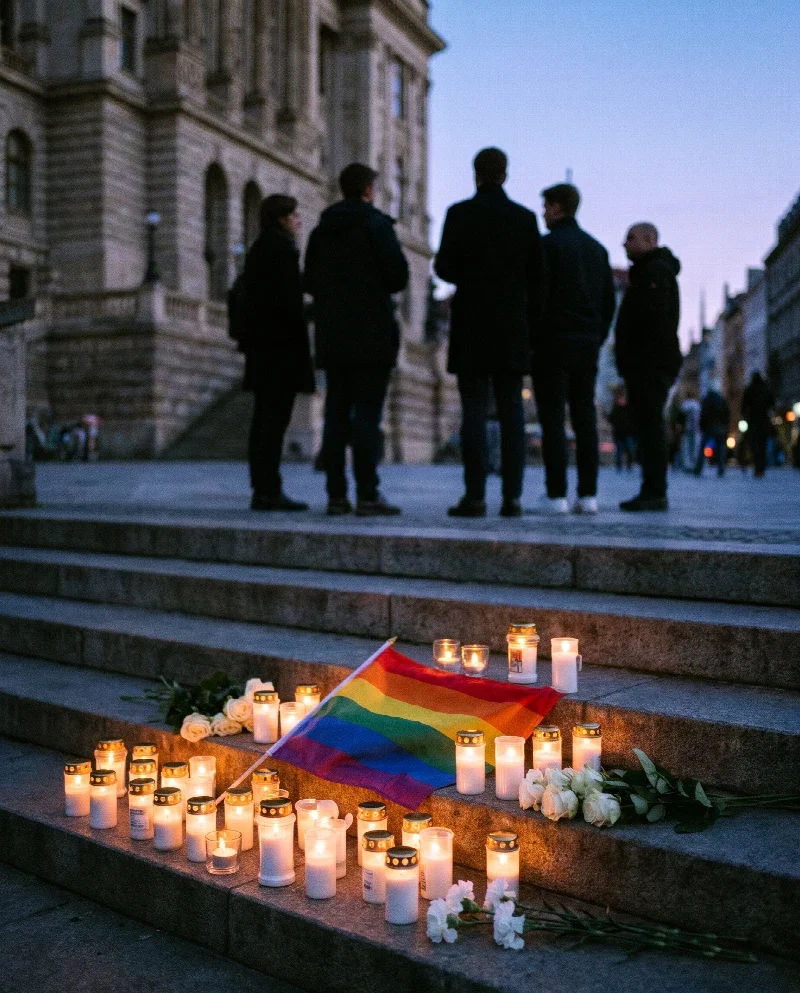
At least 233 LGBTIQ people across the world have been murdered for who they are between January 2020 and July 2026. The victims, who ranged in age from 12 to 77, are documented in a stark new report from Outright International, “Killed for Who They Are: Extrajudicial Executions and Targeted Killings of LGBTIQ People”, published on Tuesday 27 October.
The report details how state actions—or failures to act—commit, enable, or ignore these killings. It highlights a deadly combination of prejudice, weak legal frameworks, and a lack of accountability that puts queer lives at risk every day. As the report states bluntly: "Government failure to actively intervene to protect the rights of LGBT, gender-diverse, and intersex persons…leads to their deaths."
The Tip of the Iceberg
Researchers acknowledge that the true number of victims is far higher. "We will never know the exact number of people killed because they are queer," said Ohotuowo Ogbeche of Outright International during an online discussion of the findings. Documenting these murders is incredibly difficult, especially in the 65 UN member states that still criminalise consensual same-sex relations. Stigma and fear force many to hide their identities, meaning their murders are often never reported or recognised as targeted hate crimes.
The report found at least 18 children among the victims. It also noted that only two intersex victims were documented (in Colombia and Kenya), pointing not to a lack of violence but to “serious gaps in recognition, reporting and data collection.”
Laws on Paper, Violence in Reality
Even in countries with progressive laws, legal protection doesn't always translate to safety. South Africa, for example, is the only country in sub-Saharan Africa with a constitution that explicitly protects against discrimination based on sexual orientation. Yet, the report documents 36 targeted killings of queer people there since 2020. One case is that of Imam Muhsin Hendricks, an openly gay imam killed in February 2025 after reportedly receiving death threats. At the time of the report, no arrests had been made.
"Having rights written in the constitution did not automatically mean that we could live those rights safely," explained Jade Madingwane of the Forum for the Empowerment of Women (FEW). "You can't just have laws and policies and not have an implementation plan or a budget for that."
The importance of official recognition was echoed by Maria Clara of Colombia Diversa, an organisation that has documented over 2,346 homicides of LGBTIQ people in Colombia since 2006. "What is not named, what is not measured... is excluded from the scope of the state intervention," she said. "Counting is more than recording deaths. It's about affirming that this life matters."
A Crucial Vote at the United Nations
The report's release comes just weeks before a critical vote at the UN General Assembly. In November 2026, member states will vote on a biennial resolution that condemns extrajudicial, summary, or arbitrary executions. This resolution names specific groups vulnerable to such killings and obligates states to investigate, prosecute, and provide justice.
Sexual orientation and gender identity have been included in the list of protected grounds since 2002 and 2012, respectively. However, at every vote, a bloc of states has attempted to remove this language. While these attempts have so far failed for this specific resolution, the threat remains real. In 2025, the words "sexual orientation and gender identity" were successfully removed from a different General Assembly resolution by a narrow margin.
Removing the language, as supportive states warned in 2024, would "send a dangerous signal to the perpetrators."
How You Can Help
In response, Outright International, along with Amnesty International, Human Rights Watch, ILGA World, and others, has launched a global campaign. They have sent a joint letter to all 193 UN member states, urging them to vote to keep the full list of protected groups intact.
You can add your voice by signing the petition at go.outright.org/right-to-life. Before the vote, the number of signatures from each country will be delivered to that country's UN mission in New York. The campaign notes that while no petition is entirely safe everywhere, individuals concerned about their safety should consult with people they trust before signing.
Despite the grim statistics, Ogbeche of Outright International offered a message of resolve. "We are not helpless, we are not hopeless. You can do something, and we have been doing things."