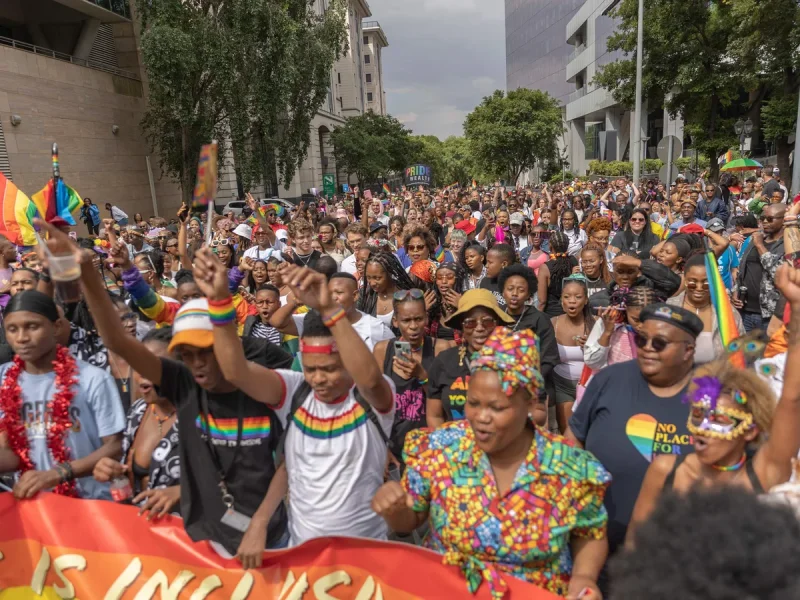
The streets of Sandton, Johannesburg's financial district, were filled with colour and sound on Saturday as hundreds gathered for the city's annual Pride parade. Participants waved rainbow flags and carried banners, marking one of the largest and longest-running LGBTQ+ celebrations on the African continent.
While the atmosphere was one of celebration, the event also carried a strong political message. Many attendees voiced concerns over a global rollback of queer rights, particularly those affecting the transgender community. "As we've seen in countries like America, they are just taking away all the rights from transgender folks, and that's what I'm here to protest about," participant Patrick Smit-Stachowski told reporters at the event.
This sentiment highlights the dual role of Johannesburg Pride: it is both a celebration of the freedoms secured in South Africa and a platform for solidarity with queer communities facing increasing hostility elsewhere.
A Legal Anomaly in Africa
South Africa stands in stark contrast to many of its neighbours regarding LGBTQ+ rights. It remains the only nation on the continent where same-sex marriage is legal, having passed legislation in 2006. Furthermore, its post-apartheid constitution, adopted in 1996, was the first in the world to explicitly outlaw discrimination based on sexual orientation.
This legal framework has allowed a visible and vibrant queer community to flourish, making events like Johannesburg Pride possible. However, the legal protections do not always translate to lived experience, and advocates note that social stigma and violence remain significant issues for many LGBTQ+ South Africans, particularly in areas outside of major urban centres.
The parade serves as a powerful demonstration of visibility in a region where, in many countries, such a gathering would be impossible. The presence of international attendees from across Africa and Asia underscored the event's significance as a beacon of relative safety and acceptance on the continent.