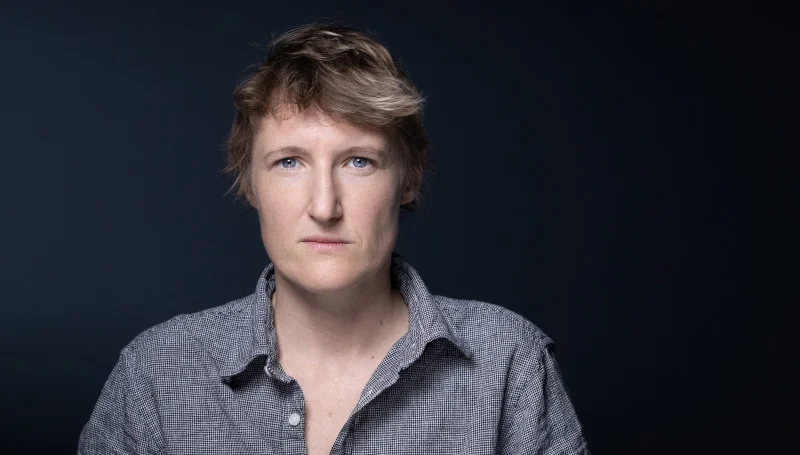
A recent poll on the voting intentions of LGBTQ+ people in France has challenged a common narrative within the community, suggesting that lesbians are not only drawn to far-right parties but may support them in slightly greater numbers than gay men. The findings counter a recent statement by prominent French lesbian activist and politician Alice Coffin, who claimed that the rise in far-right sentiment was primarily a phenomenon among gay men.
Speaking at a festival in Strasbourg, Coffin addressed a poll figure showing that 32% of LGBTQ+ people in France intend to vote for a far-right candidate in the 2027 presidential election. "Sorry gays, but you're going to have to take responsibility," she stated, implying that lesbians did not share this trend. However, a closer look at the data from the poll, conducted by Ifop for the French publication Têtu, reveals a more nuanced and, for some, surprising picture.
A Closer Look at the Numbers
The poll specifically examined voting intentions for candidates in the 2027 presidential election. When broken down by sexual orientation, the results for the main far-right party, Rassemblement National (RN), led by Jordan Bardella, were as follows:
- Lesbians: 37% expressed an intention to vote for Bardella.
- Gay men: 25% expressed an intention to vote for Bardella.
When including other far-right candidates like Éric Zemmour, the total support for the "radical right" bloc reached 37% among lesbians, compared to 29% among gay men. It is important to note, as the original analysis did, that polling subgroups involves smaller sample sizes (in this case, 78 lesbians and 214 gay men), which increases the margin of error. Therefore, these figures indicate a trend rather than a definitive statistical certainty.
A Growing Trend?
Comparing this data to a similar poll conducted before the 2022 presidential election suggests a significant shift. In 2022, the total far-right vote was slightly higher among gay men (31%) than lesbians (27%). However, the support for Marine Le Pen's RN party was already stronger among lesbians (21%) than gay men (16%).
The latest poll indicates that while far-right support among gay men has remained relatively stable, it has seen a notable increase among lesbians, driven primarily by the RN. This trend challenges the long-held assumption that lesbians, as a doubly marginalized group (women and queer), would be fundamentally opposed to far-right ideologies.
A European Context
This development in France is not an isolated incident. The idea of a "female immunity" to far-right politics is being increasingly questioned across Europe. The rise of female leaders in far-right movements, such as Giorgia Meloni in Italy and Marine Le Pen in France, demonstrates a broader appeal that transcends gender lines.
Particularly relevant is the case of Alice Weidel, the co-leader of Germany's far-right Alternative für Deutschland (AfD) party, who is a lesbian. Her prominent position serves as a stark reminder that political identity is complex and cannot be predicted solely based on sexual orientation or gender.
For the LGBTQ+ community in the Netherlands and beyond, these findings from France are a prompt for reflection. They underscore that the queer community is not a political monolith and is susceptible to the same populist and nationalist currents influencing the general population. The data challenges us to look beyond simplistic internal divisions and understand the diverse reasons why some members of our community are drawn to parties whose platforms often stand in opposition to LGBTQ+ rights.