
07
Oct
Utrecht's queer history is barely visible in the city, and this event aims to change that. Join the discussion on how to make queer history a visible and natural part of Utrecht.
Queering Utrecht's History – Visible in the City
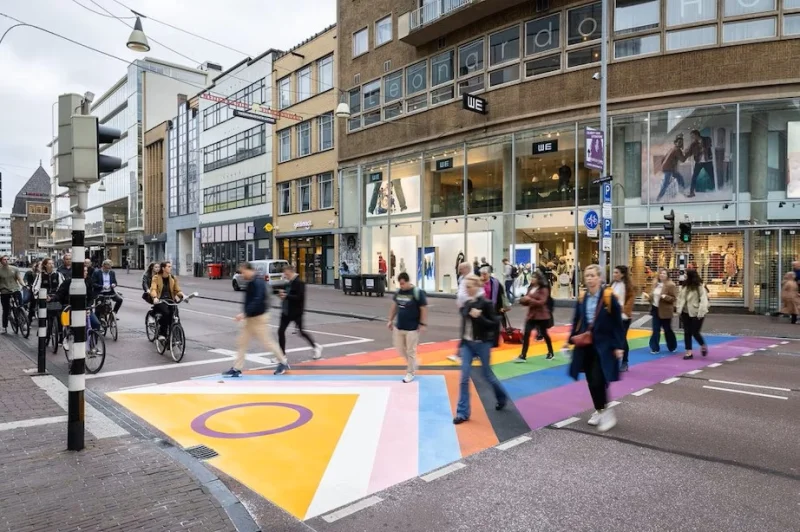
During Queering Utrecht’s History, the new Queer City Map will be launched: a map of Utrecht's city center with a walk along 24 important places from Utrecht's LGBTQIA+ history (which you can take home with you afterwards). But we want to go further. With images, text, and QR codes on things like attention tiles, facade signs, plaques, murals, mosaics, and artworks, we want to bring LGBTQIA+ history back to the places where it happened.
Which places are important to you? Which stories deserve a place in the public space? And how could we make that history visible? Together, we will explore how to make queer history visible in the city. We will start with an inspiring presentation by Maurice van Lieshout and Nine Geertman. Afterwards, we will have a panel discussion about where, what, and how? The discussion leader is Laura Meijer from Queer U Stories.
Panelists
- Fred Nuwenhuis, Municipality of Utrecht, expert on information carriers in public space
- Marijke Huisman, Utrecht University, university lecturer in public history
- Mieke Heurneman, Landschap Erfgoed Utrecht, heritage specialist
- Romi Leever, Utrecht City Council, council member for Pro
- Wilfred van Buuren, IHLIA queer heritage organization, head of collection
This way, we take the first steps towards a recognizable network of places that showcase Utrecht's queer history. Imagine: walking through Utrecht, you not only pass historical buildings and monuments but also discover where Hubert Schouten, the first Utrecht gay activist, lived, or where Dirkje Kuik, the most famous Utrecht trans woman, shaped her life and work. At the Jacobibrug, you'll see why this place has been the beating heart of the queer movement since the 1980s, and further along the Oudegracht, a reference to the beginning of the Utrecht Ballroom Scene. You'll discover where Gloria Wekker gave her inaugural speech that meant so much to our movement and where the first Utrecht Canal Pride ever started. And that's just the beginning.
This event is part of the Utrecht Queer Culture Festival and the Month of History.
De Kargadoor
Oudegracht 36, Utrecht, Netherlands
Queer Places Nearby
Upcoming
Oudegracht 36, Utrecht, Netherlands
Queer Places Nearby
Café Kalff
Bar in Utrecht
Bar in Utrecht
Body Talk
Bar in Utrecht
Bar in Utrecht
U-Bar
Bar in Utrecht
Bar in Utrecht
Upcoming