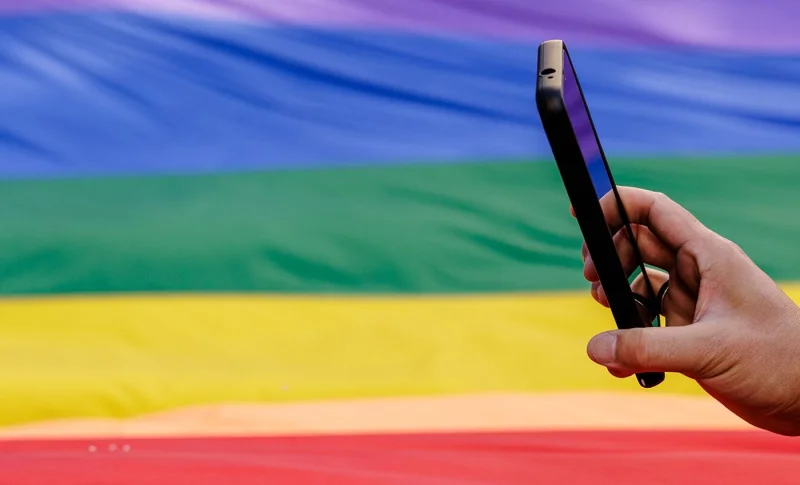
According to the boy's lawyer, who spoke with the independent news outlet Mediazona, the act was not intended as propaganda. "He had no intention of spreading propaganda; he doesn’t even know what that is. It was just a joke that backfired," the lawyer explained. The boy, who has a history of winning academic and creative competitions, was reportedly unaware of the potential consequences.
Because he is under the age of 16, the boy cannot be held administratively liable under Russian law. While the formal charges were dismissed, the case was not closed. Instead, police forwarded the materials to the local Juvenile Affairs Commission, a body responsible for handling issues related to minors.
From Warning to 'Reformation'
The commission issued a formal warning for the "LGBT propaganda" allegation. However, a second charge of displaying "extremist symbols" was treated more severely. This is likely linked to Russia's Supreme Court decision in late 2023 to label the "international LGBT public movement" as an extremist organization, effectively outlawing any public association with LGBTQ+ symbols or activism.
Citing the extremism charge, the commission concluded that the child "needs to be reformed" and recommended his transfer to a special closed-type educational-correctional facility—a school for juvenile offenders where he would live and study under strict supervision.
The boy has already been officially registered as a juvenile offender. "The boy was an excellent student with good character references, but then something clicked—his hormones kicked in—and he wanted to joke around," his lawyer stated. "Adults interpreted this as ‘oh my, he’s promoting something’."
The lawyer has filed an appeal against the commission's decision, arguing against the disproportionate response from the authorities. She also pointed to the state's own role in the matter, questioning why authorities punish a child for accessing online content they have failed to block. "The internet is something that’s accessible to everyone... Even children can go online, find them and then show them to someone else. And the authorities already treat this as a form of propaganda," she said.
This case serves as a stark illustration of the current climate in Russia, where anti-LGBTQ+ legislation is increasingly being used to police the expression and curiosity of young people, with potentially life-altering consequences.